FX Accounting Automation: A Practical Guide for UK Finance Teams
Learn how UK finance teams can automate FX accounting controls. Our guide covers rate rules, revaluation, reconciliation and payment records.



Waiting for funds to land can feel like the least productive part of a business day. Your sale is done, the customer is happy, the invoice is closed, but the money is still in flight somewhere between systems, banks, and settlement dates.
This guide explains how payment settlement works, why it takes time, and what controls help you reconcile faster. It also shows howWise Business supports international transfers, and payouts, so cash flow is less of a guessing game.
💡 Learn more about Wise Business
Payment settlement is the stage where a transaction is finalised, and the requested funds are finally transferred from payer’s to payee’s account. It’s the moment a payment becomes real money for the business, not just an approved transaction sitting in a queue.
Settlement matters because the timing affects working capital. A delay can be normal (batch processing), a warning sign (failed settlement), or a risk event (mismatched details that trigger manual review). It also affects how quickly a finance team can reconcile sales records against the bank statement and close the books efficiently .
It's important to track the settlement date. That’s the date the transfer is settled under the rules of the relevant network or clearing house, and it’s not always the same as the purchase date. If you’re forecasting cash, settlement dates (when the money arrived) are often more useful than transaction dates (when the customer paid)
Even a simple card payment can involve a small crowd.
Aggregators can simplify acceptance, but they also add another layer to settlement, reporting, and reconciliation.
Wise payment gateway
Made for ecommerce with low fees and local currencies. Coming soon.
Register for updates
Gross settlement means settling each transaction individually. It’s common in real-time gross settlement (RTGS) systems and tends to support faster finality, but it can require more liquidity. If your business needs certainty fast, gross-settlement models are often the reason some payment types feel instant.
Net settlement means obligations are offset, and only the net amount is settled at set times. This is where netting comes in, reducing the number and value of payments needed to settle a group of transactions. It’s efficient, but it introduces a timing gap, so the settlement date may be later than the transaction date.
Bilateral netting is a specific type of netting between two parties. Bilateral netting is a process where two parties (e.g., banks), merge the debts they owe each other and only settle the difference. This reduces the number and value of payments or deliveries needed to settle.
In simple terms, it’s “you owe me, I owe you, let’s settle the difference.”
Most settlement journeys follow the same process: approval, preparation, movement of funds, and then reconciliation. The names differ across payment instruments, but the logic is consistent.
Below is the end-to-end flow, using card settlement as the clearest example.
The payer’s bank checks if the payment should be approved. For example, with cards, the point of sale sends an authorisation request that moves through the acquiring bank and card network to the issuing bank.
This stage checks details and available funds or credit, but it does not mean the money has settled yet.
Verification adds security checks and risk logic. At this stage, issuing banks verify the transaction’s validity and assess risk parameters before approving or declining.
This is also where fraud screening and authentication measures may influence whether a payment proceeds.
Capture is when the acquiring bank begins to move funds to the merchant bank account. It happens after authorisation and can be delayed to allow time for changes to the final amount or fraud checks. Delayed capture stalls , settlement and affects when funds become available.
Batching groups authorised transactions for processing. Batching is sending grouped authorised transactions to the payment processor at the end of the day, as an important step before settlement.
For businesses, batching policies can influence settlement timing, especially for card acceptance.
Clearing is transmitting, reconciling, and sometimes confirming transactions prior to settlement, potentially including the netting transactions and establishing final settlement positions. In many systems, clearing is driven by electronic messages, including financial EDI (Electronic Data Interchange) and structured formats used between institutions. This is also where data quality matters most. Bad references, mismatched amounts, or missing identifiers create exceptions that slow settlement and complicate reconciliation later.
A clean payment transfer file is often the cheapest operational improvement you can make.
Settlement is the process by which funds transfer occurs between banks and networks. For card payments, issuing banks move funds to card networks, which transfer to acquiring banks, typically within one to three business days. At this point, the money arrives, after interchange and processing fees have been deducted along the way.
Settlement and funding are related but not identical. Settlement is the transfer of funds between banks, while funding is when the money becomes available in the business’s account. That difference explains why a payment can be settled in reporting but still not be usable cash until later.
Reconciliation is where finance teams match what they expected with what arrived. Reconciliation is comparing recorded transaction amounts with settled and funded amounts to find discrepancies. This is where settlement reports, fees, chargebacks, and partial captures become obvious.
Cross-border settlement involves currency conversion, time zones, and sometimes multiple intermediary banks. It can take one to four business days, depending on the banks involved.
Netting and payment-versus-payment (PvP) mechanisms exist to reduce FX settlement risk or Herstatt Risk. Herstatt risk is a situation where one party in the payments process can deliver currency and still face non-delivery of the other leg. It's named after the 1974 failure of Bankhaus Herstatt. .
For businesses paying internationally, the practical point is to choose rails and providers that reduce intermediaries and improve traceability.
| 💡 Read more about: Cross-border payment flows |
|---|
Settlement timing depends on the payment instrument, cut-off times, and whether the system settles gross or net. In a typical credit card timeline, authorisation is instant, clearing completes overnight, and settlement completes within one to three business days. \
Cross-border settlement can take longer due to extra steps and banking calendars.
Below are common timeframes, plus why they take that long.
Most merchants receive funds within 1–3 business days on average, depending on batching frequency, processor policies, banking hours, and cross-border restrictions. If your processor offers same-day settlement, it usually has specific eligibility or pricing.
From a merchant perspective, settlement is when the issuing bank sends money to the acquirer minus interchange fees, then the acquirer deposits the remainder to the merchant after deducting processing fees.
That is why gross sales and settled amounts rarely match perfectly without a settlement report. This is also why reconciliation should be built around net amounts and fee lines. If the finance team reconciles to gross sales only, it will spend too much time investigating missing money that is actually just fees.
c Settlement periods can be same-day, next-day, two-day (standard), or longer for higher-risk or international activity. Same-day usually means funds transfer within the same business day, while next-day and two-day depend on overnight processing.
Monthly settlement is less common for modern card transactions, but it still appears in some B2B arrangements. It’s essentially a longer netting cycle, usually paired with invoicing, credit terms, or aggregator-style payouts.
If your business uses long settlement cycles, cash forecasting becomes more about settlement dates than sales dates.
ACH is a batch system, so timing is driven by processing windows. ACH transactions are batched and sent to the central ACH operator, with settlement usually occurring on the next business day after the batch is sent. \
That next-day framing is useful, but there are Same Day ACH transfers for eligible payments.
Nacha’s schedules show Same Day ACH settlement windows at 1:00 p.m. ET, 5:00 p.m. ET, and 6:00 p.m. ET, depending on the processing window and deadlines. It also shows next-day ACH settlement at 8:30 a.m. ET.¹
For payment managers, ACH settlement times often feel inconsistent because they depend on cut-offs and bank processing. If you’re using ACH for vendor payments, build controls that track initiation time, file cut-off, settlement date, and funds availability.
Wires tend to settle quickly because they are commonly processed in real time. For example, CHAPS is a real-time gross settlement system where each CHAPS payment is settled individually in real-time with the bank's RTGS infrastructure. Funds transfers are immediate, final, and irrevocable once processed. It’s generally used for large-value, time-critical payments.
Wires are usually settled within hours, and the recipient is often credited the same day or within 24 hours, depending on cut-off times and time zones.
For cross-border wires, intermediaries, compliance checks, and bank hours can stretch timelines. Choosing multi-currency accounts, such as Wise Business let you send domestic and global payments quickly.
💡 Learn more about Wise Business
Digital wallets feel instant at checkout, but settlement still follows rails underneath. Digital wallet providers may hold funds briefly for security checks, with settlement typically within one to three business days and funding often within two to three business days. \
The wallet experience is fast, but the merchant’s settlement timeline still depends on clearing and payout rules. If your business sells internationally, wallets can also add localisation benefits but complicate reconciliation. That’s where clean settlement reports and consistent transaction references matter.
| 💡 Explore more about: payment processing times |
|---|
Wise Business helps teams move from waiting for settlement to actively managing it across borders and currencies. Withinternational business payments, businesses cansend money to 140+ countries, see the mid-market exchange rate and Wise’s fee separately before confirming, and reduce surprises that slow reconciliation.
With several ways to receive money, businesses can get paid using local account details in 8+ and hold funds in 40+ currencies, which can simplify cross-border settlement planning and settlement date tracking.
Add theWise Business card for spending in 150+ countries and keep business payments and employee spend easier to reconcile, with cashback of 0.5%. Open an account, move money with more control, and keep settlement and reporting cleaner as you scale.
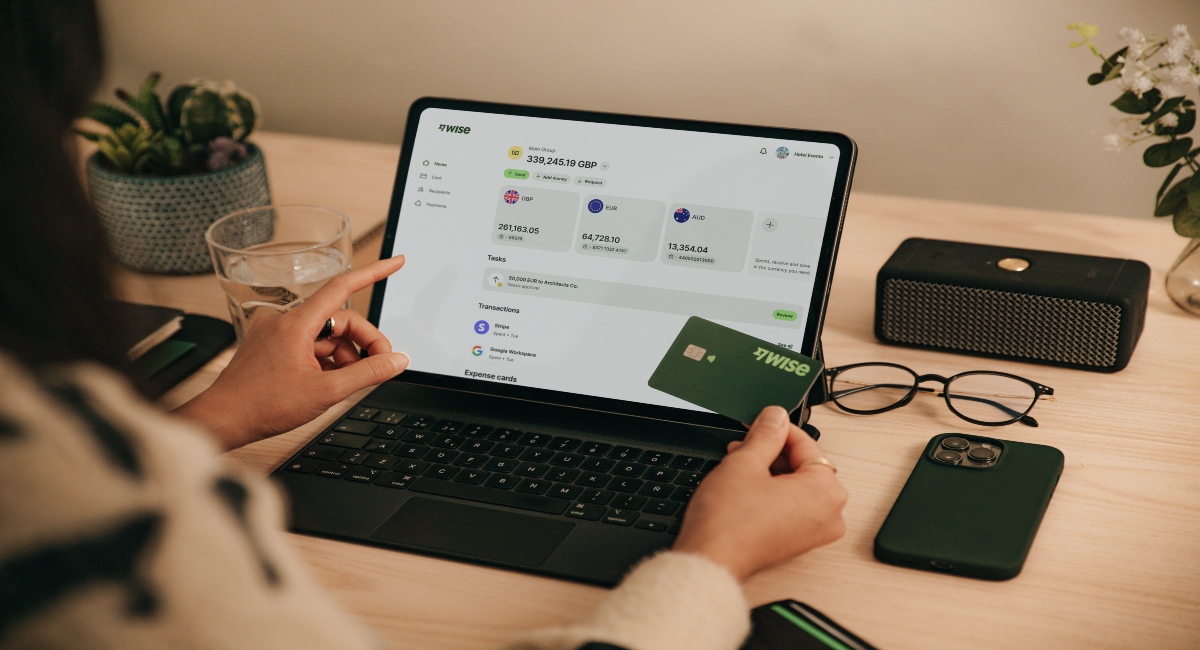
With Wise Business, you can:
Make the wise choice when selecting a business account for your domestic and global needs.
Be Smart, Get Wise.
Growth not guaranteed. Your balance will go down in the event of a government default or interest rates going negative. Taxes may apply. Investments are offered by Wise Assets UK Ltd. (FRN 839689).
Disclaimer: The UK Wise Business pricing structure is changed on 26/11/2025. Receiving money, direct debits and getting paid features are not available with the Essential Plan which you can open for free. Pay a one-time set up fee of £50 to unlock Advanced features including account details to receive payments in 22+ currencies or 8+ currencies for non-swift payments. You’ll also get access to our invoice generating tool, payment links, QR codes and the ability to set up direct debits all within one account. Please check our website for the latest pricing information.
It depends on the payment instrument and settlement model. Cards typically settle within one to three business days. ACH commonly settles next business day after batching, with Same Day ACH windows available for eligible payments¹.
Clearing is the process of transmitting, reconciling, and sometimes confirming transactions prior to settlement. It might include netting. Settlement is the point where the funds transfer (or discharge of an obligation) is completed under the system’s rules.
A settlement report is the document (or data file) that shows what actually settled and what fees were deducted. It supports reconciliation by linking transactions, settlement dates, net amounts, chargebacks, and adjustments. Without it, finance teams end up matching payments manually across multiple systems.
Settlement is the final completion of a transaction within the payment system, often between banks or payment networks. A payout is the provider’s transfer of available funds to your business bank account, which may be scheduled daily, weekly, or on demand, depending on the provider.
Sources used
Sources last checked: 14-May-2026
*Please see terms of use and product availability for your region or visit Wise fees and pricing for the most up to date pricing and fee information.
This publication is provided for general information purposes and does not constitute legal, tax or other professional advice from Wise Payments Limited or its subsidiaries and its affiliates, and it is not intended as a substitute for obtaining advice from a financial advisor or any other professional.
We make no representations, warranties or guarantees, whether expressed or implied, that the content in the publication is accurate, complete or up to date.

Learn how UK finance teams can automate FX accounting controls. Our guide covers rate rules, revaluation, reconciliation and payment records.

Learn how UK businesses can improve global cash visibility, forecasting, liquidity risk controls and cross-border payment execution in our guide.

Learn how multilateral netting offsets group obligations into net positions. Our guide covers the process, controls, risks and settlement steps.

Learn how a rolling reserve works. Our guide explains how they are calculated, how funds are released, the effects on cash flow, and more.

Learn how to automate your company's FX revaluation at month-end. Our guide explains all of the steps and answers key questions on FX revaluation.

Learn how Pay by Bank works for UK businesses, from payment initiation and customer approval to confirmation, refunds, risks and reconciliation controls safely.