


Wire Transfers vs Bank Transfers: A Quick Guide for UK Businesses
Learn the difference between wire transfers and bank transfers. Our guide compares speed, costs and payment routes for UK businesses sending money globally.


When it comes to managing a company’s money, few things matter as much as keeping track of what you owe your vendors.
With that in mind, we’ve put this guide together to break down the Accounts Payable Turnover ratio in detail.
We’ll walk you through ways to calculate it, what it means when the ratio is high or low, and why each scenario can impact your business in different ways.
And if you’re looking to streamline your working capital and handle international vendor payments with ease, we’ll explain why opening a Wise Business account could be the smart move.

| Topic | Notes |
|---|---|
| 📊 Definition & Purpose | A vital liquidity metric showing how efficiently a business pays short-term supplier debts, typically over a year. |
| 💰 Financial Health Insight | Provides immediate clarity on short-term liquidity (ability to pay bills) and cash-flow efficiency (use of supplier credit terms. |
| 🔄 Calculation | Calculated as Net Credit Purchases divided by Average Accounts Payable; the result shows how many times payables are cleared in the period. |
| 📈 High Ratio Implication | Indicates the company is paying suppliers quickly, which suggests strong liquidity, but may mean not fully capitalising on credit terms. |
| 📉 Low Ratio Implication | Indicates the company is taking longer to pay, which can signal strategic cash preservation or potential cash-flow issues. |
| 🤝 Supplier Relationships | A healthy, consistent ratio builds trust, leading to better terms and preventing supply chain disruptions from late payments. |
| 🗓️ Days Payable Outstanding (DPO) | An intuitive conversion where $DPO = 365 / AP \ Turnover \ Ratio$, showing the average number of days it takes to pay suppliers. |
| 🎯 "Good" Ratio Context | There is no single ideal ratio; it must be assessed against industry benchmarks, specific supplier terms, and the company’s internal cash flow strategy. |
| 💡 Optimisation Tool | Services like Wise Business can help streamline international payments to maintain a consistent ratio and optimise DPO strategically. |
Key Fact ⚠️: If the client is a small business in the private sector, then it is the responsibility of the contractor’s company to determine IR35 status.
The Accounts Payable (AP) Turnover ratio is a vital liquidity ratio in the accounts payable process. It measures how quickly a company pays its short-term debts to suppliers or creditors who have extended trade credit.
To put it simply, it tells you how often a company clears its outstanding vendor bills over a given time, usually a year.
Around 90% of UK companies faced delayed payments in the past year. 44% believe that delays are now more frequent than ever 1.
Stats like this underscore the importance of companies keeping tabs on vendors’ payment schedules. If not well cared for, this could have serious repercussions for the company’s finances!
This leads us to conclude that accounts payable turnover is a helpful metric you’ll find on a company’s balance sheet. It gives you a quick look at two things:
A thorough analysis of this ratio provides several key benefits for management, investors, and creditors. Now, let’s see what this number can help you understand:
Accounts Payable Turnover isn't just a formality for your finance team. It’s an in-depth check of how healthy your business really is.
It reflects how much leverage you have with suppliers, how much you spend on inventory, and how comfortably you can handle short-term bills. Overlooking it can put your profits and supply chain at risk.
For further clarification, consider the example of retail giant Tesco. Their purchasing cycles are massive 2.
Each day, they work with thousands of suppliers, restock daily, and manage the constant movement of goods.
Accurate AP Turnover can help them plan stock levels more accurately. If their ratio suddenly changes, it could signal shifts in buying patterns, seasonal demand, or changes in supplier terms.
This helps Tesco spot when they need to tweak their buying strategy, renegotiate terms, or get ready for cash-flow changes.
Calculating your Accounts Payable (AP) Turnover ratio is easier than it sounds. Once you know the two numbers you need, you can quickly figure out how fast your business pays its suppliers.
The most accurate way to calculate AP Turnover is by using Net Credit Purchases:
AP Turnover Ratio = Total Net Credit Purchases / Average Accounts Payable
Some companies use Cost of Goods Sold (COGS) instead. However, Net Credit Purchases provide a clearer picture of your cash flow efficiency across all suppliers, not just those tied to inventory.
So basically, you’ll need two things: Net Credit Purchases and Average Accounts Payable for your chosen period (monthly, quarterly, or yearly).
This is the total value of goods and services you bought on credit, minus any returns or adjustments.
Net Credit Purchases = Total Credit Purchases – Credit Purchase Returns
Pro tip: Only include purchases made on credit. Cash purchases don’t count. Most accounting or AP software can pull this number for you.
This is the average amount you owed suppliers during the period.
Look for the Accounts Payable figure under current liabilities on your balance sheet, then use:
Average AP = (Beginning AP Balance + Ending AP Balance) / 2
Your final AP Turnover number shows how many times you paid off your complete payables balance during the period. For example, an AP Turnover of 6 means you paid your suppliers roughly six times in a year. That works out to a payment cycle of about 60 days (365 ÷ 6).
A company's Accounts Payable (AP) Turnover ratio can reveal a lot about how it manages cash flow and supplier payments. But like most financial metrics, context matters.
A "high" or "low" ratio doesn't automatically mean something good or bad. You need to look at why the number is where it is.
The table below summarises the differences between high and low turnover ratios as well as what to expect.
| Ratio type | What it suggests | Possible positive reasons | Possible concerns |
|---|---|---|---|
| High AP Turnover | The company pays suppliers quickly | Strong cash position, efficient AP processes, strong vendor trust | Not using credit terms entirely, reduced cash flexibility |
| Low AP Turnover | The company takes longer to pay suppliers | Strategic cash preservation, favourable credit terms, and seasonal cash cycles | Potential cash-flow issues, inefficient payment systems, and supplier concerns |
A high AP Turnover ratio usually indicates that the company pays its suppliers promptly. This can point to:
Note that an extremely high ratio isn’t always a win. It may mean the company is paying too early and not fully taking advantage of available credit terms. They may be missing out on an easy way to conserve cash.
A low ratio typically suggests slower payments, which can raise questions about:
At this point, it’s essential to note that a very low AP Turnover Ratio could potentially raise concerns for investors and lenders. They may sense financial instability or inefficient cash management around the corner.
But again, context matters. A low ratio isn’t always negative. It may simply mean the company is:
At the end of the day, the business should be transparent about its current AP status. This provides clarity for investors and increases their confidence in the company.
👀 Find out more by reading our guide to accounts payable automation.
Days Payable Outstanding (DPO) tells you the average number of days a company takes to pay its suppliers. We can also call it the “calendar version” of the Accounts Payable Turnover ratio. Here’s what each represents:
The formula for converting Accounts Payable (AP) Turnover Ratio into Days Payment Outstanding (DPO) is as follows:
DPO = 365 / AP Turnover Ratio
A higher DPO indicates that a company is taking longer to pay suppliers. And a lower DPO means suppliers are paid sooner. Check out this example that might help you understand it better:
If a company’s AP Turnover ratio is 6.0, then:
DPO = 365 / 6 ≈ 60.8 days
That means the business pays suppliers roughly every 60 days.
The conversion of the AP Turnover ratio into DPO is a metric that helps make critical business decisions. A few reasons why it matters so much are:
The table below looks into the Days Payable of Tesco (TSCDY) and what it indicates3:
| Metric/Indicator | Recent Value (approx.) | What It Suggests/Context |
|---|---|---|
| Days Payable Outstanding (DPO) | ~ 58 days (as of mid-2025) | On average, Tesco takes about 58 days to pay suppliers. This is a moderate-to-typical timeframe in retail. |
| Historical DPO range (past 10 years) | Min ≈ 47.8 days, Median ≈ 57.9 days, Max ≈ 61 days | Shows relative stability: Tesco hasn’t swung between extremely short or extremely long payment cycles. It indicates consistent payment discipline. |
| Industry comparison (Retail-Defensive sector) | Tesco’s DPO (≈ 60.3 days) ranks better (longer) than around 73% of 306 companies in the Retail - Defensive industry. | Implies Tesco is likely to use its supplier credit terms more fully than many peers. They can conserve cash rather than rushing to pay. |
Tesco’s stable ~58-day DPO shows that a somewhat lower turnover (i.e., slower payables) can be a controlled, strategic decision. It is not necessarily a red flag.
That said, because of reporting limitations, you have to be careful not to treat DPO as an exact substitute for AP Turnover Ratio. The numbers tell a story. But only after you interpret them in context.
As a rough benchmark, an Accounts Payable Turnover ratio of around 12 suggests payments are made in about 30 days.
But this can vary widely across sectors, so there really isn’t a single definition of a "good" AP Turnover Ratio.
Every business operates under different supplier terms, cash positions, and industry norms, so context is key.
For example, companies with generous credit terms may naturally show a lower ratio because they take longer to pay. In comparison, cash-rich businesses might pay vendors quickly and end up with a higher ratio.
Industry standards and company size also influence what’s considered healthy. At its core, the ratio must align with your strategy and trends over time.
Tracking it consistently helps you spot shifts in payment behaviour and cash flow pressures. Your finance team can spot opportunities to make payables much easier and efficient.
👀 Find out more by reading our guide to 5 Ways UK Businesses Can Transform Accounts Payable Processes.
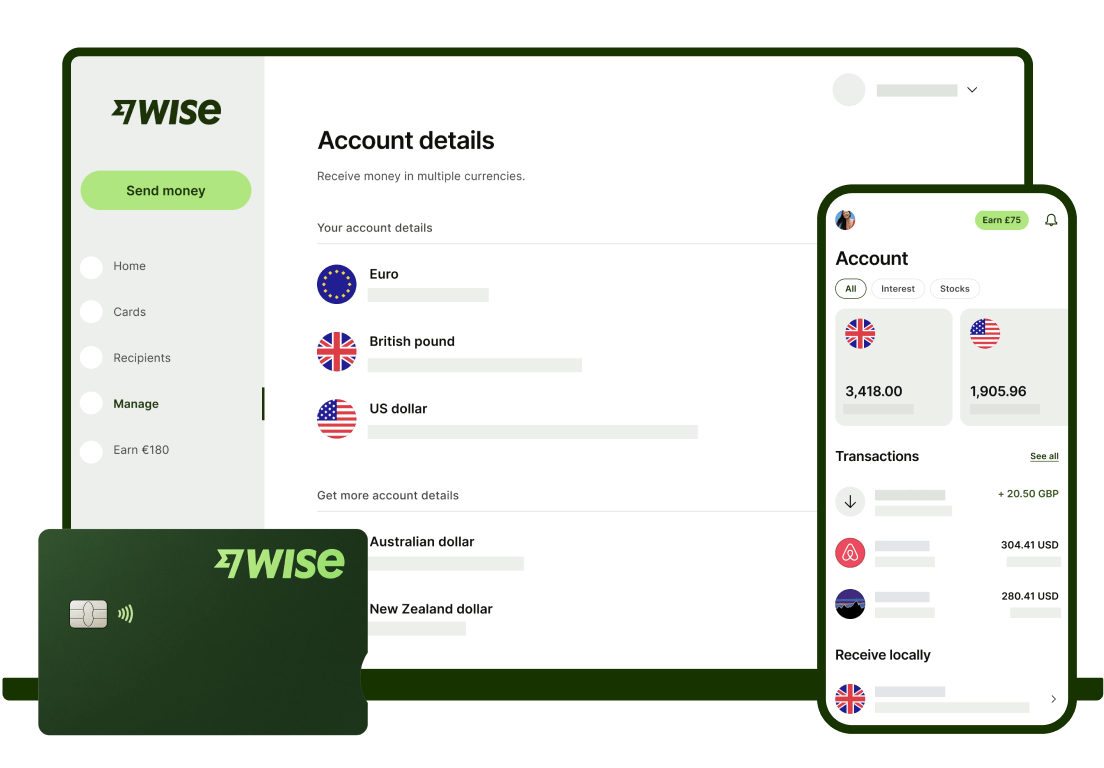
Still think accounts payable means spending days shuffling invoices and losing money on hidden exchange rate fees for international vendor transactions? Wise Business is here to help you do better.
With a Wise Business advanced plan*, you can send money internationally with Wise to 140+ countries and access account details in 8+ currencies.
For seamless, reliable international transfers, you can pay suppliers, team members, and invoices with batch payments in multiple currencies, which helps to maintain a consistent AP Turnover ratio and optimise Days Payable Outstanding (DPO).
What’s more, Wise Business integrates with accounting software like Xero and Quickbooks, giving you the option to automate routine tasks and save valuable hours on manual processing of expenses and payments reconciliation.
You can even manage your team's access and set limits as your business grows.
Be Smart, Get Wise.
*Disclaimer: The UK Wise Business pricing structure is changing with effect from 26/11/2025 date. Receiving money, direct debits and getting paid features are not available with the Essential Plan which you can open for free. Pay a one-time set up fee of £50 to unlock Advanced features including account details to receive payments in 22+ currencies or 8+ currencies for non-swift payments. You’ll also get access to our invoice generating tool, payment links, QR codes and the ability to set up direct debits all within one account. Please check our website for the latest pricing information.
Accounts Payable (AP) ratios show how efficiently a company pays its suppliers, while Accounts Receivable (AR) ratios measure how quickly a company collects payments from customers.
So basically, AP focuses on money going out, and AR focuses on money coming in. Both are integral for managing cash flow effectively.
While the AP Turnover ratio is a valuable indicator of payment efficiency, it doesn’t tell the whole story. It can be affected by seasonal spending, industry norms, or one-off large payments.
A very high or low ratio doesn’t always mean good or bad performance. Context, supplier terms, and cash flow strategy should all be considered.
You can improve your AP Turnover by paying suppliers on time while taking full advantage of credit terms.
Tools like Wise Business can streamline payments, particularly if you deal with international vendors. With an Advanced plan, you can use features like batch payments or automated scheduling to save time and keep your cash flow predictable.
*Disclaimer: The UK Wise Business pricing structure is changing with effect from 26/11/2025 date. Receiving money, direct debits and getting paid features are not available with the Essential Plan which you can open for free. Pay a one-time set up fee of £50 to unlock Advanced features including account details to receive payments in 22+ currencies or 8+ currencies for non-swift payments. You’ll also get access to our invoice generating tool, payment links, QR codes and the ability to set up direct debits all within one account. Please check our website for the latest pricing information.
Sources:
Sources last checked on 12th December 2025
*Please see terms of use and product availability for your region or visit Wise fees and pricing for the most up to date pricing and fee information.
This publication is provided for general information purposes and does not constitute legal, tax or other professional advice from Wise Payments Limited or its subsidiaries and its affiliates, and it is not intended as a substitute for obtaining advice from a financial advisor or any other professional.
We make no representations, warranties or guarantees, whether expressed or implied, that the content in the publication is accurate, complete or up to date.

Learn the difference between wire transfers and bank transfers. Our guide compares speed, costs and payment routes for UK businesses sending money globally.

Learn all about the top international credit cards for UK businesses. Our guide covers features, fees, rewards, and more.

Learn all about Convera (formerly known as Western Union Business Solutions). Our guide covers fees, features and more.

Explore alternatives to Revolut GlobalHire and learn how different solutions compare for managing global payroll and payments.

Understand how Revolut GlobalHire pricing works, the fees involved, and what businesses should expect when managing global payroll across multiple countries.

Learn how to structure payroll payments for remote teams, manage global payroll challenges, and improve payment efficiency across borders.