A list of the top banks in Denmark
A list of the top banks in Denmark, including Danske Bank, Nykredit, Nordea Denmark, Jyske Bank and many more.



Denmark is an attractive destination for British expats thanks to its strong economy, excellent public services and widespread use of English.
From Copenhagen’s cultural scene to the quieter cities such as Odense and Aalborg, Denmark offers a range of options for people looking to build a new life abroad.
In this guide, we’ll explain what you need to know about moving to Denmark from the UK. We’ll cover visa and residence requirements, healthcare, housing and your options if you're thinking about retiring in Denmark.
And we’ll also introduce Wise as the smart solution for sending large sums internationally – with over 18.9 million people worldwide moving £52 billion each quarter.
With Wise you get low, transparent fees, mid-market exchange rates, and secure, trackable transfers, with dedicated support and volume discounts when sending large amounts. On a £50,000 transfer, you could save up to £1,000 with Wise vs your bank.
Get expert support for your large transfer 📞
| Please see the terms of use and product availability for your region or visit Wise fees and pricing for the most up to date pricing and fee information. |
|---|
Yes, you can move to Denmark from the UK, but the rules are different from those that applied before Brexit.
British citizens can travel to Denmark without a visa for up to 90 days in any 180-day period for purposes such as tourism, visiting family and friends, business meetings and short-term study. Denmark is part of the Schengen Area, so time spent in other Schengen countries also counts towards this 90-day limit.1
If you want to live, work or study in Denmark for longer than 90 days, you’ll generally need a Danish residence permit. British citizens are normally treated as third-country nationals and must meet the relevant Danish immigration requirements.2
The requirements depend on why you want to move to Denmark. Common routes include employment, study, family reunification and certain self-employment or business routes.
Most British citizens moving to Denmark after Brexit will need to apply for a residence permit through the Danish Agency for International Recruitment and Integration (SIRI) or the Danish Immigration Service.2
You’ll generally need:
Once you arrive, you’ll also need to obtain a CPR number from a Citizen Service centre or an International Citizen Service centre. Your CPR number is important for everyday life in Denmark.
You’ll need it for things such as employment, banking, healthcare and accessing many public services.4
British citizens can visit Denmark for up to 90 days in any 180-day period without a visa. If you want to live in Denmark for longer, you’ll generally need a residence permit that allows you to stay for the relevant period.2
Permanent residence in Denmark generally requires eight years of legal residence, although this can be reduced to four years if additional conditions are met.5

Let's take a look at the main steps involved in moving to Denmark from the UK.
Common options for British citizens include accepting a job with a Danish employer, studying at a Danish university or joining a qualifying family member in Denmark. For employment, some of the main routes include the Positive Lists for professions experiencing shortages and the Pay Limit schemes.6
Make sure you identify the correct route before making firm plans, as the eligibility criteria can vary considerably.
The documents you’ll need depend on your application. People moving for work will generally need an employment contract or job offer, while students need evidence of admission to an approved Danish educational programme.
You may also need financial documentation, proof of accommodation and copies of your passport. Foreign documents may need to be translated or certified depending on the application.
Apply through the appropriate Danish authority and make sure you complete the required steps, including paying any application fee and providing biometric information.
For many work applications, such as the Fast-track scheme, your employer may need to complete part of the application.7
The practical side of your move will usually include finding accommodation, hiring a moving company and booking a flight. You might also want to decide which belongings are worth shipping at this point.
Moving from the UK to Denmark means bringing personal belongings from a non-EU country. Depending on the items you're importing, customs declarations may be required.
Your moving company can usually help with customs paperwork, but you should still check the Danish Customs Agency’s requirements before your possessions are shipped.
Once you’ve moved into your Danish address and have the relevant residence documentation, you’ll need to register with the International Citizen Service centre to obtain your CPR number.4
Your CPR number is one of the most important pieces of administration to complete after arriving because it’s used for employment, banking, healthcare and other services.4
After receiving your CPR number, you can start arranging everyday essentials such as a Danish bank account, health insurance card and MitID. The Danish national health insurance card, commonly known as the yellow card or sundhedskort, is linked to your CPR number and gives you access to the national healthcare system.4
Your pet will generally need an approved microchip, a valid rabies vaccination and an animal health certificate. The animal health certificate must be issued by an official vet.8
British citizens moving to Denmark after Brexit generally need a residence permit if they want to stay for more than 90 days.2
The type of permit depends on your circumstances. Main routes include:
The application process depends on your immigration route. For example, someone moving to Denmark for work will normally need to submit an application based on their Danish employment, while a student will need to provide evidence of admission to an approved educational institution.
Residence permit applications are submitted to the Danish Agency for International Recruitment and Integration (SIRI). They may involve:
You can apply to extend your Danish residence permit three months before it expires. The timing and requirements depend on your immigration route.9
For work permits, you’ll generally need to show that you continue to meet the conditions of your employment-based scheme. If you change jobs, you may need to submit a new application depending on the type of permit you hold.9
Before moving to Denmark from the UK, make sure you’ve budgeted for the following expenses:
UK citizens can retire in Denmark if they meet certain requirements, but Denmark doesn’t offer a general retirement visa. Instead, retirees generally need to qualify under another residence route, such as family reunification or another immigration category for which they meet the requirements.
Special rules exist for certain people who previously worked for international organisations in Denmark, but this isn’t a general retirement route.10
Here are some useful facts about Denmark before you make the move:
| 💰 Currency: | Danish krone (DKK) |
|---|---|
| 🗣️ Main language: | Danish |
| 👥 Population: | 6,030,77311 |
| 🇬🇧 Number of British expats: | 18,52912 |

Some of the most popular locations for expats include Copenhagen, Aarhus and Aalborg.
Copenhagen is Denmark’s capital and the country's largest international hub. Aarhus is Denmark’s second-largest city, with a large student and international community, while Aalborg in northern Denmark is another popular university and business centre.
Denmark is generally considered an expensive country to live in, although the exact cost of living in Denmark depends heavily on where you live and your lifestyle.
Groceries and restaurant prices are generally 15 to 20% higher than in the UK, but other everyday costs can be lower. Rent is around 15% cheaper on average, while utilities cost about 30% less and monthly public transport passes are around 10% cheaper.13
If you’re planning to buy property, prices are around 16% higher on average, although this varies significantly depending on the location.13

The exact requirements vary between banks, you’ll usually need identification and documentation showing your connection to Denmark to open a bank account.
You may be asked for:
Major Danish banks include:
📚 Opening a Danish bank account
Whether you can keep your UK bank account after moving abroad depends on your bank’s rules. For example, Barclays will close both your current and savings accounts once you move overseas.15

You can rent and buy Danish property as a UK citizen if you have the legal right to live in Denmark, although different rules apply depending on whether you’re renting or purchasing.
British citizens generally need permission from the Danish Department of Civil Affairs to buy property unless they have domicile in Denmark or have lived there for at least five years.16
Renting is generally the simpler option when you first arrive. Landlords can normally request up to three months’ rent as a deposit. It’s important to check the rental agreement carefully and avoid paying a deposit before you've received a signed contract.17
Denmark has a tax-funded public healthcare system. Once you’re registered as a resident and covered by the Danish national health insurance system, you receive a health insurance card (sundhedskort) that allows you to access public healthcare.18
Most GP and hospital services are provided through the public system. However, patients may still have to pay for certain services, including some dental treatment, medicines and other treatments depending on their circumstances.18
UK expats can access public healthcare in Denmark on the same terms as Danish citizens. Once you get a health insurance card, you can access free GP appointments, hospital treatment and most specialist care within the public healthcare system.18
Private health insurance, known as sundhedsforsikring, isn’t mandatory, but some expats choose to take out additional cover. This can provide faster access to private treatment and greater choice.18
English is widely spoken in Denmark, including among many healthcare professionals, especially in larger cities and areas with international communities. However, learning some Danish can still be useful, especially if you move to a smaller town.
If you take prescription medication with you from the UK, keep medicines in their original packaging and carry a copy of your prescription. It’s a good idea to also have a letter from your doctor.
You can work in Denmark as a British citizen if you have a Danish residence and work permit.
The best route depends on your occupation, salary and qualifications. Skilled workers may be eligible for one of Denmark's Positive Lists, while higher-paid roles can potentially qualify under the Pay Limit schemes.6
Denmark also has a Fast-track scheme for certain certified employers, which can provide a quicker route for eligible international employees.6
The average salary in Denmark is 51,675 DKK per month before tax, including pension contributions.19
Denmark offers a wide range of higher education programmes taught in English, making it accessible to international students. Around 10% of all students are international.20
For visa applications, you’ll generally need to show proof of funds of around 6,000 DKK per month. Health insurance is also mandatory and typically costs between 1,000 DKK and 1,500 DKK per year.20
On average, the tuition for international students is between 45,000 and 120,000 DKK.21
Before moving abroad to start your new Danish life, you'll have various expenses to manage, including real estate fees, visa applications, and rental deposits, some of which may require international payments.
Open a Wise account and you can send money between the UK and Denmark for low, transparent fees* and the mid-market exchange rate. It’s not a bank account but offers many similar features.
You can also use Wise once you arrive in your new home. You can spend in Danish krone from the moment you step off the plane using your Wise card. It works in 150+ countries and automatically converts your pounds to the local currency, only adding a tiny, upfront currency conversion fee*.
Remember, if you’re moving to Denmark, Wise can help with sending or receiving large amounts, our dedicated team of experts are ready to help with every step of your transfer. Simply email us or request a call back below.
Get expert support for your large transfer 📞
To summarise, here are the key points to keep in mind when moving to Denmark from the UK:
Sources used:
1. GOV.UK - Entry requirements
2. Ministry of Foreign Affairs - How to apply for a residence permit
3. New to Denmark - Higher educational programmes
4. Life in Denmark - When you arrive
5. New to Denmark - Permanent residence
6. New to Denmark - Work permit
7. New to Denmark - Fast-track scheme
8. Your Europe - Travelling with pets
9. New to Denmark - The Pay Limit scheme - extension
10. New to Denmark - Retired employee of an international organisation
11. Worldometers - Danish population
12. Statistics Denmark - Number of UK expats
13. Numbeo - Cost of living in Denmark compared to the UK
14. Internations - Opening a bank account and managing taxes in Denmark
15. Barclays - Living outside the UK
16. Life in Denmark - Purchasing real estate
17. Life in Denmark - Renting a home
18. Expat Focus - Healthcare in Denmark
19. Statistics Denmark - Average salary in Denmark
20. Educations.com - Study in Denmark
21. Educations.com - Study costs in Denmark
Sources last checked on date: 14-Aug-2026
*Please see terms of use and product availability for your region or visit Wise fees and pricing for the most up to date pricing and fee information.
This publication is provided for general information purposes and does not constitute legal, tax or other professional advice from Wise Payments Limited or its subsidiaries and its affiliates, and it is not intended as a substitute for obtaining advice from a financial advisor or any other professional.
We make no representations, warranties or guarantees, whether expressed or implied, that the content in the publication is accurate, complete or up to date.
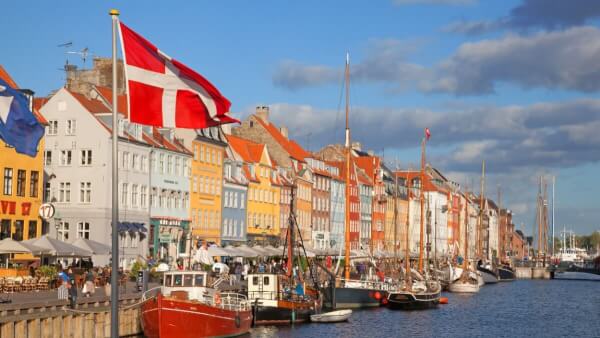
A list of the top banks in Denmark, including Danske Bank, Nykredit, Nordea Denmark, Jyske Bank and many more.

Thinking of buying a summer house in Denmark as a UK citizen? Learn about the 5-year rule, property taxes, costs, and how to purchase step by step.
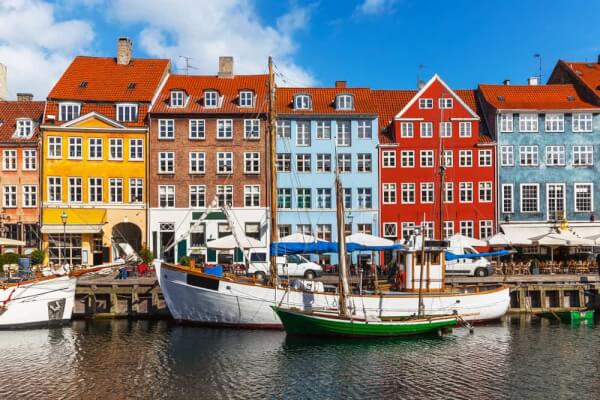
Cost of living in Denmark varies from region to region. This guide outlines what you can expect in terms of living costs.
UK buyer’s guide to buying property in Denmark: Read on about real estate prices, taxes/fees, mortgages, and where to start your search.
Copenhagen is a world class city, with fantastic culture and a vibrant cosmopolitan outlook. The Danes are famed for having the best work life balance on the...

Between insanely beautiful nature and architecture, one of the highest happiness indexes in the world, incredible workers’ benefits and the unique (and cozy!)...