A list of the top banks in Denmark
A list of the top banks in Denmark, including Danske Bank, Nykredit, Nordea Denmark, Jyske Bank and many more.


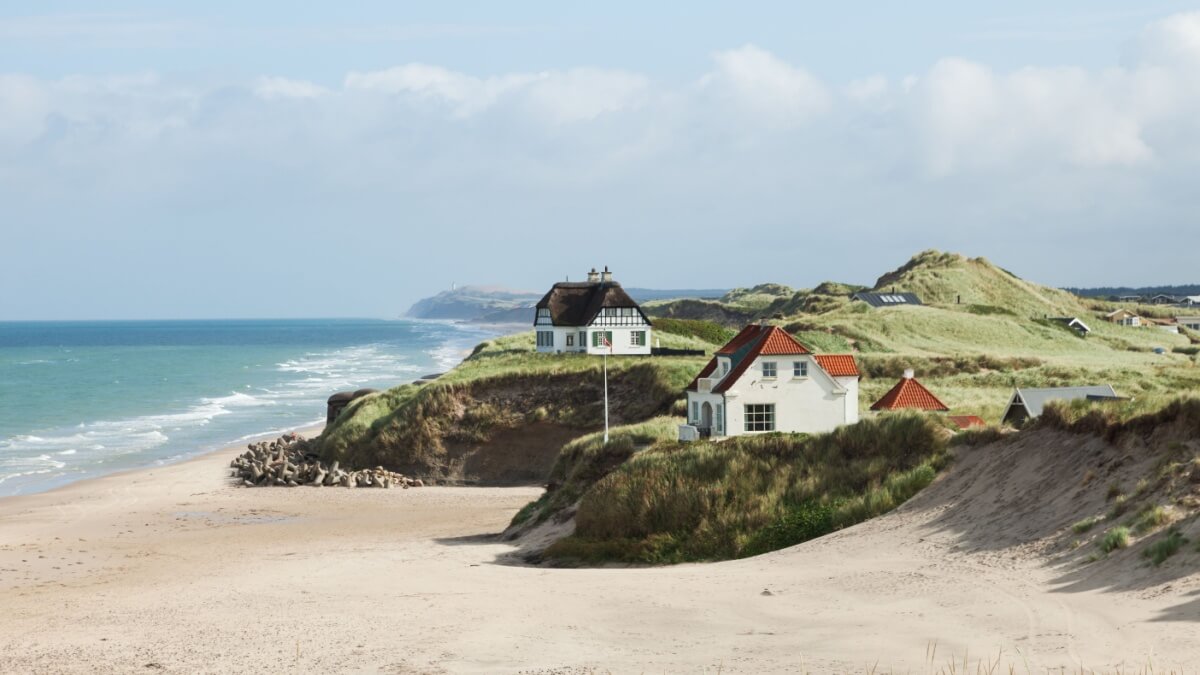
Are you a Brit looking to buy a summer house in Denmark? You wouldn’t be the first person charmed by this serene country full of history, culture, and friendly people. Not to mention the beautiful nature.
Danish people love their summerhouses or sommerhus.Many of them can be used all year round, but since they were originally built to be used in the summer months, they still carry the summerhouse title.
These lovely wooden houses are often located near the seaside, as Denmark has plenty of coastline. Depending on your circumstances it might be possible for you to buy your own summer house in Denmark. Let’s take a closer look.
If you’re looking for ways to save money on currency exchange when buying property in Denmark, check out the money services provider Wise. You can send large transfers with Wise for low fees and great exchange rates - making it ideal if you’re sending a secure international transfer.
The Danish Act on the Acquisition of Real Estate says that in order for someone to buy a summer house in Denmark, they must either be a resident or have lived in Denmark for a total of five years. This can also be non-consecutive, meaning that the time lived in Denmark can be divided into separate periods.
Non-residents have to also be either an EU national working in Denmark or a non-EU national with a valid residence or business permit.
An exception can be made for foreigners who can prove particularly strong ties to Denmark. You can apply for special permission from the Danish Ministry of Justice and your application will be judged based on the following criteria:
Another thing to note is that you can only apply to buy a specific property instead of any summer house that is for sale on the market.¹
In reality, this special permission isn’t granted very often. If you think you qualify, reach out to a lawyer and they will help you with the application process.
One other route that can be available to you is to purchase the summer home through a company. For this, you’d need to have an ApS (Anpartsselskab), the Danish version of a private limited company.²
If you’re not able to buy a summer house in Denmark, you can still rent one and enjoy a low-commitment sommerhus experience!
No, purchasing property in Denmark does not give you residency. In most cases, you need to have residency before you are able to buy any kind of property in Denmark.
As we’ve already discovered, buying a summer house in Denmark isn’t always exactly easy, depending on your circumstances.
Once you’ve found out you’re eligible to purchase a property, you need to find the right property, make sure you have financing and then complete the purchase.
Here’s your step-by-step guide to buying a summer house in Denmark.
Most of the action in the Danish real estate market happens online. You can browse portals like boligsiden.dk , edc.dk, and https://www.nybolig.dk/ to see available properties. These sites are only available in Danish, but you can easily browse them in English by using the Google Chrome browser’s translation function.
You can also contact a real estate agency or broker directly and they’ll help you find the perfect property. Other ways are to look for ads on social media, to keep an eye on auctions, or to even look for ads in newspapers.
Where will the money for your summer house be coming from? If you need to get a mortgage or bank loan, now is the perfect time to get it pre-approved.
In Denmark, individuals need to make a minimum down payment of 5% of the purchase price to buy a property.³ But… foreigners will usually need to make a higher down payment. This is because a foreigner is seen as a riskier customer, that might leave the country when things turn sour, leaving the bank in trouble.
Go for an in-person viewing to get a good sense of the summer house. Make sure to take as much time as you need and view several different properties. This can help you weigh the pros and cons and you’ll get a good overview of what’s on the market.
Before going through with the purchase, you will have a chance to inspect the property thoroughly. Besides checking the actual summer house and surrounding areas you will also want to check the Land Register.
After you’ve decided to buy the summer home you have chosen, it’s time to put down all the details in a contract. Once all parties have signed the contract, it becomes binding.
When the money is transferred to the seller’s account, the real estate ownership must be transferred to the new owner. The property is registered with the local Land Register, which will use a new property title.
International transfers could get expensive, especially if the provider adds a margin to the exchange rate to convert your pounds. Consider checking out Wise to handle your large transfers with mid-market exchange rates and low, transparent fees.
It’s great to have the safety net of insurance when you need it. Consider getting insurance for your holiday home so you can enjoy it worry-free.
Once you get your keys and step inside, you can start enjoying your very own Danish summer house.
In general, real estate in Denmark is on the pricier side. If your budget is very low, a good option would be to get a timeshare. Timeshares are properties that are owned by several people. Each person has exclusive access to the property for a certain amount of time – for example, 5 weeks per year. Usually, these will be condominium-type buildings. On boligsiden.dk there are many timeshares available starting from just a few hundred pounds.
The cheapest summer house we found on the same portal was selling for 14,396 pounds. More common pricing seemed to start around 25,000–35,000 pounds. The more exclusive holiday houses cost over a million pounds.
According to Statista, in 2021 the average selling price for holiday homes in Denmark was 2,575 pounds per square meter (about 10.8 square feet).⁴
Buying property in Denmarkis not cheap. Danes have some of the highest property taxes in Europe. Let’s take a closer look.
| Tax | Amount ⁵ ⁶ |
|---|---|
| Property Value Tax | Properties with a value up to DKK 3,040,000 (about 350,092 pounds) – 0.92% of the amount. More than DKK 3,040,000 – 0.92% of the amount and 3% of the amount exceeding DKK 3,040,000. |
| Municipal Real Estate Tax | Depending on the location, between 1.6% and 3.4% of the property value |
As we already mentioned earlier, one of the best ways to find your summer house is through online portals. Then again, finding one through a real estate agency or broker is also a good idea.
Going through an agency can often give you more peace of mind, as you’ll have a dedicated person handling your requests and freeing up your time.
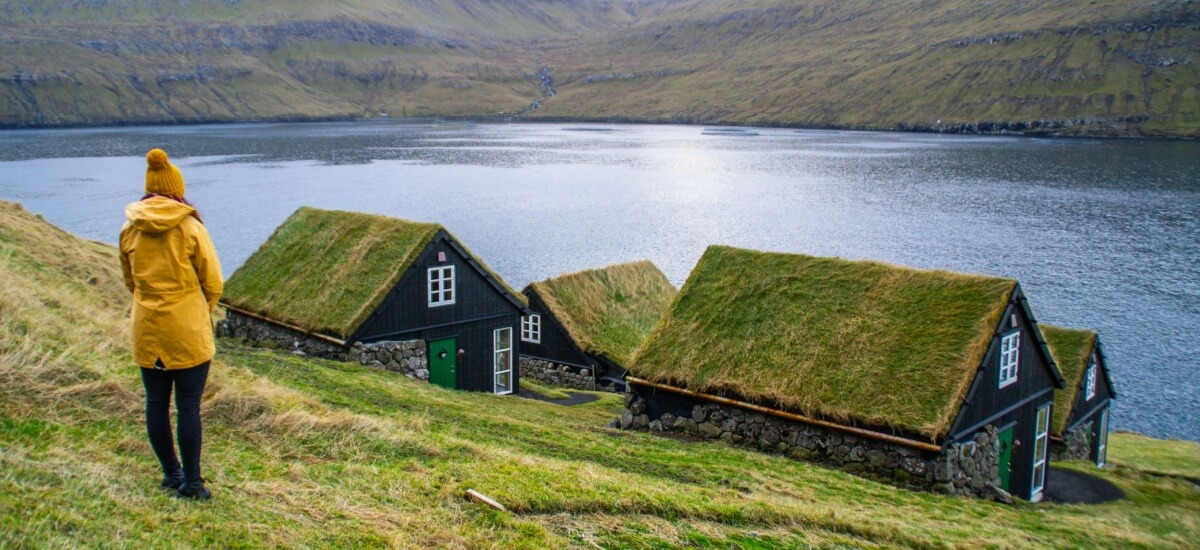
There’s no right or wrong here, of course. The most important thing is that you choose the right home – for you. A dream summer home will look very different, depending on who’s dream it is.
Here are a few things to think about when you’re choosing your holiday home.
One of the most important things to consider is the budget. While it may get in the way of romantic fantasies of idyllic living, managing your budget well will set you up for long-term success. You don’t want to find yourself in a situation where your dream vacation home has become a financial burden.
Besides looking at the purchase cost, also consider the upkeep costs. Make sure you are aware of all associated costs. If it’s an older house, consider if any big renovations will need to be undertaken in the upcoming years.
Older houses may need more love and care – and sometimes money. When you’re planning to buy a summer house you can work yourself, make sure you have a good estimate of how much work is needed and what your expenses are.
You don’t want to spend your free time fixing up the house only to realise you could have had a newer house for the same amount of money you’ve now spent on renovating.
What should the surroundings of your summer house look like? Do you prefer beautiful nature with no people around? Do you want to see the seashore or green forests? What kind of activities do you want to engage in when you’re staying at your holiday home?
Whatever your preferences may be, take time to dream up your perfect summer house experience and aim to get as close to that as possible.
When it comes to specific areas, a few are worth noting. Popular holiday home areas you can look into include the West Coast, North Jutland, Bornholm, Fyn, and The Danish Riviera.
Also note how easy – or not easy – it is to get to the summer house. It’s always smart to bet on a house that is easily accessible by roads and transportation.
Properties like this usually have higher value, which they keep over time.
And don’t forget about your own convenience. Being able to get to your summer house easily makes for more comfortable, stress-free living.
Even if you are heading to your summer house to switch off, it can sometimes be important to have fast internet access. Whether that’s because you’ll be working remotely or streaming films in 4K, make sure the house is equipped (or can easily be equipped) with a good internet connection if you need one.
And that’s it – now you know all the important details of buying a summer house in Denmark as a foreigner. It’s certainly become harder to buy property for British citizens after the UK left the European Union. But hopefully, with a little effort, you’ll find your little corner of bliss to enjoy.
And, if you want to save money while buying your new summer house in Denmark, use Wise to send your international transfer.
Sources used:
Sources last checked on date: 25-Apr-2024
*Please see terms of use and product availability for your region or visit Wise fees and pricing for the most up to date pricing and fee information.
This publication is provided for general information purposes and does not constitute legal, tax or other professional advice from Wise Payments Limited or its subsidiaries and its affiliates, and it is not intended as a substitute for obtaining advice from a financial advisor or any other professional.
We make no representations, warranties or guarantees, whether expressed or implied, that the content in the publication is accurate, complete or up to date.
A list of the top banks in Denmark, including Danske Bank, Nykredit, Nordea Denmark, Jyske Bank and many more.
Cost of living in Denmark varies from region to region. This guide outlines what you can expect in terms of living costs.
Your essential guide on how to buy property in Denmark as a foreigner. Learn about house prices, legal requirements, mortgages and more.

People dream of moving to Denmark for its egalitarian society, progressive ideals and focus on design and aesthetics. In Denmark, you’ll find bakeries,...
Copenhagen is a world class city, with fantastic culture and a vibrant cosmopolitan outlook. The Danes are famed for having the best work life balance on the...

Between insanely beautiful nature and architecture, one of the highest happiness indexes in the world, incredible workers’ benefits and the unique (and cozy!)...