How much to charge as a freelance makeup artist
Discover what to charge as a freelance makeup artist in 2025. Our guide covers setting your rates for bridal, events, and photoshoots to boost your profit.



Winning clients as an independent recruiter in the UK is about choosing a clear niche, showing up where your buyers already look for help, and staying helpfully persistent.
In this guide, we’ve laid out a practical plan for how to get clients as a freelance recruiter, from defining your ideal customer to following up after the initial reach out without being a nuisance.
And if you work with clients across borders (or plan to), we’ve also explained why Wise Business is the perfect account, thanks to features like the ability to invoice clients for free and exchange your earnings between 40+ currencies at the mid-market exchange rate with no hidden fees.

Before you worry about where to find clients, decide which clients you actually want. The fancy term for this is ‘Ideal Customer Profile’ (ICP), which is essentially your dream client.
Establishing an ICP makes your outreach specific and your pitch credible.
In fact, the UK's Recruitment & Employment Confederation (REC) advises businesses to define a focused plan by sector, skill, or geography so prospects instantly see your value1. There’s no reason why your approach as a freelancer should be any different.
Your ICP should be a simple, 1-page description of the companies you're built to help.
Write who you help, the roles you fill, the context in which you're most valuable, the pain you remove (speed, scarce talent, process), and two or three concise results you can point to.
Independent UK guidance consistently pushes founders to research their market deeply and identify a niche so they can speak a client's language from day one.
In other words, spend time understanding the skills shortages, decision-makers, and buying triggers in a narrowly defined segment rather than "recruiting for everyone".
If you're torn between two niches, pick one and commit to it for 90 days. Remember that depth creates trust, and you can always broaden later.
A good pitch feels like a plan, not a promise. If you're not sure how to pitch your services without sounding generic, have one clear outcome and one useful next step.
Open by naming the buyer's job-to-be-done ("You've got to staff two founding engineers before your next milestone"), then explain the steps you'll take (intake, calibration, talent mapping, shortlist deadlines, feedback rhythms) and the risk you can remove (speed to shortlist, retention track record, replacement terms).
Close with a low-friction first step. Think of something that helps the buyer even if they don't hire you yet, such as a 48-hour talent snapshot with anonymised profiles and salary bands.
Keep it short and specific, especially in email. Industry research on sales outreach shows the best results come from short, relevant messages and fast follow-ups2 (more on follow-ups later).

Your buyers won't hire what they can't find. Prioritise platforms where UK hiring managers and founders already search for recruitment help.
Some of the most important platforms to look into include:
LinkedIn: Create a LinkedIn Service Page on your personal profile so prospects can discover your offerings and request proposals directly via LinkedIn. This is built into LinkedIn and helps you show up in services searches3.
Freelance marketplaces (for pipeline and proof): Use Upwork or PeoplePerHour strategically for early traction, reviews, and social proof. Both have active categories for HR, recruiting, and sourcing, which is handy for a few fast wins and publicly visible testimonials, even if your long-term plan is direct client work.
Niche communities: For example, sector-specific Slack groups, founder communities, and meetups (e.g., product, data, construction). Use them to answer questions and post occasional "how I fill X roles" breakdowns, focusing on value first, pitch later.
Industry bodies & content: Skim UK bodies like the REC (and APSCo if relevant) to stay current on hiring trends, compliance, and client expectations1. You'll get practical angles for your posts and outreach that go beyond "we recruit great people."
Remember that visibility doesn't mean broadcasting constantly. It means being discoverable and credible, which requires a clear service page, a few proof points, and occasional posts that show how you solve hiring problems in your niche.
Random outreach creates random results. Build a small weekly system you can run on repeat.
Start with a list of 20–40 companies that match your ICP, then identify one or two decision-makers in each.
Note the specific trigger for your message (funding round, new office, spike in open roles). That opening line is what makes you relevant.
Choose two channels to start (email and LinkedIn), and add a phone only when it fits your style.
For UK B2B, refer to the UK Information Commissioner's Office (ICO) guidance on marketing emails to corporate subscribers (e.g., most company addresses).
Generally, PECR allows marketing emails to corporate subscribers, but you must identify yourself, offer a simple opt-out, and handle any personal data in a lawful manner under the UK GDPR4. Keep good records and always honour opt-outs.
For cadence, plan a short, polite sequence over roughly 10 business days. Think: initial email, LinkedIn connect with a short non-sales note, a second email with a different angle (timeline or salary data), and a brief nudge a week later. The aim is to keep things useful and low-pressure.
A simple, useful cadence might look like this:
| Day | Channel | Action |
|---|---|---|
| Day 1 | Initial outreach, referencing their specific trigger (e.g. funding, new roles) | |
| Day 2 | Send a connection request with a short, non-sales note | |
| Day 4 | First follow-up offering a different angle or a piece of value (e.g., salary data). | |
| Day 7 | Second follow-up (a brief, low-pressure nudge) | |
| Day 10 | A final, brief check-in message or value-add post |
Most replies don't come from the first message. Industry analyses find that follow-ups lift response rates, especially when you nudge within a day or two and use more than one channel2.
Use short, conversational nudges that offer something new - whether that be an updated hiring timeline, salary insight, or a tiny sample of the market.
Here are a few research-backed pointers you can borrow for recruiting outreach:
How many messages are reasonable? You don't need a 15-touch sales cadence to win recruitment work.
A practical rule of thumb is three thoughtful follow-ups across 7–10 business days, then park for a month and add value in the meantime.
The key is fast, respectful persistence, not inbox carpet-bombing. That keeps your brand positive while staying present.

International hiring work often means cross-border invoices. If you work with international clients (or plan to), the admin shouldn't slow your deals. Wise Business solves this issue.
With a Wise Business account, UK businesses can issue invoices in a client's currency, receive funds using local account details in multiple currencies, and convert money at the mid-market rate (the one you see on Google) with no hidden fees.
You also get a multi-currency account and card that can hold over 40+ currencies. There's no monthly subscription, payments are fast, and pricing is transparent, which is ideal when you're juggling retainers, success fees, or project invoices.
Be Smart, Get Wise.
Note: Transaction speed claims depends on individual circumstances and may not be available for all transactions.
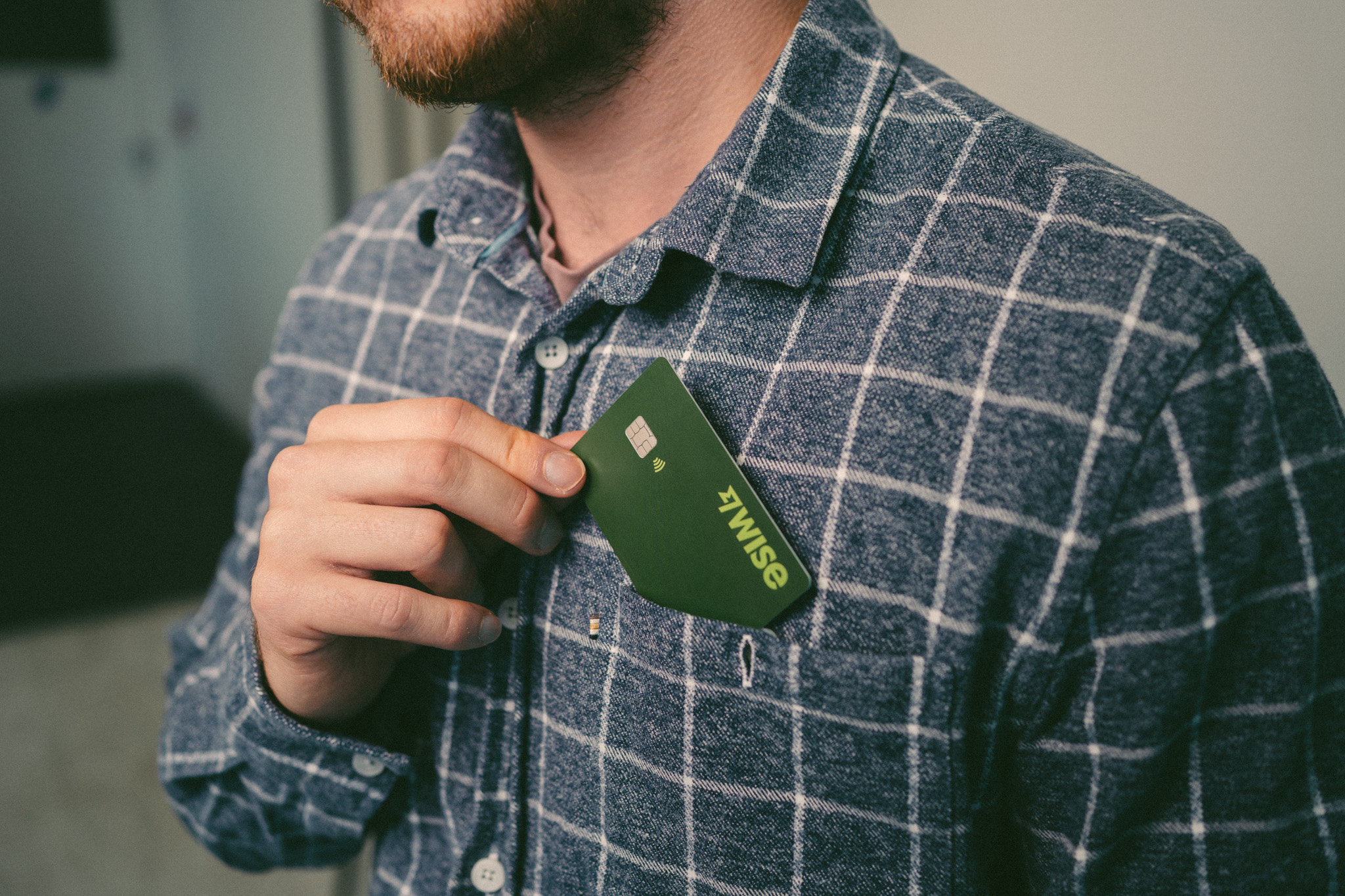
"I’ve been with Wise Business for five or six years now. I manage multiple currencies, and when I was searching for a business account, Wise stood out. It was the quickest, easiest, and probably the best one to use.”
When targeting the right client, start where buyers already search: LinkedIn (set up a Services Page so people can request proposals3) and a short burst on Upwork or PeoplePerHour to earn visible reviews. Pair this with a 10-day outreach cadence to a tight ICP list.
In many cases, yes. If you're emailing corporate subscribers (most company addresses) and you meet PECR rules, including clearly identifying yourself, including an easy opt-out, and handling any personal data lawfully under the UK GDPR4. Always check the ICO's latest guidance and keep records.
Note: This content is for general informational purposes only and does not constitute legal or professional advice. Always consult the ICO's latest guidance and seek professional legal advice for specific compliance questions.
Aim for three thoughtful nudges across 7–10 business days, then pause for 30–45 days.
Research and benchmarks show multi-touch, multi-channel cadences outperform single-touch efforts, but aggressive daily chasing can backfire.
Name the urgent outcome ("two hires by X date"), show a simple plan, and offer a low-friction next step, such as a 48-hour talent snapshot. Keep it under ~120 words, as data suggests clarity and speed matter more than length2.
Indirectly, yes. If a US-based or EU-based client can avoid friction in the currency movement process (like the kind that comes from hidden exchange fees), they're more likely to move forward.
Wise Business provides local account details and pay-as-you-go pricing with no monthly subscription, which removes a common objection in cross-border deals.
Sources:
Sources last checked on 27th October, 2025
Disclaimer: The UK Wise Business pricing structure is changing with effect from 26/11/2025 date. Receiving money, direct debits and getting paid features are not available with the Essential Plan which you can open for free. Pay a one-time set up fee of £50 to unlock Advanced features including account details to receive payments in 22+ currencies or 8+ currencies for non-swift payments. You’ll also get access to our invoice generating tool, payment links, QuickPay QR codes and the ability to set up direct debits all within one account. Please check our website for the latest pricing information.
*Please see terms of use and product availability for your region or visit Wise fees and pricing for the most up to date pricing and fee information.
This publication is provided for general information purposes and does not constitute legal, tax or other professional advice from Wise Payments Limited or its subsidiaries and its affiliates, and it is not intended as a substitute for obtaining advice from a financial advisor or any other professional.
We make no representations, warranties or guarantees, whether expressed or implied, that the content in the publication is accurate, complete or up to date.

Discover what to charge as a freelance makeup artist in 2025. Our guide covers setting your rates for bridal, events, and photoshoots to boost your profit.

As a freelancer or sole trader, working with clients in different parts of the world can feel like a constant juggling act. One minute you're knee-deep in a...

Find and retain high-value clients for your freelance work. Our guide explains proven strategies to secure long-term revenue and grow your freelance business.

Learn how to set winning rates for social media management. Our 2025 guide covers pricing packages, retainers, and strategy to maximise your freelance income.

Discover how to get clients as a freelance copywriter in the UK and start saving on unnecessary conversion fees with Wise Business.

Discover the right price to charge for freelance web development in 2025. Our guide covers pricing strategies and caveats to help you earn what you're worth.