
Best Ways to Use Wise Business as a Freelancer in the UK
Find out how to get the most out of a Wise Business account as a freelancer in the UK. Our guide covers all features with use cases for freelancers.



Budgeting for Facebook ads can feel like trying to hit a moving target. You know it's a powerful way to reach customers, but figuring out the actual investment required is often unclear.
This guide explains what UK small businesses can expect to pay for Facebook advertising by breaking down the key factors that influence cost and providing realistic price benchmarks.
We've also explained how Wise Business can help you manage your ad spend, especially if you’re paying ad bills in US Dollars and Euros in addition to GBP.

| Topic | Notes |
| How costs are determined ⚖️ | Costs are dynamic, set by a live auction. Key factors include your campaign objective, audience specificity, ad quality, industry competition, and seasonality. |
| Average UK cost benchmarks 📊 | Some UK benchmarks suggest averages like £0.43 per click (CPC), £6.60 per 1,000 impressions (CPM), and £13.91 per action (CPA), but these can vary significantly.1 |
| Budgeting for small businesses 💰 | A good starting budget is £215-£1,000 per month.1 A small daily budget of £5 is possible for testing, but it may not be enough for the algorithm to exit the learning phase effectively. |
| Don't forget VAT 🧾 | UK businesses must budget for an additional 20% VAT2 on top of their total ad spend. For example, a £1,000 ad spend will result in a £1,200 bill. |
| Consider Wise Business for multi-currency ad accounts 💱 | [Wise Business](https://wise.com/gb/business/) can help you pay international ad bills in 40+
currencies - you can convert GBP to those currencies at the mid-market rate with low, transparent fees, ensuring more of your budget goes towards advertising. |
There's no fixed price list for Facebook ads. Instead, a live auction determines the cost as your ads compete against others to reach your target audience.3
Several key factors influence how much you'll bid and ultimately pay. Understanding them is the first step to managing your budget wisely.
Every time there's an opportunity to show an ad to someone on Facebook, an auction takes place.
Facebook's goal is to show the most relevant ad to the user. It decides the winner based not just on the highest monetary bid, but on the total value, which includes your bid, the ad's quality, and its estimated action rates.4
A higher-quality, more relevant ad can often win an auction against a higher bid.
When you set up a campaign, you choose an objective, such as 'Traffic', 'Engagement', or 'Leads'. This tells Facebook what you want to achieve, and it directly impacts your costs.5
An objective like 'Video Views’ is generally cheaper than 'Lead Generation', as getting a user to watch a video is an easier action than getting them to submit their contact details.
The more specific your audience, the higher the competition and cost can be—although highly relevant targeting can sometimes improve efficiency and reduce costs.
Targeting a narrow, high-value demographic, like "London-based entrepreneurs interested in fintech", will likely be more expensive than targeting a broad audience, like "all UK residents aged 25-45".
The size of your audience also plays a role; if it's too small, costs can rise due to limited ad inventory.
Facebook assesses ad quality through its ‘relevance diagnostics’ and rewards high-quality, relevant ads with lower costs and better delivery.6
Poor quality ads with negative feedback may see their costs increase or their delivery throttled.
Advertising costs fluctuate throughout the year. They typically spike during peak shopping seasons like Black Friday, Cyber Monday, and the run-up to Christmas, when more businesses are competing for the same audience's attention.7
Planning your campaigns around these periods can help manage costs.
Competition also varies by industry. Sectors like finance, insurance, and e-commerce are notoriously competitive, which drives up advertising costs.8
A local service-based business, on the other hand, might find its advertising costs are significantly lower due to less direct competition in the ad auction.
Where your ad appears across Meta's platforms also affects the price.9
Placements like the Facebook and Instagram feeds are highly coveted and generally more expensive than placements in Messenger, Audience Network, or the right-hand column.
You can let Facebook automatically choose the most effective placements or select them manually.
While costs are dynamic, looking at average benchmarks can give you a realistic starting point for your budget. These figures are averages and can vary significantly based on the factors mentioned above.
Cost Per Click is the price you pay each time someone clicks on your ad. In the UK, this is a common metric for campaigns with a 'Traffic' objective.
A typical CPC can range from £0.40 to £1.50,1 but it may be higher in very competitive industries.
Cost Per Mille, or cost per 1,000 impressions, is the price you pay for your ad to be shown 1,000 times. This is a common metric for brand awareness campaigns. In the UK, you can expect an average CPM to be anywhere from £5.00 to £15.00.1
Cost Per Action is the price you pay for a specific action, such as a lead, a purchase, or an app install. This is often the most important metric, but also the most variable. A CPA for a lead in the UK could range from £10 to £50+, but can exceed £100+ in competitive or high-value industries.
| Metric | Average UK Cost Range | Best For |
| Cost Per Click (CPC) | £0.30 - £2.00 | Driving traffic to a website or app |
| Cost Per Mille (CPM) | £5.00- £15.00 | Building brand awareness and reach |
| Cost Per Action (CPA) | £10.00 - £50.00+ | Generating leads, sales, or sign-ups |
Setting the right budget is crucial for success. It needs to be large enough to give the platform's algorithm enough data to learn and optimise, but also comfortable for your business's cash flow.
Before you spend a single penny, define what a successful campaign looks like. Do you need 100 new leads a month? 50 sales of a new product?
Knowing your target allows you to work backwards and determine how much you can afford to spend per result (your target CPA).
When you launch a new campaign, Facebook's system enters a 'learning phase'. During this time, it's exploring the best way to deliver your ads. This phase requires a sufficient budget and volume of conversions (around 50 per week is a good target) to exit successfully.10
Underfunding your campaigns here is a common mistake that leads to poor results.
A smart way to start is with a test budget. For example, if your target CPA is £20, you'll want to budget at least £1,000 (50 conversions x £20) for the learning phase to see if you can achieve that goal.
If you have a smaller budget, you might start with a daily spend of £10-£20 for a week or two to gather initial data on CPC and click-through rates.11
💡To keep a clear eye on your test spend, consider using a Wise Business debit card. You can track expenses easily and even get 0.5% cashback on your ad spend (terms and conditions apply).
Ready to get started? The process begins in Meta's Ads Manager. You must have a Facebook Business Page to run ads; you cannot use a personal profile.
If you don't have one already, creating a Business Page is your first step. It's the public face of your business on the platform and the hub for all your advertising activity. Ensure it's filled out with your business details, logo, and contact information.
Navigate to Ads Manager and click 'Create'. Facebook will ask you to choose from a list of objectives, grouped under Awareness, Consideration, and Conversion. Your choice here should align directly with your business goal.
This is where you tell Facebook who you want to see your ads. You can define your audience based on location, age, gender, interests, and behaviours. You'll also choose your ad placements and set a start and end date for your campaign.
Here, you'll decide how much you want to spend, either as a daily budget or a lifetime budget for the entire campaign. You can also choose a bid strategy.
If you're new to this, allowing Facebook to bid automatically is often the wisest choice to get the most results for your budget.
Finally, you'll need to add a payment method to your ad account. Meta accepts several options, including major credit and debit cards, PayPal, and direct debit. Once your payment method is confirmed, you can publish your ad.
A crucial budgeting detail often overlooked by UK businesses is Value Added Tax (VAT).
As a provider of digital services, Meta charges UK VAT on advertising services. The current rate is 20%2 and it is added to your ad spend.
For example, if you spend £1,000 on ads, your total bill will be £1,200. You should factor VAT into your budget where applicable, particularly if you’re not VAT-registered or cannot reclaim VAT.
Note that VAT treatment depends on your VAT status. If you’re not VAT-registered (or haven’t added a VAT number), Meta typically adds 20% VAT. If you are VAT-registered, VAT is usually handled via the reverse charge mechanism, meaning you account for it yourself rather than paying it upfront.
Note: This publication is provided for general information purposes and does not constitute legal, tax or other professional advice from Wise Payments Limited, its subsidiaries or affiliates, and it is not intended as a substitute for obtaining business advice from a tax advisor or any other professional.
💡To make tracking your ad spend and VAT easier, you can sync your Wise Business account with accounting software like Xero or QuickBooks, automating your expense management.
Many UK businesses don't realise that their Meta ad account may bill in a currency other than the British pound (GBP), such as USD or EUR.
This often happens when an overseas partner sets up the account or when someone creates it in a different billing currency.
When you pay a USD bill with your standard UK bank card, your bank will convert the currency for you, but they'll use their own exchange rate and often add a fee.
This rate may be less favorable than the mid-market rate, meaning you lose a portion of your marketing budget on every single bill.
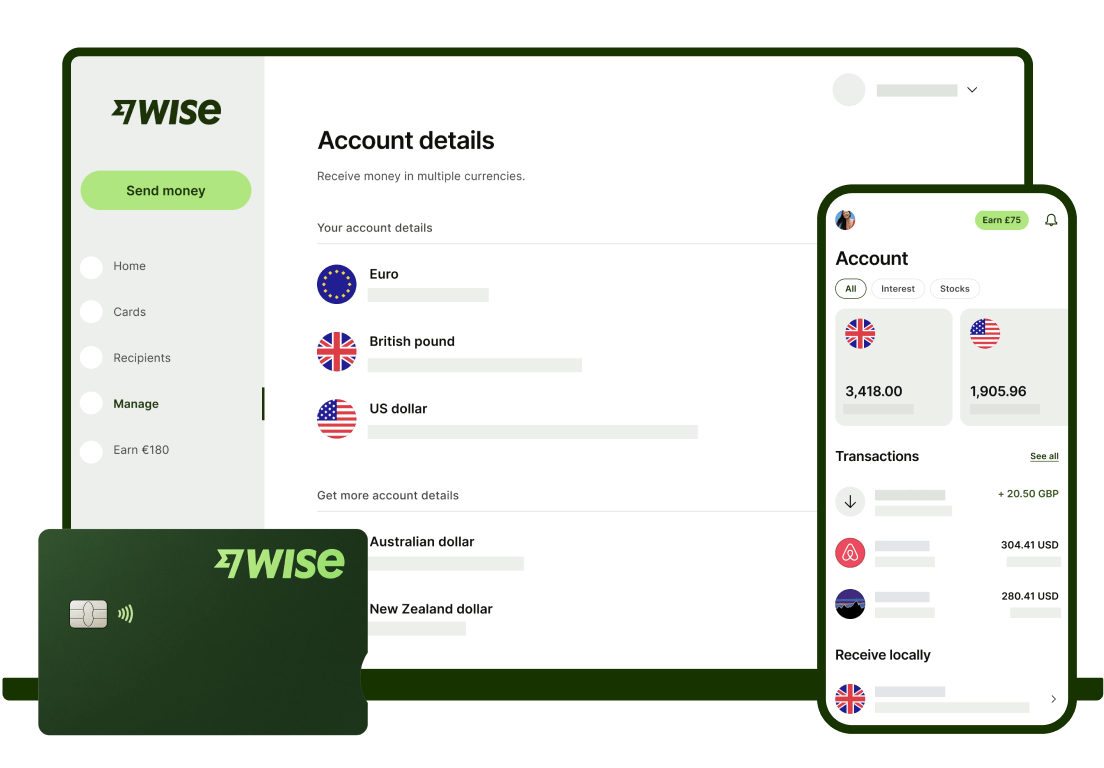
Paying more than you need to on international ad bills is not a smart use of your marketing budget. Wise Business is built for global businesses, providing a straightforward way to pay for expenses in different currencies from one business account.
With Wise Business, you can:
Make the wise choice when selecting a business account for all your domestic and global needs.
Be Smart, Get Wise.
A typical starting budget for a UK small business is typically between £215 and £430 per month.1 This allows a daily spend of £10–£30, enough to gather meaningful data and begin optimising your campaigns without a huge initial commitment.
Yes, for most businesses, it is highly worth it. With its vast user base and powerful targeting options, Facebook allows you to reach your ideal customers with incredible precision.
The key is to have a clear strategy, compelling ad creative, and a well-managed budget to ensure a positive return on investment.
Yes, you can run ads for as little as a few pounds a day. However, a budget of £5 a day may not be enough for Facebook's algorithm to gather sufficient data to exit the 'learning phase' quickly.10
This can lead to slower results. It's a viable option for very small-scale testing, but may not be effective for driving significant growth.
The cheapest way to advertise is to focus on creating high-quality, highly relevant ads for a well-defined audience. Campaign objectives like 'Engagement' or 'Video Views' are generally less expensive than 'Conversion' or 'Lead Generation' objectives.12
Running campaigns during off-peak seasons can also help reduce costs.
Facebook charges you when your ad costs reach your account's billing threshold, or on your monthly bill date13. It automatically charges the primary payment method on your ad account. You’re charged based on your campaign objective (e.g. impressions, clicks, or conversions), up to your set budget limits.
You can check your billing currency in Meta Ads Manager. Go to 'Billing & Payments', then 'Payment Settings’ to see your ad account’s currency. Generally, you can’t change the currency of an existing ad account, so you’ll need to create a new account to use a different currency.
💡If your ad account currency is in USD or EUR, you can pay in those currencies by converting GBP to USD or EUR at the mid-market rate with low, transparent fees using your Wise Business account.
Yes. If your business is based in the UK, Meta will add UK VAT at the standard rate (currently 20%)2 to the cost of your advertising services. You’ll see this charge on your billing receipts.
Sources
Sources last checked on 26th March 2026
*Please see terms of use and product availability for your region or visit Wise fees and pricing for the most up to date pricing and fee information.
This publication is provided for general information purposes and does not constitute legal, tax or other professional advice from Wise Payments Limited or its subsidiaries and its affiliates, and it is not intended as a substitute for obtaining advice from a financial advisor or any other professional.
We make no representations, warranties or guarantees, whether expressed or implied, that the content in the publication is accurate, complete or up to date.

Find out how to get the most out of a Wise Business account as a freelancer in the UK. Our guide covers all features with use cases for freelancers.

Learn how much outsourcing accounting costs for UK businesses. Our guide explains pricing, services, and factors affecting fees.

Learn how much outsourcing graphic design costs in the UK. Our guide explains typical rates, cost factors, and budgeting tips.

Discover how small businesses in the UK are using AI to boost growth and revenue. Our guide details practical use cases for all types of small businesses.

Learn how much it can cost to outsource social media in the UK. Our guide explains average rates, pricing models, cost drivers, and more.

Startups today have never faced tougher competition. With investor expectations as sky high as valuations, nearly 20% fail because they are outcompeted and...