ATMs in Italy: locations, fees, and tips (2025)
Read our essential guide to ATMs in Italy, including how to find them, fees, exchange rates, withdrawal limits and more.



Currently planning a getaway to Italy? We don’t blame you! Right now, you’re probably buzzing with excitement and thinking about your itinerary. However, you may need to consider your travel budget and do some research into the difference in financial habits between the UK and Italian locals.
Debit cards are the leading payment method in Italy, but cash is a close second. Even though statistics show you can rely on cards, different payment methods are better in certain situations. This article will help you to answer the question - which is more convenient in Italy, cash or card?
We’ll also show you a cost-effective way to manage your spending in Italy and 150+ countries worldwide. For any international purchases, whether online or in person, you can rely on the Wise card. You can even withdraw cash like a local at the mid-market exchange rate for low fees*.
The share of cash payments in Italy is declining throughout the years, but it’s still rather high. When it comes to exact numbers, around a quarter of all payments are made out in cash.
At the moment, debit cards are the most popular payment method among Italians. They’re followed by cash and digital wallets. At this tempo, digital wallets are expected to become as popular as debit cards in a few years. However, this doesn’t mean that Italians will give up on cash, as it’s still preferred by many.
Tipping is not as common in Italy as it is in some other countries, but it’s appreciated. The tip amount depends on the circumstances and it’s even unusual to tip in certain situations. For instance, Italians usually don’t tip taxi drivers.
If you want to leave a tip in a restaurant, the usual amount is 10-15% or just leftover change from the bill. It’s a nice way of letting your server know that you’re satisfied, but there’s no pressure to leave it.

We’ve listed some situations where you’ll be paying for things in Italy. Here’s whether you’ll be able to pay by card, in cash or both:
| Payment for… | Card 💳 | Cash 💶 |
|---|---|---|
| 🚕 Taxis3 | Usually, but check with the driver beforehand | Yes |
| 🏪 Convenience stores4 | Usually, but sometimes not for small purchases | Yes |
| ☕ Coffee shops4 | Usually, but sometimes not for small purchases | Yes |
| 🚌 Public transport5 | Yes | Yes |
| 🍽️ Restaurants4 | Usually, but sometimes not for small purchases | Yes |
| 🛵 Vespa rental6 | Yes | Yes |
There’s roughly around 47,000 ATMs in Italy. Besides Italian banks, you can find them in shopping malls, markets and tourist streets. Italian ATMs are often open 24/7, except for those inside banks which work from 9 am to 3 pm.
When it comes to limits, they’re usually between €250 and €1000 per transaction. ATM fees are pretty low in Italy and some ATMs don’t have them at all.
Yes, you can use UK-issued debit cards on your trip to Italy. However, keep in mind that some smaller businesses may not accept them.
Yes, UK credit cards are suitable for use across Italy.
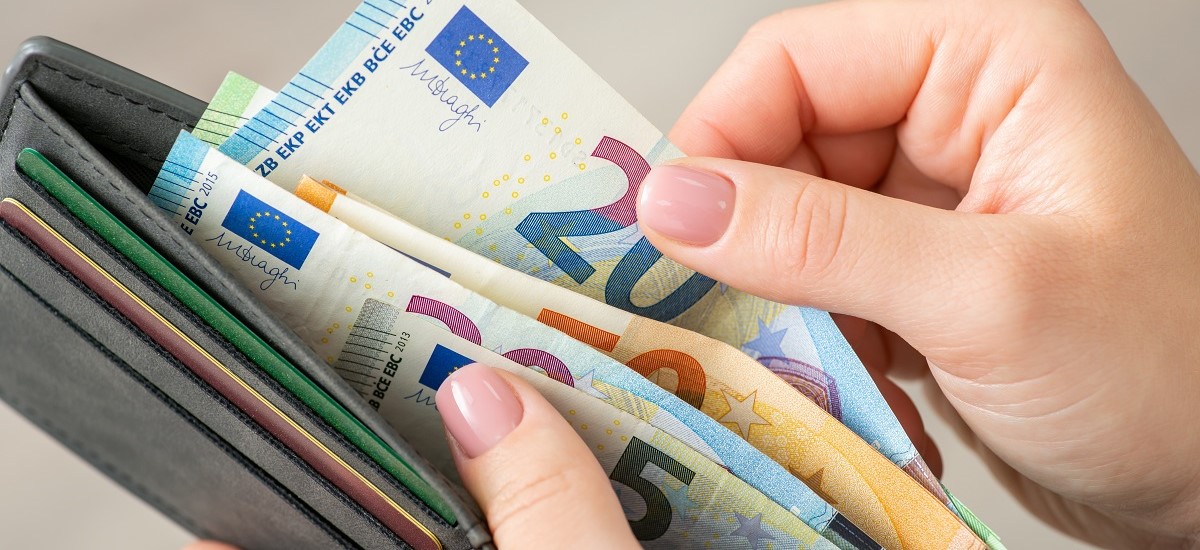
Even though statistics show that debit cards are more popular at the moment, cash is still king in Italy. Italians are known for staying loyal to it, especially their older population. That’s why you most likely won’t find a place that doesn’t accept cash.
Cash may be a better option because you might miss out on some experiences without it. For example, you won’t be able to buy anything from street vendors and at farmers’ markets.
There are also cafés and stores in Italy that won’t let you pay with your card if your purchase is small. Many Italian churches and cathedrals do accept card payments for donations but cash is likely preferred. Finally, in case you like leaving cash tips, it’s good to keep some euros on you.
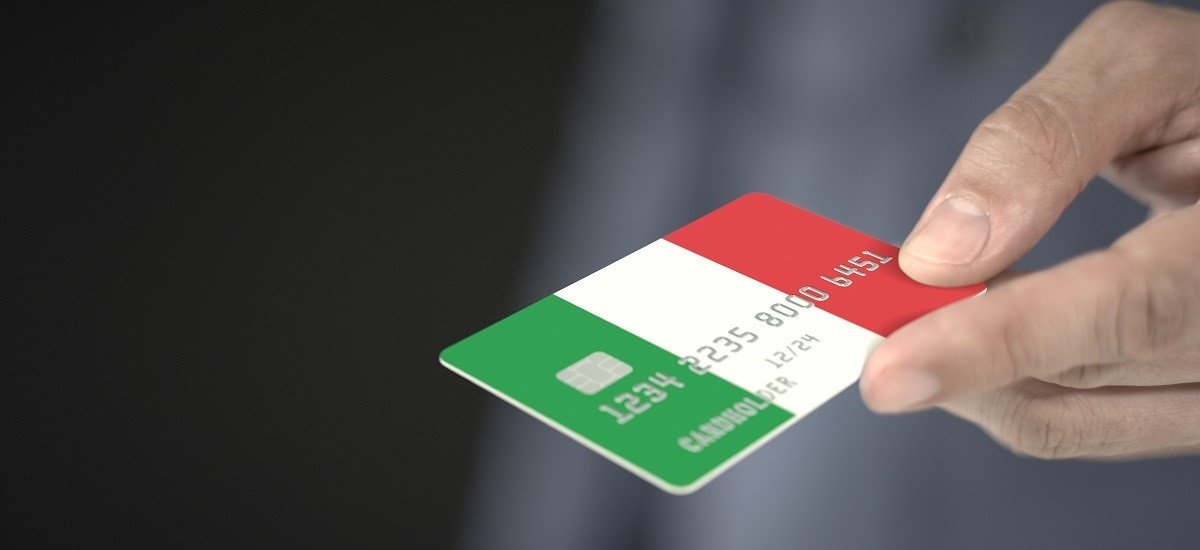
If you plan on visiting big cities or some parts of Italy with higher crime rates, you may opt not to carry cash to avoid pickpockets.
It’s also more convenient to pay by tapping instead of dealing with a bunch of change you won’t be able to convert back or use at home.
Yes, contactless payment is common among Italians. The limit for contactless card payments in Italy is 50 euros, the same as it is in other Eurozone countries.
Your Wise card can also be used for contactless payments in Italy. If you don’t want to carry physical cards with you, you can get the Wise virtual card with all the same features, which you can add to your phone's digital wallet.
Besides traditional credit and debit cards, other payment methods are also available in Italy.
Italians use digital methods of payment less than they use cash, but statistics show that this will likely change in the future. The well-known wallet apps such as Google Wallet, Skrill and Apple Pay are also popular here, especially Google Wallet. However, PayPal is the most commonly used mobile payment app in Italy.
For an additional layer of security, you could add your Wise virtual card to your wallet. It has all the benefits of a regular Wise card, but it exists in your phone only. You can freeze your Wise virtual card after every transaction too, for extra security.
BNPL is a payment method that’s gaining popularity worldwide and Italy is no exception. The locals are beginning to use both foreign and Italian apps that allow them to split their purchases into monthly instalments.
Some of the most popular BNPL options in Italy are Klarna and Scalapay.

If you had to pick between one or the other, it might be better to rely on cash in Italy. It’s accepted everywhere, including taxis and small businesses, and you can use it to leave tips.
However, the best choice would be using both cash and cards. Each option has its advantages and you could make the most of them.
Want to spend like a local in Italy and in 150+ countries without worrying about exchange rates and hidden fees? The Wise card might be just the option you were looking for.
The Wise card can be used for international payments, from your accommodation costs to daily expenses. It automatically converts your pounds at the mid-market exchange rate with only a small, transparent currency conversion fee*.
This means more of your money can be spent on those little extras like gelato!
You can also use your Wise card to easily withdraw cash from the ATMs in Italy. Each month, you can make 2 withdrawals of up to 200 GBP for free. After that, there is a small charge of 0.5 GBP per withdrawal*.
Here are some of the most frequent questions about using cash or cards in Italy:
Yes, you can use it across Italy as long as the place you’re at accepts card payments.
There’s no need to get euros ahead of your trip. You could also rely on your Wise card and have it automatically convert pounds to euros for you.
Both are widely used, so feel free to use what you like better.
Yes, Visa cards are used in Italy, both at ATMs and at POS.
It’s up to you - you can pay the tourist tax with both cash and cards.12
You could find out if your bank has a correspondent in Italy or use the Wise card for withdrawals.
Yes, contactless payments are common in Italy.
Yes, you can use your Wise card in Rome, Milan and anywhere else in Italy to enjoy auto-conversion on all your holiday spending at the mid-market rate for a small, transparent fee*.
Why not also check out the Wise account? There’s no limit on how much you can hold in your Wise account and it can hold over 40+ currencies.
Sources used:
Sources last checked on date: 11-Jul-2024
*Please see terms of use and product availability for your region or visit Wise fees and pricing for the most up to date pricing and fee information.
This publication is provided for general information purposes and does not constitute legal, tax or other professional advice from Wise Payments Limited or its subsidiaries and its affiliates, and it is not intended as a substitute for obtaining advice from a financial advisor or any other professional.
We make no representations, warranties or guarantees, whether expressed or implied, that the content in the publication is accurate, complete or up to date.

Read our essential guide to ATMs in Italy, including how to find them, fees, exchange rates, withdrawal limits and more.

Italy is just a flight away. Learn how to shop tax-free at Gucci and many other stores, and obtain a VAT refund in cities like Rome, Milan, and Florence.
Read our complete guide to the Italy digital nomad visa, covering fees, documents, eligibility requirements and how to apply.

Planning a trip to Italy? From eligibility to the necessary paperwork, here's a comprehensive guide on how to apply for an Italian Schengen visa from the UK.

Travelling to Venice soon? Find out everything about the Venice tourist tax and essential travel tips.

Check out our in-depth guide on everything you need to know about buying a prepaid Italy SIM card, including different providers, pricing, and features.