Ulster Bank large transfers and transfer limits
Read our helpful guide to Ulster Bank large transfers in the UK, including transfer times, limits, fees, security and the steps to send a payment.


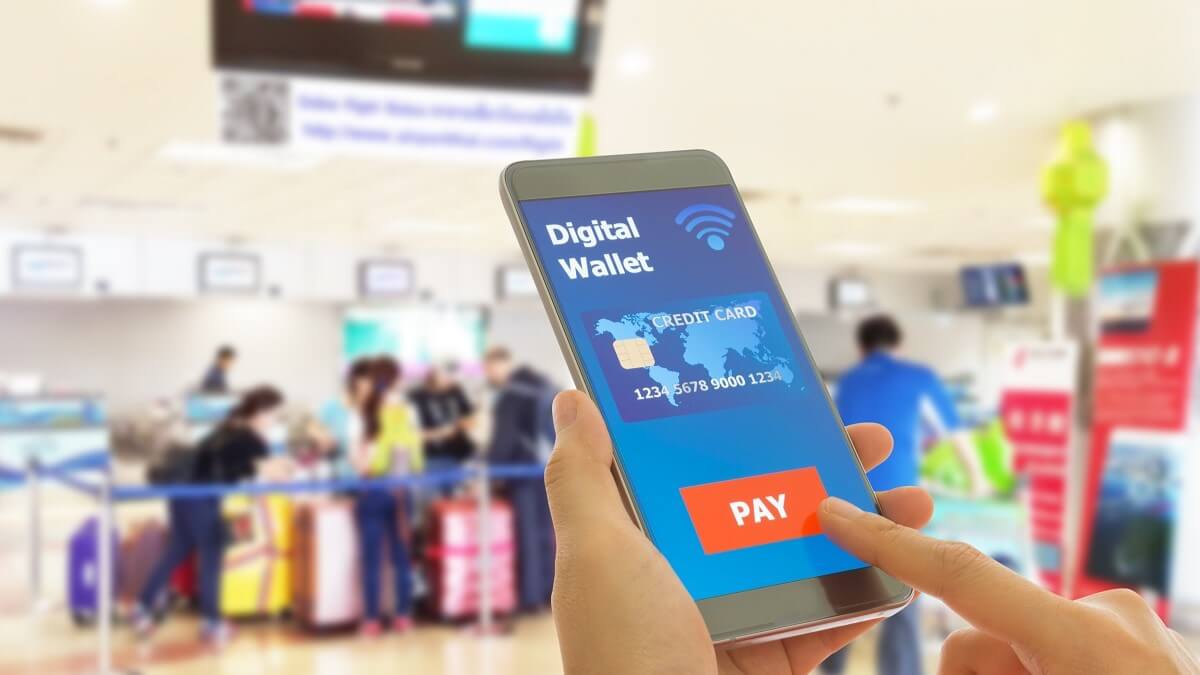
If you’re on a mission to find the best digital wallet available in the UK, Apple Pay and Google Wallet are likely in your top picks. Both of them allow you to make easy contactless payments with high levels of security.
In this guide, we’ll do an Apple Pay vs Google Wallet comparison, to give you an idea which one might be better for you. We’ll include how many people in the UK have them, where you can use them and whether they charge any fees.
Before we dive into the comparison, here’s a look at their features, listed in alphabetical order:
| Feature | Apple Pay3 | Google Wallet1 |
|---|---|---|
| Compatible devices | iPhone, Apple Watch, Mac and iPad | Android devices |
| Availability | Wherever an Apple Pay/contactless symbol is displayed | Wherever a Google Pay/contactless symbol is displayed |
| How many people use it in the UK? | 67% of UK mobile payment users use Apple Pay at POS2 | 33% of UK mobile payment users use Google Wallet at POS2 |
| Security | Advanced security claimed by Apple | Advanced security claimed by Google |
| Cost | No fee from Apple | No fee from Google |
Google Wallet gives you easy and quick access to your payment cards, plane and concert tickets, IDs and different passes. It can be used for everything from contactless transactions in stores and in-app purchases to paying for public transport4.
Besides these features, Google Wallet can also store your proof of vaccination and test records and can even hold your digital car keys, but at the moment that’s available only for certain BMW models4.
Apple Pay is a safe, widely accepted payment method that’s easy to set up. It can be used for purchases in shops, online and in apps. Although you’re not paying directly with your card, you can still use all rewards and benefits connected to it when using Apple Pay3.
Apple Pay works anywhere that accepts contactless payments, from stores to taxis. It’s also possible to pay for public transport using Apple Pay. You won’t even need to unlock your phone or Apple Watch, just tap the card reader3.
Apple Pay is Apple’s safe mobile payment service. It can be used in stores, on the internet and in apps5.
Apple Wallet is the app or the place which holds the credit and debit cards you use with Apple Pay. Besides this feature, Apple Wallets also hold boarding passes, car keys, transit cards and more5.
| Apple Wallet | Apple Pay |
|---|---|
| Apple’s digital wallet app | Apple’s mobile payment service |
| Preinstalled on Apple devices | Doesn’t have an app, but it’s used within Apple Wallet |
| Stores boarding passes, car keys, rewards cards and more | Only used for transactions |
Apple Cash is a digital card that lives in your Apple Wallet and it can be used to send and receive money from Messages or from Wallet. Apple Cash Family is a way for you to set up Apple Cash for members in your Family Sharing group who are minors6.
However, Apple Cash and Apple Cash Family are only available to US residents at the moment6.
Google guarantees that their Wallet has a high level of security4. When you use your Google Wallet to pay, your personal information is protected and your card number is not revealed to the merchant.
The privacy controls let you decide exactly which information you want to share. Also, Android offers two important security features - two-step verification and remote data erase4.
Apple says that their Apple Pay service is much safer than using a physical card3. This is because your card information is never shared with the merchant when you use Apple Pay, but also due to the fact that your card numbers aren’t stored on Apple servers.
When making a purchase with Apple Pay, you must use Face ID, Touch ID or your password3.
Apple Pay and Google Wallet have similar features and security levels and they’re both rather popular among Brits.
The main difference when comparing Apple Pay vs Google Wallet is their compatibility with different devices. They can be used across the UK for various types of payments, but your decision will probably mostly depend on whether you have an Android or an iPhone.
Let’s answer some more questions about Apple Pay and Google Wallet:
No, Apple Pay doesn’t charge any fees3. However, keep in mind that any fee that applies when you use your card directly can also be charged when you use Apple Pay.
Yes, Google Wallet is free1. But just like with Apple Pay, your card provider can charge their fees just like they would when you’re using your card directly.
Here are some of the most popular payment apps and how many UK shoppers use them2:
| Payment app | Percentage of UK shoppers |
|---|---|
| Apple Pay | 67% |
| Google Wallet (Google Pay) | 33% |
| Samsung Wallet (Samsung Pay) | 7% |
| PayPal | 30% |
Apple Pay can be used when paying for public transport, including the London tube7. Their Express Mode allows you to easily tap and pay without Face ID, Touch ID or your passcode. However, this feature can only be used on public transport.
Google Wallet can be used in any store that accepts contactless payments, supermarkets included. So, next time you go to Aldi, Tesco or Sainsbury's, feel free to leave your physical cards at home.
Sources used for this article:
1. Google Wallet - Google Wallet FAQ
2. Statista - biggest contactless payment brands in the UK (March 2024 data)
3. Apple - Apple Pay details
4. Google Wallet - Google Wallet homepage
5. Apple - Apple Wallet details
6. Apple - Apple Cash explained
7. Apple - Apple Pay Express Mode details
Sources last checked on date: 31-May-2024
*Please see terms of use and product availability for your region or visit Wise fees and pricing for the most up to date pricing and fee information.
This publication is provided for general information purposes and does not constitute legal, tax or other professional advice from Wise Payments Limited or its subsidiaries and its affiliates, and it is not intended as a substitute for obtaining advice from a financial advisor or any other professional.
We make no representations, warranties or guarantees, whether expressed or implied, that the content in the publication is accurate, complete or up to date.

Read our helpful guide to Ulster Bank large transfers in the UK, including transfer times, limits, fees, security and the steps to send a payment.

Read our helpful guide to RBS large transfers in the UK, including transfer times, limits, fees, security and the steps to send a payment.

Read our helpful guide to TorFX large transfers in the UK, including transfer times, limits, fees, security and the steps to send a payment.

Read our helpful guide to Xe large transfers in the UK, including transfer times, limits, fees, security and the steps to send a payment.

Read our helpful guide to Xoom large transfers in the UK, including transfer times, limits, fees, security and the steps to send a payment.

Read our helpful guide to Instarem large transfers in the UK, including transfer times, limits, fees, security and the steps to send a payment.