How to make international payments with Wise Business
earn how Wise Business helps NZ companies send international payments, pay global invoices, and handle bulk payouts using the real mid-market exchange rate.



With over 600,000 businesses trading in New Zealand,1 there’s plenty of opportunity to procure goods and services from locally based brands. And, once you master the art of overseas payments, a whole new world of possibilities awaits.
Today, we’re covering everything the Kiwi SMB should know about B2B payments, from definitions to trends, processes, methods, and challenges. Through fine-tuning procedures, you could minimise processing times and mitigate fees.
| Table of Contents |
|---|


A B2B payment refers to money sent between two businesses for goods or services. Common examples include paying suppliers, wholesalers, software subscriptions, or contractors.
B2B payments differ from business-to-consumer (B2C) payments, not only for the parties involved. While B2C transactions are usually small and settled instantly at checkout, B2B payments tend to be larger, more formal, and more complex.
Businesses use certain terminology when making B2B payments.
In 2026, shifting regulations and advancing technologies could evolve the B2B payment landscape in New Zealand and beyond.
Domestic B2B payments occur within a unified, single-country banking and legal framework, using one currency. Most incur low flat fees or no fees and settle within the same day, or sometimes even just hours. Domestic bank transfers use New Zealand’s Bulk Electronic Clearing System (BECS), which covers direct debits, automatic payments, bill payments, and direct credits.3
International B2B payments involve multiple currencies, jurisdictions, and financial systems, making them more costly and complex. Standard overseas bank transfers in New Zealand use the SWIFT network, which routes money between multiple banks or intermediaries, each charging separate fees.
The precise process may vary between businesses, industries, and payment types.
In New Zealand, businesses must maintain records of all cash and digital sales and purchases for 7 years in English or Maori.4 Meticulous record-keeping may also help manage cash flow and minimise fraud.
Kiwis can choose from a range of methods when paying other businesses, each with distinct pros and cons.
A multi-currency business account allows Kiwi SMBs to hold, receive, and pay in multiple foreign currencies from a single centralized platform. Instead of juggling overseas bank accounts or paying steep double-conversion fees, companies can manage cross-border B2B transactions as if they were operating locally.


Standard BECs bank transfers are fast and free, making them the go-to option for domestic B2B payments in New Zealand. Same-bank transfers settle instantly, while interbank transfers generally take under an hour when done before 10 pm; otherwise, first thing in the morning. The buyer pays through an NZ business bank portal or app.
POLi is a unique Kiwi option that lets the buyer pay directly from their online banking account. When making online payments, the buyer selects POLi at checkout, selects their bank, and logs in with their credentials to pay.5
Although primarily used for B2C transactions, plenty of Kiwi businesses also use POLi for B2B payments.
Standard SWIFT bank transfers see funds move across borders from the sending bank to the receiving bank, sometimes via an intermediary bank, all of which charge separate fees. Flat fees generally range from $20 to $60 per transfer, plus a 1-3% exchange rate markup. Processing may take 3-5 business days.

Some business debit and credit cards offer attractive cashback and rewards, albeit with higher fees that can eat into profit margins, especially on high-value invoices. Also, steep interest rates may apply to businesses that fail to repay balances on time.
Typical B2B card processing fees in New Zealand range from 1.5% to 3.5%, with an additional per-transaction charge of $0.05 to $0.30. International card fees often add an extra 1% on top.
In New Zealand, eInvoicing uses the common Peppol standard to exchange invoice information between buyers and suppliers, even if their financial systems differ. The network automatically generates invoices, validates NZ Business Numbers (NZBN), and reconciles purchases, reducing manual processing and improving accuracy.6

Digital wallets, such as Google Pay and Apple Pay, help keep card details safe through encryption, tokenisation, and biometric authentication. Businesses can use them to make in-person or online B2B payments, often at similar or identical rates to debit or credit cards.
Larger enterprises sometimes use corporate cards for day-to-day work-related expenses. Corporate cards connect to an expense account tied to an entity rather than a person. Purchases are automatically recorded and sorted in conjunction with accounting software.
Direct debit is a recurring payment method in which the supplier withdraws funds from the buyer’s business bank account at an agreed-upon schedule, such as weekly, monthly, quarterly, or annually. Direct debits work through BECs, require written authorisation, and are common for ongoing services such as software subscriptions and utilities.

Physical paper-based formats like cheques and cash are becoming increasingly uncommon in New Zealand, where digital payments dominate. Nonetheless, some businesses still use them.
Paying offshore suppliers is fraught with difficulties. Some of the biggest concerns include:
Managing B2B payments efficiently is essential for growth, yet paying overseas suppliers often means navigating hidden exchange rate markups, unexpected intermediary fees, and multi-day delays through traditional SWIFT network channels. These extra overhead costs and slow turnaround times can strain cash flow and complicate relationships with international vendors.
Wise Business helps solve these cross-border payment challenges by using a local payment network to transfer funds across borders quickly and transparently.
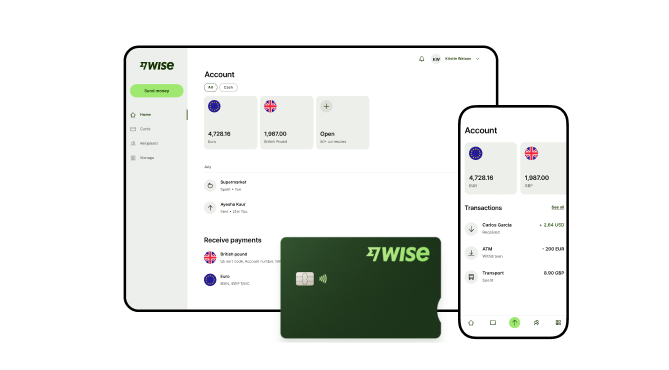
A Wise Business account allows users to send, receive, and hold in multiple currencies. Experience hassle-free global transactions by transacting like a local business. Here's what you get with a Wise Business account:
Sign up for the Wise Business account! 🚀
This is not financial or investment advice - Wise has not taken into account your objectives, financial circumstances or needs and you should consider if it is appropriate for you.
1. What is the difference between B2B and B2C payments?
B2B payments tend to be larger and have longer payment terms than B2C payments, which are typically made and approved instantly.
2. How long do international B2B payments take to process in NZ?
SWIFT bank transfers can take 3-5 business days to finalise. Fintech alternatives like Wise Business usually settle within 1 business day.
3. Are B2B payments safe from fraud?
Like any payment type, B2B payments are susceptible to fraud. Businesses must take necessary steps to reduce their risk. Although fees are higher, card schemes like Visa and Mastercard may provide better fraud protection than other payment types.
4. Can I automate my B2B payment processes?
In New Zealand, some businesses automate B2B payments by using eInvoicing, which automatically transmits invoices between businesses, even those using different financial systems.
Sources
*Please see terms of use and product availability for your region or visit Wise fees and pricing for the most up to date pricing and fee information.
This publication is provided for general information purposes and does not constitute legal, tax or other professional advice from Wise Payments Limited or its subsidiaries and its affiliates, and it is not intended as a substitute for obtaining advice from a financial advisor or any other professional.
We make no representations, warranties or guarantees, whether expressed or implied, that the content in the publication is accurate, complete or up to date.

earn how Wise Business helps NZ companies send international payments, pay global invoices, and handle bulk payouts using the real mid-market exchange rate.

Discover what remittance advice means for Kiwi SMBs. Learn its benefits, types, how to use a template, and tips for managing international supplier payments.

Discover what a point of sale (POS) system is, how it works, its types, and how to choose and set up the right POS software and hardware for your NZ business.

Learn how direct debit works for New Zealand businesses, its benefits, how to set it up, and how Wise Business simplifies international recurring payments.