Guide on B2B payments in New Zealand
Learn how B2B payments work for New Zealand businesses. Explore key terms, different methods, step-by-step processes, and challenges.



According to the Reserve Bank of New Zealand, direct debit and automatic payments are the most popular way to pay ongoing bills, used by over 75.3% of Kiwis.1 The automated, low-fee payment method offers a plethora of business benefits, from reducing admin to improving customer retention and cash flow management.
In this post, we’re discussing what direct debit means for Kiwi SMBs with recurring payment needs, including the process, benefits, and start-up. We’ll also introduce Wise Business, a cost-effective solution for direct debit cross-currency payments.
| Table of Contents |
|---|


Direct debit is a recurring payment method in which a business obtains the customer's permission to directly debit funds from their account on an agreed-upon schedule. Alternative recurring payment types include automated card payments and bank transfers.
In New Zealand, direct debits are governed by the Bulk Electronic Clearing System (BECS). This system defines transaction rules, standards, and procedures, including settlement and interchange timeframes, as well as dispute resolution procedures.2
Businesses generally use direct debits at predefined intervals, such as weekly, fortnightly, monthly, quarterly, or annually. Direct debits work best for recurring services such as mobile plans, gym memberships, streaming services, and software subscriptions, as well as utilities like electricity, water, and gas.
There are three main types of recurring direct debit payments:
Most consumer bank accounts will accept direct debits, although there are exceptions.3 Customers can check directly with their financial institution.
For a direct debit to work in New Zealand, the customer authorises the business – known as the “initiator” – to take automated electronic payments from their nominated bank account. Consent is acquired through a direct debit authority form, sometimes known as a mandate, which covers the services provided, the payment schedule, and the associated fees.
Once signed, the initiator informs the customer’s bank, which schedules payments for the agreed-upon billing cycle. The business must give the customer 10 days’ notice before billing the first payment.3
Direct debits may take up to 5 business days to clear, though processing times vary between providers. Fees also vary, typically ranging from $0.20 to $2 per domestic transaction. Some providers charge a start-up fee, while others do not.
When it comes time for your end-of-month reconciliation, many direct debit providers integrate with the best accounting software. That lets you spend less time on manual admin and more time growing your business.
The main difference between direct debit and automatic payment is the party that initiates the payment schedule.
While direct debits require the business to initiate the transaction, automatic bank transfers – also known as “automatic payments” in New Zealand – are set up by the customer through an online banking portal. Kiwis commonly use them to pay rent and employee salaries, or set money aside for savings or investment contributions.
As the customer sets the schedule and amount, automatic payments are only suitable for fixed recurring payments.3
Direct debits offer numerous benefits for businesses, even when compared to other recurring payments such as cards and bank transfers.
A Kiwi business can apply to become an initiator through a direct debit provider, such as a bank or payment processor.
The precise process varies between providers. Nonetheless, here’s a quick step-by-step guide for businesses setting up a direct debit in New Zealand.
Direct debits must usually be signed by a customer in-person. However, in some situations, it’s possible to establish a direct debit online or over the phone.4
Establishing a direct debit with a foreign bank account is considerably more complex due to differing regulations. For example, foreign infrastructure, such as SEPA (Single Euro Payments Area) in Europe and ACH (Automated Clearing House) in the USA, has different rules from those of the Australia and New Zealand-based BECS.
Some small businesses establish recurring card payments through a payment gateway, as these may be less prone to regulatory complexities.
Nonetheless, time zone differences and varying banking holidays can lead to slower processing times and unexpected delays. Plus, many providers might add on a hidden markup to the foreign exchange rate, further inflating already high international transaction fees.
Traditional business accounts may seldom restrict your automated payments to local currency accounts, causing unnecessary hurdles if your operations span across borders.
A Wise Business account helps solve this friction by allowing you to set up direct debits in multiple global currencies, including AUD, NZD, USD, GBP, EUR, and CAD.
In addition, businesses have the flexibility to choose if they would want to automatically convert the missing amount from other currencies using the lowest possible fee to ensure that the automated payments run smoothly. This ensures that direct debit payments occur even if there is no balance in that specific currency.
Setting up an automated payment from your account is simple, digital, and typically takes just a few days to finalize.
Maintaining complete visibility over your business expenses is vital, so Wise gives you the tools to track or stop your payments instantly from your dashboard.
Important note: To ensure a payment does not leave your account, you must cancel the direct debit at least 1 working day before the next scheduled payment date.
Expanding a business globally opens up exciting opportunities, but also new challenges like receiving payments across borders. Hidden foreign transaction fees and hefty currency conversions involved with international payments can eat into your profits and time.
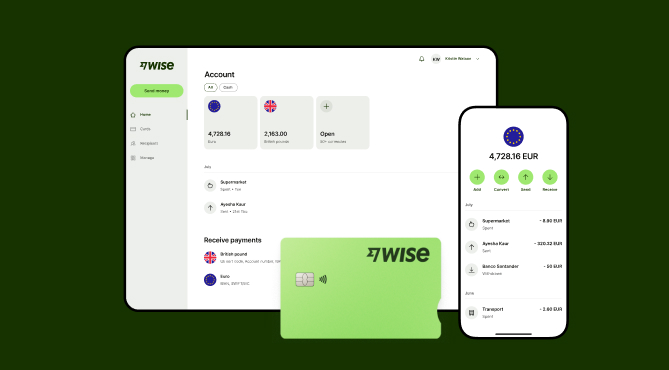
Wise Business serves as a cost-effective solution where you can receive money from around the world at the speed and price of local payments.
Transform the way you receive payments with Wise Business:
Sign up for the Wise Business account! 🚀
This is not financial or investment advice - Wise has not taken into account your objectives, financial circumstances or needs and you should consider if it is appropriate for you.
1. What is a direct debit in New Zealand?
A direct debit is when a company obtains a customer's permission to bill their bank account at an agreed-upon schedule via a BECS transfer.
2. What is the difference between a direct debit and an automatic payment?
The main difference is who initiates the payment. An “automatic payment” is when a customer sets up a payment schedule in their online banking portal, while a direct debit is when the business pulls funds directly from the customer’s account.
3. Are direct debits popular in New Zealand?
Yes. Direct debits are widely used for recurring payments such as utility bills, mobile phone plans, and insurance renewals.
4. What are the benefits of direct debit in New Zealand?
Direct debit offers a convenient, low-cost way to process recurring payments, with fewer failures due to expired or stolen cards.
Sources:
*Please see terms of use and product availability for your region or visit Wise fees and pricing for the most up to date pricing and fee information.
This publication is provided for general information purposes and does not constitute legal, tax or other professional advice from Wise Payments Limited or its subsidiaries and its affiliates, and it is not intended as a substitute for obtaining advice from a financial advisor or any other professional.
We make no representations, warranties or guarantees, whether expressed or implied, that the content in the publication is accurate, complete or up to date.

Learn how B2B payments work for New Zealand businesses. Explore key terms, different methods, step-by-step processes, and challenges.

earn how Wise Business helps NZ companies send international payments, pay global invoices, and handle bulk payouts using the real mid-market exchange rate.

Discover what remittance advice means for Kiwi SMBs. Learn its benefits, types, how to use a template, and tips for managing international supplier payments.

Discover what a point of sale (POS) system is, how it works, its types, and how to choose and set up the right POS software and hardware for your NZ business.