How to take payments on a website: A Guide for Small Businesses
Learn how to take payments on a website, from choosing a payment provider to setting up a checkout, accepting cards, and managing fees.



When accepting card payments, Australian businesses typically pay an interchange fee as part of their overall payment processing costs. These fees help banks and payment networks process payments quickly and securely, but they are an ongoing expense – one that’s useful to be aware of and fully understand.
This guide explains what interchange fees are in simple terms, laying out how they work in Australia, who receives them, and what you can do to reduce costs, which includes managing all your international finances with a Wise Business multi-currency account.
| Table of Contents |
|---|


Interchange fees are charges paid by banks when a customer uses a card to make a payment. When someone pays using a credit or debit card, the merchant’s (business’s) bank or payment provider pays an interchange fee to the bank that issued the customer’s card. The merchant then ‘covers’ this cost through their payment processing fees. In other words: every card payment triggers a tiny bank-to-bank toll.
In practice, it looks like this:
Interchange fees are usually charged as a percentage of the transaction amount plus a small fixed fee. They help cover costs linked to things like fraud prevention, card security systems, credit risk management, and payment infrastructure.
For many Australian businesses, interchange fees make up a big chunk of card acceptance costs, which can have an impact on day-to-day finances. It can affect profit margins, decisions about how to price products, the cost of international transactions, and how best to manage cash flow. When processing large volumes of card transactions, even small differences in these interchange rates can add up quickly.
Interchange fees and scheme fees are often conflated, but they’re different charges. Interchange fees are set by card networks like Visa and are paid to the customer’s issuing bank, accounting for most of the costs for card processing. In contrast, scheme fees are paid to the card network itself to cover network operations and infrastructure. They are typically smaller than interchange fees.
Meanwhile, a merchant service fee is the total fee a business pays to accept card payments, with interchange fees one part of the broader cost. A merchant service fee, which is what most businesses look at when comparing full payment processing costs, can include interchange fees, scheme fees, gateway or platform fees, and any acquirer markups.
Now we’ve defined interchange fees, let’s look at how they actually work. Understanding the main players involved and the payment flow behind a typical card transaction makes it easier to understand the full process.
There are usually four parties involved in a card payment:
When a customer taps their card or inputs their details at an online checkout, it triggers a payment flow that includes the interchange fee.
During settlement, the merchant’s acquiring bank pays the interchange fee to the customer’s issuing bank, with the cost then passed onto the merchant as part of their card processing fees.

Both credit and debit cards have interchange fees. However, because there’s less risk with debit cards, the fee is typically lower. Data from the Reserve Bank of Australia (RBA) shows that merchant fees for card payments (which include interchange fees) account for 0.2% of transaction values on average, compared to a higher 0.8% average for credit cards¹.
The bank that issued the customer’s card earns the revenue from interchange fees, not the merchant’s bank. The issuing bank often uses these fees to cover the costs of processing the transaction, as well as funding card reward programmes or fraud protection tech and schemes.
Interchange fees are set by card networks, but the actual rate depends on a range of factors, including the type of card being used and the risk of the transaction.
Visa sets different rates depending on factors such as²:
Mastercard follows a similar structure to Visa, with higher fees for³:
American Express works a bit differently because it often acts as both the network and issuing bank, which can result in higher payment acceptance costs as it controls the entire payment process from issuing the card to settling the transaction. Amex isn’t subject to the RBA’s regulations⁴.
There is a highly regulated environment for interchange fees in Australia. The RBA governs interchange fees for most card transactions, capping them to keep merchant costs down and make it easier for everyone to see the costs involved.
Australia also has strict regulations for payment surchanges – charges businesses add to a transaction. Businesses can only pass on the actual cost of accepting card payments; inflated or excessive card fees aren’t allowed⁶.
If you take card payments often, a few best practices can keep interchange costs down.
Unfortunately, interchange fees are just one part of taking international card payments. If you’re regularly working with overseas suppliers or accepting sales from customers outside Australia, you’ll quickly run into other costs. Traditional banks can add exchange rate markups, for example, and increase the flat-rate percentage fee for international cards.
With Wise Business, you’ll be able to send, receive, and manage money globally with low, transparent fees and the exact mid-market exchange rate – no markups or ‘penalties’ for expanding into new markets.
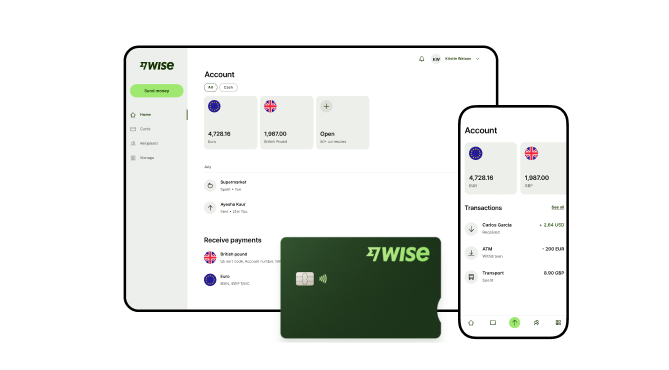


If you're a business in the Philippines trying to go global, you've probably hit a wall of confusing foreign exchange fees when collecting payments from international customers. Wise Business helps you cut through all that complexity—be it a local bank transfer or a wire transfer. By simplifying how you receive payments, you're free to pursue what matters—growing a local brand with global sights.
➡️Get started with Wise Business today
Wise Pilipinas Inc. is regulated by the Bangko Sentral ng Pilipinas. You may visit the BSP website for more information about its regulatory framework and consumer protection policies. To reach Wise, visit help center here.
1. Can Australian merchants pass interchange fees on to customers?
Yes, Australian merchants can still pass on interchange fees as a surcharge, but there are strict rules, and the RBA is planning to end all surcharging on debit and credit cards in October 2026⁷. Currently, you can only pass on the actual cost of interchange fees and card acceptance to customers (no markups).
2. Do interchange fees apply to contactless and online payments?
Yes, interchange fees typically apply to both. However, online payments usually have higher interchange fees compared to contactless in-person transactions because there is a higher risk of ‘card-not-present’ payments, which increases the likelihood of fraud and chargebacks.
Sources:
*Please see terms of use and product availability for your region or visit Wise fees and pricing for the most up to date pricing and fee information.
This publication is provided for general information purposes and does not constitute legal, tax or other professional advice from Wise Payments Limited or its subsidiaries and its affiliates, and it is not intended as a substitute for obtaining advice from a financial advisor or any other professional.
We make no representations, warranties or guarantees, whether expressed or implied, that the content in the publication is accurate, complete or up to date.

Learn how to take payments on a website, from choosing a payment provider to setting up a checkout, accepting cards, and managing fees.

Compare GoCardless vs Airwallex on features, global capabilities, and pricing. Find the right payment solution for your Australian business.

Compare Payoneer vs Airwallex. Explore key differences in features, global coverage, expense management, corporate cards, setup, and fees.

Explore popular online payment methods in Australia, their key benefits, and setup steps. Compare essential factors like fees and security. Read here!

Discover how to open an Amazon Business account in Australia. We explore procurement benefits, pricing tiers, setup steps, and handling global payments.

Learn how Australian SMBs can prevent payment fraud. We explore essential security features, main payment options, setup steps, and sending global payments.