Best Payment Gateways for eCommerce
Need a fast, frictionless, and cost-effective payment solution for your online store? We cover the best payment gateways for ecommerce.



The customer taps a mobile onto an EFTPOS card reader. The machine goes “beep”, and a tick pops up to confirm the transaction is complete. Simple, right?
While the customer experience seems straightforward enough, a lot goes on behind the scenes. Payment processing involves a slew of interconnected systems, procedures, and security standards, as well as payment service providers with varying benefits and fee structures.
Understanding the basics can help Australian businesses find a suitable payment solution for their needs. Here’s everything you need to know.
| Table of Contents |
|---|


Payment processing refers to the systems and procedures that allow businesses to accept electronic payments. It’s not just a single step. Payment processing encompasses the entire transactional journey, from initiation to authentication, verification, and settlement.
The term also spans various electronic payment methods, including EFTs, cards (debit or credit), digital wallets, bank transfers, and BPAY.
According to the Reserve Bank of Australia, only 15% of payments were made in cash in 2025.1 Therefore, efficient, cost-effective payment processing is crucial for local businesses.
Multiple systems and entities comprise the payment processing workflow, each performing a distinct role.
The payment gateway connects all parties involved in the transaction, allowing them to communicate seamlessly. In a typical payment process, the gateway transmits encrypted data, forwards card details to the payment processor, and informs both banks once the transaction is complete. Gateways work within POS terminals or pop-up payment windows for online payment processing.
Payment processing services handle logistics and funds transfers. First, it accepts requests transmitted from the gateway, then authenticates them with both banks to validate the transaction. Once approved, the payment processing provider transfers funds from the customer account to the merchant account.
Think of it like a trusted middle-person that securely swaps funds between two parties. Popular platforms include Stripe, PayPal, and Square.
The acquiring bank, or simply the “acquirer,” is the institution that receives the funds. Within the acquiring bank, a business will usually have a business account for day-to-day financials and a merchant account for accepting and temporarily holding card payments.
The issuing bank is the financial institution of the party sending the funds. In a business-to-business (B2B) transaction, funds usually come from a business account, either via a business credit card or a bank transfer. Consumers more commonly pay with a card or a digital wallet linked to a savings or credit account held with the issuing bank.
The card scheme establishes the standards, rules, and infrastructure for processing its own branded card payments. Common international examples include Visa, Mastercard, and American Express, while eftpos is an Australian domestic-only card scheme alternative.
Aussie businesses have many payment options at their disposal.
| Payment type | Examples | Common use |
|---|---|---|
| Debit/credit card payments | Visa, Mastercard, eftpos, American Express | Everyday purchases, online shopping |
| Mobile wallets | Apple Pay, Google Pay, Samsung Wallet | Smartphone and smartwatch payments, online payments |
| Bank transfers | Online banking, including Osko and PayID | Peer transfers, supplier payments |
| Direct debit | Utility bills, subscriptions, insurance | Recurring payments |
| Direct credit | Payroll | Paying staff salaries |
| BPAY | BPAY via online banking | Bill and tax payments |
| Buy now, pay later (BNPL) | Afterpay, Zip, Klarna | Installment purchases |
| Prepaid cards | Gift cards, reloadable cards | Gifts and controlled spending |
| Cross-currency payments | Wise Business | Low-cost international transactions |
Now that we’re up to speed on the terminology, let’s examine the payment processing workflow. The precise process may vary, but generally looks something like the following:
Sound complicated? That’s because it is. Payment processing involves rapid, seamless communication across multiple systems within an intricate financial network. This complexity is why businesses have relatively high payment processing software costs.
The ideal payment processor depends on your sales volume, industry, product, and customer habits. Consider the following when shopping around.
Fee structure: Smaller businesses may benefit from lower upfront costs but higher per-transaction charges, while the reverse may be true for larger businesses.
Fees: High POS rental or per-transaction charges may make some solutions financially unviable.
Offline/online: In-person businesses have entirely different payment processing system requirements from online stores.
Security: Does your payment processor use encrypted gateways and comply with PCI DSS (Payment Card Industry Data Security Standard)?
Customer support: Some businesses may benefit from in-person training or Australia-based support.
Fees vary by provider, plan, and service. Businesses must combine one-off and ongoing fees to determine total payment processing costs.
Many payment processors charge monthly or annual subscription fees following a software-as-a-service (SaaS) pricing model. Banks may charge monthly account-keeping fees for business and/or merchant accounts.
Payment processors, alternative services, and banks may charge a one-off fee to establish an account. This fee may be in addition to subscription and per-transaction fees.
Card schemes, such as Visa, Mastercard, and eftpos, set interchange fees, usually a percentage and a fixed amount, that the acquiring bank pays to the issuing bank. These fees cover fraud and card rewards costs and are passed on to the merchant.
Payment processors may charge fees comprising a fixed percentage and a fixed amount, such as 2% plus $0.30 per transaction.
Sometimes known as bundled pricing, this fee structure has three tiers that vary by risk: qualified, mid-qualified, and non-qualified. Online payments are riskier than in-person payments, which is why they attract higher fees.
In-person businesses trading may wish to purchase or hire a POS system. More complex, feature-rich models cost significantly more than entry-level systems.
Merchants often pay chargeback fees whenever a customer successfully disputes an authorised transaction.
Banks and payment processors may charge a batch fee for settling transactions at the end of a business day.
International transaction fees generally apply to cross-currency payments. For example, your business might pay 1.6% for domestic card payments and 2.9% for international cards.
Many payment processors use their own currency conversion rates that include a hidden markup over the “real” mid-market exchange rates. Some institutions slap on up to 3%, and the business often won’t see the final rate until after the transaction has settled.
Understanding the various layers of payment processing fees is crucial for any Australian business, particularly when dealing with overseas customers or suppliers.
Expanding a business globally opens up exciting opportunities, but also new challenges like receiving payments across borders. Hidden foreign transaction fees and hefty currency conversions involved with international payments can eat into your profits and time.
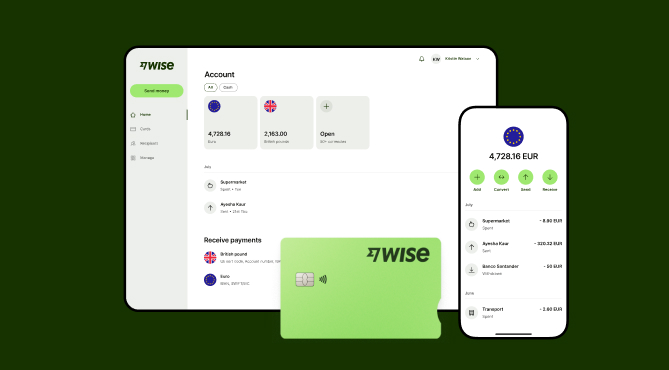
Wise Business serves as a cost-effective solution where you can receive money from around the world at the speed and price of local payments.
Transform the way you receive payments with Wise Business:
Sign up for the Wise Business account! 🚀
This general advice does not take into account your objectives, financial circumstances or needs and you should consider if it is appropriate for you.
Source:
*Please see terms of use and product availability for your region or visit Wise fees and pricing for the most up to date pricing and fee information.
This publication is provided for general information purposes and does not constitute legal, tax or other professional advice from Wise Payments Limited or its subsidiaries and its affiliates, and it is not intended as a substitute for obtaining advice from a financial advisor or any other professional.
We make no representations, warranties or guarantees, whether expressed or implied, that the content in the publication is accurate, complete or up to date.

Need a fast, frictionless, and cost-effective payment solution for your online store? We cover the best payment gateways for ecommerce.

Learn how to set up online payments for a small business in Australia, including payment methods, providers, costs, setup steps, and common challenges.

Learn how to take payments on a website, from choosing a payment provider to setting up a checkout, accepting cards, and managing fees.

Discover how to build an end-to-end invoice automation workflow, avoid the pay-out gap, and scale your business with integrated payment solutions.

Learn how to accept online payments in Australia. Learn about methods like gateways, links, and bank transfers and managing fees, security, and compliance.

Compare the best Shopify payment methods for Australian businesses, and find the right solution to lower your transaction fees and boost sales.