Adyen vs Stripe: Comparison for Australian businesses
Compare Adyen vs Stripe for Australian businesses. Explore features, fees, and how Wise Business can reduce international payment costs.



If you run a business, chances are you’re already using EFTs every day. The vast majority of modern transactions are ‘powered’ by electronic funds transfers (EFTs), and they are key to how you send and receive payments, so it’s useful to know exactly what they are.
This guide will break down what EFT means and how it works, the different types you’ll come across, and what Australian businesses need to know. There’s also an intro to Wise Business: a multi-currency account you can use to manage all your international EFTs and business finances.
| Table of Contents |
|---|


EFT stands for electronic funds transfer, and as the name suggests, it’s a broad term used to describe any type of payment where money moves digitally from one bank account to another, without physical cash or paper cheques.
For Australian businesses, EFTs make up the lion’s share of daily transactions. When you’re sorting payroll or collecting payments from customers, these are typically EFTs. Payment types can include bank transfers, card payments, direct debits, and wire transfers.
There’s a common step-by-step process behind EFTs that starts with someone ‘triggering’ the transaction. Here’s how they work.
The sender gets the transfer underway through an online banking or payment platform, or an integrated system (like invoicing or payroll software). You’re likely very familiar with this process – it’s where all the key details are entered, such as the recipient’s account info and the payment amount.
Next, the payment is checked and approved before it proceeds onward. The payment processor does this, verifying the transaction details and confirming sufficient funds are available. They’ll also run through a few security checks (such as fraud screening) to make sure the payment is legitimate.
After everything has been authorised, the sender’s bank gets the transaction ready for transfer. This might include actions such as formatting the payment message and routing it through the appropriate payment network. At this stage, the instruction is queued, ready to be sent.
Now it’s time to transmit the payment through secure banking networks – such as BECS for domestic transfers in Australia or SWIFT for international payments. The recipient’s bank then receives the instruction and begins the process of crediting the funds.
The final stage: funds are finally settled between banks and credited to the recipient's account. Both parties are usually notified when the transaction is complete, either instantly or after a short delay, depending on the payment type.
When completing an EFT, the exact details you’ll need will depend on where you are sending the money. You’ll need a bit more info for overseas EFTs.
For domestic EFTs, make sure you’ve got:
For international EFTs:
There isn’t a single, universal time frame for EFTs. Again, it’s very much dependent on whether the payment is domestic or international and on the type of infrastructure supporting it.
Domestic EFTs (Australia):
International EFTs:
Traditional bank transfers, particularly international ones, can take a few days because payments bounce through multiple banks and clearing systems en route to the recipient. Each of these steps adds time, especially if currency conversions or compliance checks are required.
These payment flows and checks are among the key factors that impact how long it takes for an EFT to settle.
EFTs have become the ‘default’ way for businesses to move money for a reason. The benefits include:
EFT is an umbrella term that covers several different payment methods and transaction types.
Even with all the benefits we’ve covered, there are some specific challenges with international EFTs. These include:
International EFTs through traditional banks can be expensive and unpredictable, especially if there are hidden FX fees and markups.
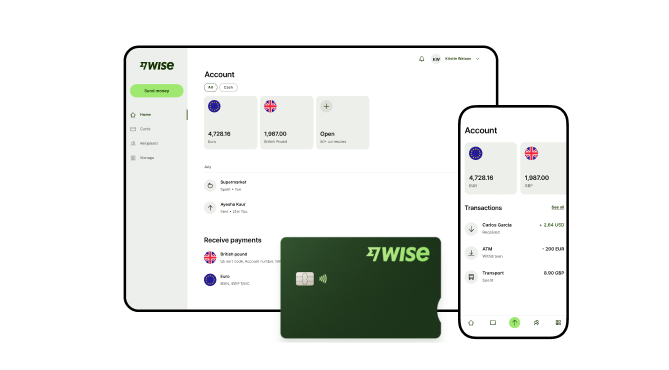
Wise Business brings clarity to daily transactions by providing Australian businesses with a faster, more transparent way to move money globally. A Wise Business account allows users to can send, receive, and hold in multiple currencies. Experience hassle-free global transactions by transacting like a local business. Here's what you get with a Wise Business account:
Sign up for the Wise Business account! 🚀
This general advice does not take into account your objectives, financial circumstances or needs and you should consider if it is appropriate for you.
**Capital at risk, growth not guaranteed. Interest is the name of a custody and nominee service provided by Wise Australia Investments Pty Ltd in partnership with Franklin Templeton.
1. What is the difference between an EFT and an ETF?
An EFT (electronic funds transfer) is a payment method used to move money between different accounts, while an ETF (exchange-traded fund) is an investment product traded on the stock exchange. Despite the very similar acronyms, they’re actually very different things – ETFs are not related to payments.
2. Can I send an EFT to anyone in Australia?
Yes, as long as you have the correct BSB and account number, you can send an EFT to most Australian bank accounts. Many banks also support PayID, a service that lets you send money using a phone number or email address linked to the recipient’s bank account⁶.
3. How secure are EFT payments?
EFTs are generally deemed one of the most secure payment types, as there are several security layers in place (backed by regulations) to protect sensitive information. They use high levels of encryption and mult-factor authentications (2FA), while the payments provider is likely to offer some form of fraud protection.
4. What information do I need to make an international EFT?
To make an international EFT, you’ll typically need the recipient’s name and bank details, as well as a SWIFT or BIC code. It’s then just a case of selecting a currency and entering a payment amount (along with the details) to complete the transfer.
Sources:
*Please see terms of use and product availability for your region or visit Wise fees and pricing for the most up to date pricing and fee information.
This publication is provided for general information purposes and does not constitute legal, tax or other professional advice from Wise Payments Limited or its subsidiaries and its affiliates, and it is not intended as a substitute for obtaining advice from a financial advisor or any other professional.
We make no representations, warranties or guarantees, whether expressed or implied, that the content in the publication is accurate, complete or up to date.

Compare Adyen vs Stripe for Australian businesses. Explore features, fees, and how Wise Business can reduce international payment costs.

Compare eWay vs Stripe for Australian businesses. Explore all the features and fees, and how they compare with alternative solutions.

Compare multi-currency business accounts in Australia. Learn how they work, the fees to expect, and the best options.

Learn what third-party payments are, how they work, and their benefits. This guide covers the main types, challenges, and how to set them up for your business.

Keen to incorporate cashless payments into your small Australian business? From benefits to costs and challenges, we’re covering everything you need to know.

Learn what ACH payments are, how ACH transfers work, fees, timelines, and ways Australian businesses can send and receive ACH payments with ease.