Amazon Business Australia: Benefits, costs and setup guide
Discover how to open an Amazon Business account in Australia. We explore procurement benefits, pricing tiers, setup steps, and handling global payments.



If you’re launching a new business in Australia, you might be wondering, “What is a merchant fee?” The umbrella term covers all fees a business pays to process an electronic transaction.
Although small on their own, merchant fees add up, especially for high-volume businesses with low profit margins. Understanding merchant fees, including the types, costs, and tax implications, can help you better manage your business.
| Table of Contents |
|---|

The merchant fee isn’t a single charge; it’s a cover-all term for any payment-related costs incurred by the merchant.
Merchant fees vary by payment method, payment type, payment processor, and bank. As they’re unavoidable, many businesses consider merchant fees as the cost of doing business.
When a customer makes a card or a digital wallet purchase, multiple systems communicate to move money between accounts.
A payment gateway passes encrypted data between systems, an issuing bank confirms the availability of sufficient funds, and a payment processor verifies the transaction and transfers the funds to an acquiring bank.
Meanwhile, a card scheme – such as Visa, Mastercard, American Express, or eftpos – sets the standards, handles technical routing, and manages settlements in the background.
Merchant fees cover the cost of designing and operating all this interconnected infrastructure, as well as fraud and dispute-related expenses. Of course, merchant fees also give each entity a nice little profit – we’re not talking about charities here.
The business, also known as the “merchant,” usually covers all payment-related fees, hence the name “merchant fees.” Many businesses bake payment costs into their pricing.
Australian businesses can currently pass on merchant fees to customers through surcharging, provided the surcharge does not exceed the actual payment processing costs. The merchant must also retain records as proof, and surcharges must be included in the final price if there is no way to pay without a surcharge.1
However, the Reserve Bank of Australia (RBA) will change these rules on 01 October 2026. Australian businesses will no longer be able to charge card surcharges, and must include any merchant fees within the advertised price.2
Around 16% of Australian businesses currently charge card surcharges, totalling $1.6 billion per year.3
Businesses must factor in a multitude of merchant fees when calculating operating costs.
The customer’s card-issuing bank charges interchange fees that vary depending on many factors. Generally speaking, merchant fees for credit cards cost more than debit cards, online payments more than in-person payments, and international cards more than domestic cards.
For many Australian businesses, eftpos has lower fees than Visa or Mastercard.4 However, contactless payments often use more expensive international card schemes by default. Some payment processors allow Least Cost Routing (LCR), which uses the cheaper eftpos card scheme during contactless payments.
While merchants must cover card scheme and interchange fees, they generally don’t pay them individually. Instead, a payment processor – such as Stripe, PayPal, or Square – will usually bundle all fees together and charge the merchant a set amount per transaction.
Later, behind the scenes, the payment processor divides the proceeds among the parties and retains the remainder to cover its own costs and profits.
Banks may charge a monthly fee to maintain a business account or merchant account.
Some payment processors operate on a Software-as-a-Service (SaaS) model with a subscription fee. However, many prefer per-transaction charges to attract smaller businesses.
Ongoing fees apply when leasing a Point of Sale terminal. Established businesses sometimes purchase a POS terminal outright to save money in the long term.
Merchants may have to pay chargeback fees when a customer disputes and reverses a transaction. Likewise, payment processors may charge refund fees when a business processes a return.
When processing cross-currency payments, few entities use the “real” mid-market exchange rate. Instead, most insert a hidden markup into the exchange rate, often somewhere between 1% and 3%. At the higher end, this markup can potentially double processing costs.
In Australia, merchant fees usually include 10% GST. Therefore, a GST-registered business may be able to claim GST credits on such fees.5
According to the ATO, many businesses overlook input tax credit claims on merchant service fees.5 You can review merchant fee invoices to confirm GST inclusion and report the correct amount on a business activity statement (BAS).
While they appear small on paper, merchant fees add up. According to the Reserve Bank of Australia, businesses collectively paid $2.4 billion in merchant service fees during the 2023/24 financial year.6
The extent of the impact largely depends on your profit margin. Low-margin sectors, such as hospitality and construction, often find that merchant service fees eat into profits. To cope, cafes might pass surcharges onto customers, while builders may encourage bank transfers instead of card payments.
Industries with higher margins, such as medical, accounting, and marketing services, aren’t as vulnerable. A 1-2% merchant fee isn’t a big deal when operating on a 50% profit margin. Many simply absorb payment processing costs to provide convenience to the customer.
Businesses can calculate total merchant fee costs by multiplying card payment revenue by the merchant fee rate. Say your business has a card revenue of $20,000 per month and pays 1.6% per transaction with Square.7 That would look like:
20,000 × 1.6% = A$320 per month, or $3,840 per year.
That calculation assumes all transactions are in-person card payments. Card-not-present payments attract higher fees due to the increased fraud risks. Many payment processors provide tools that generate merchant service fee totals so you don’t have to do the math.
Like death and taxes, there’s no way to escape merchant service fees entirely. But businesses can take measures to reduce them.
Wise Business helps solve the problem of inflated cross-border expenses when you accept international payments. By using a multi-currency account, you can receive funds in various local currencies directly from connected platforms. This helps businesses avoid the steep international card fees and hidden foreign exchange markups often associated with traditional methods.
Expanding a business globally opens up exciting opportunities, but also new challenges like receiving payments across borders. Hidden foreign transaction fees and hefty currency conversions involved with international payments can eat into your profits and time.
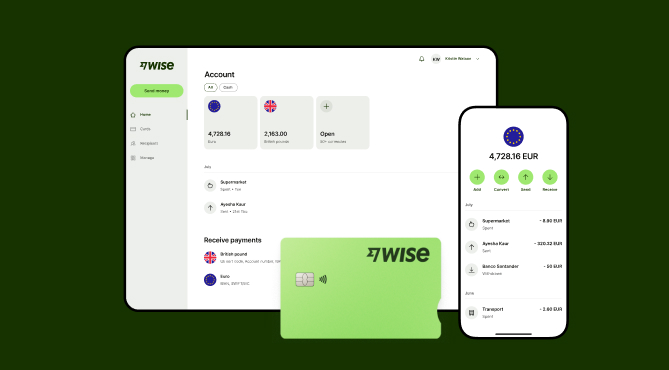
Wise Business serves as a cost-effective solution where you can receive money from around the world at the speed and price of local payments.
Transform the way you receive payments with Wise Business:
Sign up for the Wise Business account! 🚀
This general advice does not take into account your objectives, financial circumstances or needs and you should consider if it is appropriate for you.
1. What does “merchant fee” mean?
The merchant fee definition is any payment-related fee paid by the merchant.
2. What is the average merchant fee in Australia?
Merchant fees in Australia range from 0.3% for domestic eftpos payments to 2.5% for foreign credit cards (plus a hidden FOREX fee).
3. Can I pass merchant fees on to my customers in Australia?
An Australian business can currently pass on fees to customers.3 However, this will change on 01 October 2026, when surcharging will become illegal.4
4. Is a merchant fee the same as a payment processing fee?
Not quite. The payment processor fee is one fee, while the merchant fee covers all payment-related fees.
5. Is the merchant fee GST-free?
In Australia, most merchant fees include GST.5
Sources:
*Please see terms of use and product availability for your region or visit Wise fees and pricing for the most up to date pricing and fee information.
This publication is provided for general information purposes and does not constitute legal, tax or other professional advice from Wise Payments Limited or its subsidiaries and its affiliates, and it is not intended as a substitute for obtaining advice from a financial advisor or any other professional.
We make no representations, warranties or guarantees, whether expressed or implied, that the content in the publication is accurate, complete or up to date.

Discover how to open an Amazon Business account in Australia. We explore procurement benefits, pricing tiers, setup steps, and handling global payments.

Learn how Australian SMBs can prevent payment fraud. We explore essential security features, main payment options, setup steps, and sending global payments.

Compare PayPal and Airwallex features, setups, coverage, and fees for Australian businesses managing global money, plus alternative accounts like Wise Business.

Learn how Australian businesses can streamline international payment processing, reduce exchange fees, understand payment rails, and compare processing methods.

Learn how international B2B payments work, explore common methods, understand foreign exchange fees, and discover best practices to lower cross-border costs.

Learn how to calculate cost of sales for Australian SMEs. Discover the standard formula, key direct inclusions, FX landed costs, and common mistakes to avoid.