Revolut business review: Plans, fees, and Australian alternatives
Read here for a review on Revolut Business in Australia. Compare multi-currency features, subscription plans, out-of-hours transfer fees, and alternatives.



In 2025, payments in Australia look very different from a few years ago. The market value is USD 1.07 trillion1, and about 90% of Australians use digital payment methods. This makes it clear that cash isn’t most people’s first choice anymore.
For businesses, this shift affects customer preferences. If your business supports the payment methods people actually use, more payments go through, fewer customers leave mid-checkout, and you can sell in more markets.
This guide explains what payment methods are, why they matter to businesses, the main types used in Australia, and how multi-currency accounts help with international payments.
| Table of contents |
|---|

Payment methods are the different ways a business lets customers pay. This includes cash, cards, PayID, Apple Pay, PayPal, bank transfers, and other digital options that support secure and verified transactions.
Each payment method runs on its own system. Cards use card networks. PayID moves money through real-time bank transfers. Apple Pay and PayPal use tokenised details for more security. These systems decide how fast the money arrives, what the business pays in fees, and what security the method provides.
Because of these differences, businesses ideally identify the best payment method that is suitable for their operations while also balancing the popular option preferred by their customers.
Take two online stores. Store A accepts only cards. Store B accepts cards, Apple Pay, and PayPal. Customers feel more comfortable on Store B because they see the options they already use on other sites. As a result, more people complete their payments on Store B rather than leaving halfway.
In simple terms, payment methods provide a safe, direct way for funds to flow from the customer to the business.
Australia’s payment data shows clear differences in how people pay. Online3, cards make up 41% of payments, and digital wallets make up 31%. Bank transfers hold 10%, and smaller methods cover the rest. In stores4, debit cards lead at 39%, credit cards follow at 34%, digital wallets sit at 15%, and cash stands at 7%. No single method works for every customer or every channel.
These differences matter for businesses. A customer pays only when they see a method they trust. If the option is missing, the payment stops. Each method also has its own speed, cost, and level of security. These factors affect cash flow, cost control, and daily operations.
By offering payment methods that match customer preferences and suit your business needs, you can:
1. Improve payment completion and reduce drop-offs
Customers complete payments more often when they see a method they trust. If the option is missing, many leave before paying. By offering standard methods like cards, PayID, Apple Pay, or PayPal, a business keeps more customers in the checkout flow and increases successful payments.
2. Expand access to international buyers
Different countries prefer different payment methods. A method that works well in Australia may not work in another market. When a business supports regional options, international customers pay with less effort. This helps the business enter new markets with fewer barriers.
3. Strengthen day-to-day cash flow
Each payment method settles at a different speed. PayID settles almost instantly. Cards settle in one or two days. BNPL providers follow their own schedule. By choosing methods with steady settlement times, a business plans its expenses better and avoids delays.
4. Control the cost of accepting payments
Each method comes with its own fee. Cards may include processing charges. Wallets often use similar pricing. Bank transfers and PayID may cost less. When a business understands these differences, it protects its margins and avoids extra costs.
5. Lower risk across different payment methods
Some methods offer better verification. Mobile wallets use biometrics. Bank transfers rely on bank-level checks. These features lower the chance of fraud or disputes. A business chooses methods that match its risk level and transaction type.
6. Support varied transaction needs
Different types of payments need different setups. Subscriptions, large invoices, and international transfers do not use the same method. More payment options help a business handle each case without adding extra steps for the customer.
7. Serve different customer preferences
Customers use different ways to pay. Some use debit cards. Others rely on mobile wallets. Some trust PayID or PayPal. When a business offers several options, more customers feel comfortable paying.
8. Reduce manual effort in payment handling
Popular payment methods reduce confusion and delays. The business deals with fewer errors and spends less time on manual tasks.
Businesses use several payment methods to accept money from customers. Each method works on its own system and suits different types of transactions. Let us look at some of the most common payment methods used in Australia:
| Payment Method | What it offers | Where it fits best | Typical cost |
|---|---|---|---|
| Credit & Debit Cards | Accepts Visa, Mastercard, and EFTPOS. Fast authorisation, consumer protection, and recurring billing support. | Most online stores, subscriptions, and general retail. | ~0.5% for Debit and ~0.9% for Credit cards5. |
| Digital Wallets*(Apple/Google Pay, PayPal)* | Stored details for one-click checkout. High security via biometrics (FaceID). Optimized for mobile. | Mobile-heavy traffic, repeat customers, and speed-focused users. | Varies by card. PayPal charges ~2.6% + 30c AUD6. |
| Buy Now, Pay Later*(Afterpay, Zip, Klarna)* | Customers pay in installments while merchants get paid upfront. Increases cart value and affordability. | Fashion, retail, electronics, and impulse-driven businesses. | Varies by provider; often ~4–6% per transaction7. |
| Bank Transfers*(PayID / Real-time)* | Direct bank-to-bank transfer. Fast settlement, minimal failed charges, and clear payer details. | Service businesses, B2B invoices, and high-value transactions. | Typically low-fee or no-fee depending on the bank. |
| Multi-currency*(Wise Business)* | Holds multiple currencies so customers pay locally. Avoids forced FX conversion and delays. | Exporters, global SaaS, freelancers, and international sellers. | Mid-market FX rate (no markup) + small transfer fee. |
*Cost info is indicative. Always check current pricing with your chosen provider.
Cards are one of the most common ways to pay. Credit cards draw on a credit line, while debit cards withdraw funds directly from the customer’s bank account. They suit online shopping, in-store payments, recurring billing, and subscriptions. Cards offer wide acceptance and strong customer protection.
Digital wallets store a customer’s card or bank details in a secure format. Apple Pay, Google Pay, and PayPal are popular examples. They allow quick checkout and reduce the need to type card numbers. Device-level security, such as biometrics, lowers fraud risk.
Bank transfers move money directly from the customer’s bank to the business. In Australia, this includes PayID and standard transfers. PayID offers near-instant settlement and clear payer details. This method suits invoices, B2B payments, and high-value transactions. It usually comes with lower fees.
A multi-currency account lets a business receive and hold money in several currencies without forced conversion. Customers pay in their local currency, and the business receives it directly.
A provider like Wise Business supports this by giving local account details in multiple countries. International customers pay as if they are sending money domestically. This reduces delays, avoids hidden conversion fees, and helps the business operate smoothly across borders.


Direct debit allows a business to withdraw funds from a customer’s account with permission. It suits recurring payments such as subscriptions, utilities, memberships, and rent. It removes the need for customers to pay manually every cycle.
PayTo is a newer system under Australia’s NPP. It allows fast, approved payments directly from a bank account. Businesses use PayTo for subscriptions, bill payments, and variable recurring payments because it gives instant confirmation and fewer failed charges.
BNPL splits a purchase into instalments. Customers pay the provider over time, while the business receives the full amount upfront. BNPL suits higher-value retail purchases and younger buyers who avoid credit cards.
Prepaid cards come with a fixed balance loaded by the customer. They work online and in stores. They suit customers who want more control over spending or prefer not to use a bank card.
Businesses offer gift cards or digital vouchers that customers redeem as payment. These work well for retail, food, beauty, and service-based businesses. They also bring in new customers.
Cash still appears in some in-store transactions. It suits small purchases and customers who prefer offline payment. But it requires manual handling, storage, and reconciliation.
Cheques are less common now but still appear in some business, insurance, and government payments. They settle slowly and need physical processing, so many businesses reduce cheque acceptance.
Some businesses accept crypto through payment processors. This is an emerging method and suits niche markets. Crypto payments settle through blockchain networks and require conversion to local currency for accounting.
Expanding a business globally opens up exciting opportunities, but also new challenges like receiving payments across borders. Hidden foreign transaction fees and hefty currency conversions involved with international payments can eat into your profits and time.
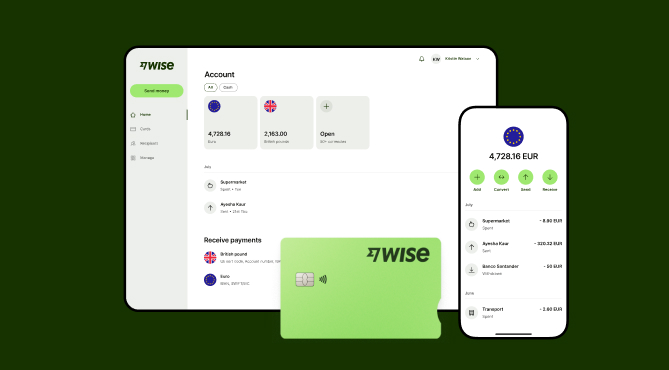
Wise Business serves as a cost-effective solution where you can receive money from around the world at the speed and price of local payments.
Transform the way you receive payments with Wise Business:
Sign up for the Wise Business account! 🚀
This general advice does not take into account your objectives, financial circumstances or needs and you should consider if it is appropriate for you.
--
1. Which is the safest payment method for international transactions?
Bank transfers and multi-currency accounts are the safest. Digital wallets with strong authentication, like Apple Pay or PayPal, also offer good protection.
2. What are the most common payment methods used for ecommerce businesses?
Cards, digital wallets, PayID, and BNPL are the most common options for ecommerce.
3. How long does it take for money from a sale to reach my bank account?
PayID arrives almost instantly. Card payments take one to two business days. BNPL and some wallets may take a bit longer.
Sources:
*Please see terms of use and product availability for your region or visit Wise fees and pricing for the most up to date pricing and fee information.
This publication is provided for general information purposes and does not constitute legal, tax or other professional advice from Wise Payments Limited or its subsidiaries and its affiliates, and it is not intended as a substitute for obtaining advice from a financial advisor or any other professional.
We make no representations, warranties or guarantees, whether expressed or implied, that the content in the publication is accurate, complete or up to date.

Read here for a review on Revolut Business in Australia. Compare multi-currency features, subscription plans, out-of-hours transfer fees, and alternatives.

Compare the best payment gateways for WooCommerce in Australia, including features, fees, payment methods, and how to choose the right integration.

Learn how the Stripe payment gateway works in Australia, including features, fees, integration options, and tips for accepting online payments.

Need a fast, frictionless, and cost-effective payment solution for your online store? We cover the best payment gateways for ecommerce.

Compare OFX vs Airwallex for Australian businesses. Explore their features, multi-currency accounts, expense management, integrations, and fees.

Learn how to set up online payments for a small business in Australia, including payment methods, providers, costs, setup steps, and common challenges.