Revolut business review: Plans, fees, and Australian alternatives
Read here for a review on Revolut Business in Australia. Compare multi-currency features, subscription plans, out-of-hours transfer fees, and alternatives.



Stripe is one of the most popular platforms for accepting and processing payments securely, both online and in person. It now supports 1+ million users in Australia and New Zealand, and globally, the platform processes over $1.4 trillion in payments annually¹.
But if you’re considering using Stripe for business, it’s good to know how much those payments will cost you.
In this guide, we’ll break down Stripe fees in Australia, covering pricing plans and the different service fees you’re likely to encounter, and show you how to manage some of these costs effectively. Plus, there’s also an intro and comparison to Wise Business to help you save on international transactions.
| Table of contents |
|---|


Stripe uses a pay-as-you-go model for processing online payments. The plans are very streamlined, with just two main ones: Standard and Custom². The latter is mainly for larger corporations with big payment volumes. As a small business, the Standard plan will cover most use cases.
Here’s a quick overview of the pricing plans.
| Stripe plan | Best for | How pricing works |
|---|---|---|
| Standard | Small to medium-sized businesses | Per-transaction fees with no monthly account costs |
| Custom | High volume or enterprise businesses | Bespoke pricing negotiated directly with Stripe |
For most Australian businesses, Standard is the default option. There’s no ongoing subscription fee, and you only pay when you process a payment or use an additional Stripe service.
The Standard plan includes²:
Stripe doesn’t have any setup fees or mandatory monthly fees, but because there aren’t any ‘free’ allowances with the standard plan, you’ll generally pay per transaction.
Stripe has a full pricing list covering three main areas: global payments, money management, and revenue and finance automation. Within these, there are multiple services that charge fees, usually either as a flat monetary amount or percentage of the transaction.
We’ll now look at some of these services and the different types of fees in more detail.
Stripe Payments is the headline service, allowing businesses to accept 100+ payment methods using pre-built checkout tools and a web-based dashboard. There are fees when you accept online payments through cards, digital wallets, or local payments in Australia like PayTo. These include GST and vary depending on the payment type.
For online card and wallet payments, Stripe charges²:
These fees cover things like payment processing, access to Stripe’s checkout tools, and all the built-in payment optimisations such as real-time retries.
If you offer buy now pay later (BNPL) options through Stripe for services such as Zip and Afterpay, additional fees apply³.
Some services also add an extra 1.5% fee for international transactions and 2% for currency conversions, so it’s a good idea to check the full list of surcharges for clarity.
Stripe Terminal is a service that lets you accept payments in person using card readers and smartphone apps. The fees are slightly lower per transaction but might include additional authorisation charges².
If you’re accepting payments in a store or other physical location, you’ll need compatible hardware. Stripe sells card readers separately, with prices excluding GST starting from $89.
Stripe processing fees aren’t a separate charge or line item. Instead, the term is commonly used to describe the cost of Stripe handling and settling payments on your behalf.
In practice, Stripe builds its processing costs into its payment fees, and they apply across card payments, bank transfers, etc. rather than existing as a standalone fee.
For example:
Stripe doesn’t charge traditional merchant account fees, such as monthly account maintenance or setup fees. Instead, merchant costs are usage-based and tied directly to the services you enable and use with Stripe.
For most businesses, Stripe merchant fees are simply a combined total of:
This model means fees always scale directly with your usage.
There aren’t charges for issuing most refunds on Stripe, but the fees from the original transaction aren’t returned. This means if you refund a customer, you’ll still pay the initial payment processing fee charged when the transaction was completed.
For businesses on standard pricing, refunds for card payments and most other payment methods don’t incur an extra refund fee. However, Stripe notes there “may be fees” for bank transfer refunds⁴.
Stripe Connect is a money management service built for platforms and marketplaces that need to collect payments and distribute funds to multiple parties, like sellers or contractors.
When Stripe sets and collects processing fees, there are no charges, but if you decide to take responsibility and set custom pricing to earn more revenue, there’s a 0.25% +$0.25 fee per transaction².
In addition to payments, Stripe offers a range of optional products that charge additional fees. Not every business will need these, but it’s useful to know these costs if you plan to scale or automate certain tasks.
When processing international payments, Stripe’s 3.5% + $0.30 charge can quickly add up, especially if you’re dealing with customers overseas regularly. There’s also an additional 2% fee if currency conversion is required².
Wise Business offers an alternative, affordable solution for both domestic cross-border transfers. Instead of profiting through payment processing fees, Wise focuses on low, transparent currency conversion costs and international transfer fees.
| Feature | Stripe cost | Wise Business cost |
|---|---|---|
| Cross-border funds movement | Charged as part of payment fees | Fee varies by currency, from 0.63% |
| Currency conversion | 2% | From 0.63% (varies by currency) |
| Receiving AUD payments | Charged as part of payment fees | Free (non-SWIFT, non-wire) |
Stripe has a few built-in features to manage Stripe fees, so they remain visible and don’t become too unwieldy or a burden on operating budgets.
Here are some tips and best practices.
Some of Stripe’s service fees include GST, but not all of them. For example, any fees for taking payments via cards, wallets, BNPL, and bank-based methods all have GST built-in to the pricing, but this isn’t made explicit for other services.
On its support page, Stripe says GST charges are applied on top of product and service at the “prevailing standard rate”, unless there’s an agreement in place for pricing that includes GST⁶. It adds that customers will be sent a monthly tax invoice for all the GST applied to fees.
The rate your business will be charged will be based on your location and tax status². It’s recommended that you research the full scale of GST charges before using Stripe’s services.
It is possible to pass Stripe fees onto customers as a surcharge. However, to do it automatically, you’ll likely have to use accounting or invoicing software tools that integrate directly with Stripe, such as Xero or Invoice2go.
If you decide to pass fees on, make sure you:
It’s important to be fully transparent about passing on charges, both at the point of payment and by disclosing it in the invoice as well.
By linking your Wise Business account to Stripe, you can receive payouts in over 8+ currencies, such as USD, GBP, and EUR. This means you can keep your funds in their original currency, avoiding Stripe’s automatic conversion to AUD.
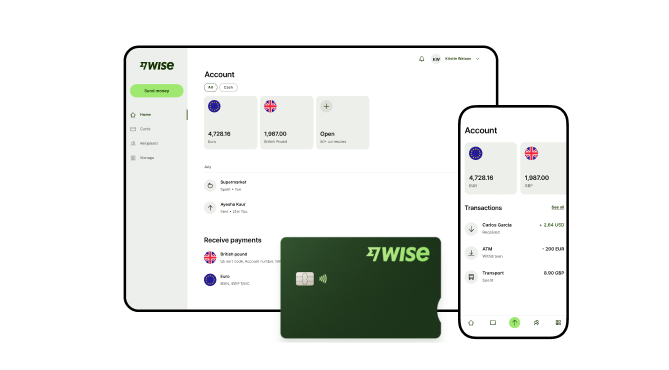
A Wise Business account allows users to send, receive, and hold in multiple currencies. Experience hassle-free global transactions by transacting like a local business. Here's what you get with a Wise Business account:
Sign up for the Wise Business account! 🚀
This general advice does not take into account your objectives, financial circumstances or needs and you should consider if it is appropriate for you.
**Capital at risk, growth not guaranteed. Interest is the name of a custody and nominee service provided by Wise Australia Investments Pty Ltd in partnership with Franklin Templeton.
Sources:
*Please see terms of use and product availability for your region or visit Wise fees and pricing for the most up to date pricing and fee information.
This publication is provided for general information purposes and does not constitute legal, tax or other professional advice from Wise Payments Limited or its subsidiaries and its affiliates, and it is not intended as a substitute for obtaining advice from a financial advisor or any other professional.
We make no representations, warranties or guarantees, whether expressed or implied, that the content in the publication is accurate, complete or up to date.

Read here for a review on Revolut Business in Australia. Compare multi-currency features, subscription plans, out-of-hours transfer fees, and alternatives.

Compare the best payment gateways for WooCommerce in Australia, including features, fees, payment methods, and how to choose the right integration.

Learn how the Stripe payment gateway works in Australia, including features, fees, integration options, and tips for accepting online payments.

Need a fast, frictionless, and cost-effective payment solution for your online store? We cover the best payment gateways for ecommerce.

Compare OFX vs Airwallex for Australian businesses. Explore their features, multi-currency accounts, expense management, integrations, and fees.

Learn how to set up online payments for a small business in Australia, including payment methods, providers, costs, setup steps, and common challenges.