Amazon Business Australia: Benefits, costs and setup guide
Discover how to open an Amazon Business account in Australia. We explore procurement benefits, pricing tiers, setup steps, and handling global payments.



International trade is a cornerstone of our economy. In 2025, Australian businesses collectively sold $665 billion worth of goods and services to overseas customers.1
Whether you’re a mining magnet or an e-commerce entrepreneur, effective international payment processing is fundamental to success. In today’s post, we’re covering everything you need to know about collecting offshore payments, from definitions to processes, networks, best practices, and fees.
With the right international payment procedures in place, you can streamline billing and slash cross-currency transaction costs.
| Table of Contents |
|---|


International payment processing is a catch-all term for cross-currency transactions of all forms. The term spans multiple payment types, including SWIFT transfers, card payments, payment gateways, digital wallets, and money transfer services.
Australian businesses process incoming and outgoing international payments for various purposes, including procurement, sales, trade, payroll, and remittances.
International payment processing services are inherently more complex and costly than domestic ones. Multiple parties may be required, with funds being routed through various financial networks and intermediaries, many of whom charge fees. Currency conversion and compliance obligations add to transaction costs, further increasing fees and processing times.
A domestic payment is when the account holder of an Australian-based financial institution pays another Australian account in AUD. It doesn’t matter if one or both account holders are overseas at the time. Domestic transaction fees tend to be low, or even free, and payments settle quickly as compliance is simpler and fewer intermediaries are involved.
International payment processing is required when the financial institution of the payer or seller is based overseas, and at least one party uses a foreign currency other than AUD. Higher transaction fees and currency conversion charges may apply, and settlements can take longer due to routing and compliance complexities.
| Domestic payments | International payments | |
|---|---|---|
| Transaction | Australia-Australia accounts | Australia-offshore account |
| Currency | AUD-only | AUD-foreign currency |
| Fees | Low or free | International transaction + FOREX |
| Payment rails and methods | Eftpos, BPAY, PayID/Osko, cards, digital wallets, BNPL | Cards, money transfer service (Wise), bank transfer, digital wallet (PayPal) |
| Compliance | Local regulations | Multiple jurisdictions and regulations |
| Settlements | Often instant | Can take several days |
When receiving international payments, businesses use a payment network, also known as a payment rail.
The payment rail is the infrastructure that processes transactions, securely moving money between payer and payee. Think of it like a railway line for money. Payment providers, such as payment processors (Stripe, Square), money transfer services (Wise), and digital wallets (PayPal), are like the locomotives moving the funds.
Each payment rail follows different routes. Some send funds between multiple intermediaries, taking a scenic route that may end up more costly. Others handle currency conversions in-house, or don’t actually send trains across borders at all.
Generally, however, the international payment process looks something like the following:
Initiation and Authorisation: The payer’s bank receives the transaction request. The payment rail confirms sufficient funds and performs compliance and security checks before authorising the transaction.
Currency Conversion: The payment is converted to a foreign currency using an exchange rate set by the payment rail, which typically includes a 2-5% margin over the mid-market rate.
Clearing: Funds are frozen during the clearing phase, when the payment is validated and reconciled, and the payment rail calculates fees to prepare for settlement. Intermediary banks assist when there is no direct sender-receiver relationship.
Settlement: The rail network sends the funds through the relevant network towards the recipient’s account. After approving the settled funds, the receiving bank credits the money into the recipient’s account.
Numerous parties can play a role in processing international payments, depending on your chosen method. Here’s a quick glossary of the key players.
Payer: The person or business making the payment
Payee (beneficiary): The person or business receiving the payment
Issuing bank: The financial institution holding the account of the payer (verifies sufficient funds and authorises the initial transaction)
Acquiring bank: The financial institution holding the account of the payee (receives funds on behalf of the payee)
Intermediary (correspondent) bank: Third-party bank acting as a go-between when the issuing and acquiring banks don’t have a direct relationship.
Payment rails: Payment infrastructure networks, such as card schemes or the SWIFT bank transfer system
Payment Service Providers (PSPs): Third-party companies helping businesses accept international payments (payment processors, money transfer services, digital wallets, etc.).

The ideal payment rail can vary by payment type. For example, an Aussie business might find it advantageous to bill customers via a money transfer service and pay suppliers by credit card.
When selecting a payment rail, businesses should consider fees, settlement timeframes, security, compliance, and convenience for both the payer and payee.
Debit and credit cards from global card schemes – Visa, Mastercard, American Express, Diners Club – are among the most popular cross-currency payment options worldwide, largely thanks to their convenience and widespread availability.
Some companies prefer paying with business cards for the perks, which range from everyday rewards to frequent flyer points and low interest rates for managing cash flow.
Card schemes communicate between the relevant accounts, handling the bulk of the work involved with authorisations, clearances, and settlements. Funds are debited from the payer’s account instantly, but may take 1 to 3 business days to reach the merchant account.
Although convenient, accepting international card payments can be expensive, especially for high-volume purchases.
Australian banks use the Society for Worldwide Interbank Financial Telecommunications (SWIFT) system for international transfers. This global relay system uses a secure messaging service to inform banks on how to perform each step of the transaction process, from authorisation to currency conversion, clearance, and settlement³.
Aussie banks use a SWIFT code, also known as a BIC to identify and authenticate accounts. Once funds leave Australia, they are routed through domestic payment rails, such as the Automated Clearing House (ACH) in the USA⁴ or the Single Euro Payments Area (SEPA) in Europe⁵.
International bank transfers take between 1 and 5 business days to settle. Fees can be high, as the issuing bank, acquiring bank, and intermediary bank may take a cut, in addition to a FOREX margin.
Mobile operating system wallets, such as Apple Wallet⁶, Google Wallet⁷, and Samsung Wallet⁸, serve as secure digital containers for storing and sharing card details.
Businesses can integrate mobile wallets into their payment gateways to accept international payments. Fees and processing times are often similar or identical to standard card payments,
Online e-wallets, such as PayPal, work a little differently. This app-based e-wallet securely stores banking information, allowing customers to pay online without disclosing any card details⁹. Fees are comparatively high². However, many customers like PayPal for its brand recognition and buyer protection.
Money transfer services like Wise don’t actually move funds across borders. Instead, they use a ‘local-in, local-out’ system, receiving AUD into an Australian account and paying in foreign currency from a local account in the relevant foreign country¹⁰.
This approach allows a money transfer service to offer instant or near-instant transfers and significantly lower international transfer fees. Importantly, businesses send funds at the mid-market exchange rate, potentially saving an extra 2-5% on every transfer. To execute this approach, the money transfer service needs to hold accounts with large sums of liquid cash in various markets worldwide.

The fees involved with processing international payments vary considerably depending on the payment rail or type.
| Payment rail or type | International payment fees | Notes |
|---|---|---|
| Credit & debit cards | Typically 3-3.5% international transaction fee. Varies by card scheme and payment processor. | Percentage-based. Expensive for high-volume purchases. Convenient and may include perks. |
| Apple Pay / Google Pay | Usually no additional fee to standard card scheme fees. Varies by card scheme and payment processor. | Generally more secure than debit/credit cards. |
| SWIFT bank transfer | Typically $20-30 transfer fee, + $10-30 intermediary fee, + 3-4% FOREX markup. Varies by banks. | Percentage and per-transaction-based. Slow processing times. |
| PayPal (Online Digital Wallet) | 3.90% (2.90% domestic commercial + 1% extra for international) + A$0.30 fixed + FOREX markup2 | Strong brand recognition and buyer protection program |
| Wise Business (Multi-currency) | Receiving domestic payments in 8+ currencies is free. SWIFT varies by currency and payment route. AUD Swift payments AUD 6.24 flat rate. | No exchange rate markup |
Businesses that frequently deal with offshore customers can incorporate international payment best practices to boost sales, streamline processes, and reduce fees.
Expanding a business globally opens up exciting opportunities, but also new challenges like receiving payments across borders. Hidden foreign transaction fees and hefty currency conversions involved with international payments can eat into your profits and time.
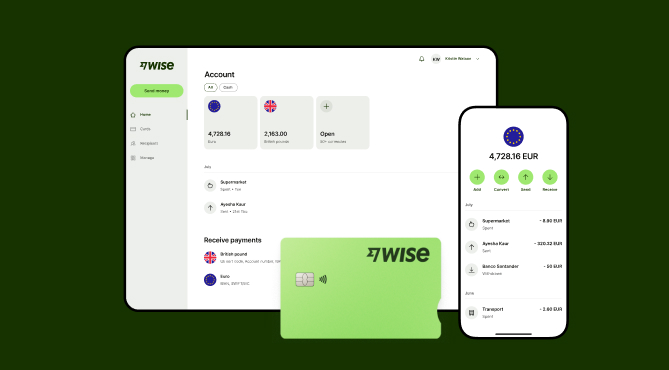
Wise Business serves as a cost-effective solution where you can receive money from around the world at the speed and price of local payments.
Transform the way you receive payments with Wise Business:
Sign up for the Wise Business account! 🚀
This general advice does not take into account your objectives, financial circumstances or needs and you should consider if it is appropriate for you.
1. How long does international payment processing typically take?
International payments typically take 1-5 days to process. However, some money transfer services can offer instant or near-instant international transfers using the ‘local-in, local-out’ method.
2. What is the mid-market exchange rate, and why does it matter?
Mid-market refers to the midpoint between the buying and selling prices of two currencies. Therefore, the mid-market exchange rate is the ‘real’ value of a currency, without any markups or margins.
3. How can businesses avoid hidden intermediary bank fees when paying international suppliers?
Businesses can avoid hidden intermediary bank fees by using a money transfer service like Wise instead of a traditional bank transfer.
Sources
1. ABS: International trade supplementary information
2. PayPal: PayPal Merchant fees
3. Swift: About Page
4. Bureau of the Fiscal Service: Automated Clearing House
5. European Central Bank: Single Euro Payments Area (SEPA)
6. Apple: Apple Wallet
7. Google Wallet: Help Page
8. Samsung: Samsung Wallet
9. PayPal: Is PayPal Safe?
10. Wise: About Wise
11. PCI Security Standards Council: PCI Security Standards Overview
*Please see terms of use and product availability for your region or visit Wise fees and pricing for the most up to date pricing and fee information.
This publication is provided for general information purposes and does not constitute legal, tax or other professional advice from Wise Payments Limited or its subsidiaries and its affiliates, and it is not intended as a substitute for obtaining advice from a financial advisor or any other professional.
We make no representations, warranties or guarantees, whether expressed or implied, that the content in the publication is accurate, complete or up to date.

Discover how to open an Amazon Business account in Australia. We explore procurement benefits, pricing tiers, setup steps, and handling global payments.

Learn what does PTY LTD mean in Australia and how it compares to other business structures. What are theequirements to start a PTY LTD in AU? Find out more!

If you’re on the hunt for a suitable business credit card in Australia, there are several offerings available. A mutual or ‘customer-owned’ bank, Heritage...

If you’re a business owner in Victoria seeking a low-rate business credit card solution, Bank of Melbourne (BOM) may be worth considering. Existing...

If you run a business that deals with international trade, you know the importance of finding a service provider that makes international payments and foreign...

If you’re the owner of a business or run the finances of one, you might be considering business debit cards. These cards are usually connected to the...