Guide on small business payment processing in Australia
Learn how small business payment processing works in Australia, including costs, setup steps, and how to manage domestic and international payments efficiently.



If you’re a business owner, entrepreneur or sole proprietor, you may be wondering about the benefits and uses of corporate cards. This guide walks through all you need to know - including the types of cards available, the fees you may need to pay, and how to get started.
We’ll also introduce the Wise for business account and card as a smart alternative to a corporate card from your normal bank.
| Table of contents |
|---|
A corporate card is issued to an employee through their company and can be used for allowable expenses like business travel and hotel costs. Using a corporate card means that an employee doesn’t need to pay business expenses upfront from their own pocket and expense it later — making it easier to manage their personal finances.
Different types of cards are available for business use. You’ll find business credit cards intended for smaller businesses and sole proprietors, as well as corporate credit cards which are intended for large, well established businesses with multiple card holders.
These cards are designed to be used for authorized business expenses, such as:
The mechanics are straightforward but powerful. The company establishes a credit line with a financial institution. Based on the company's creditworthiness and cash flow, a total credit limit is set. The company administrator can then distribute physical or virtual cards to employees, often setting individual spending limits for each person.
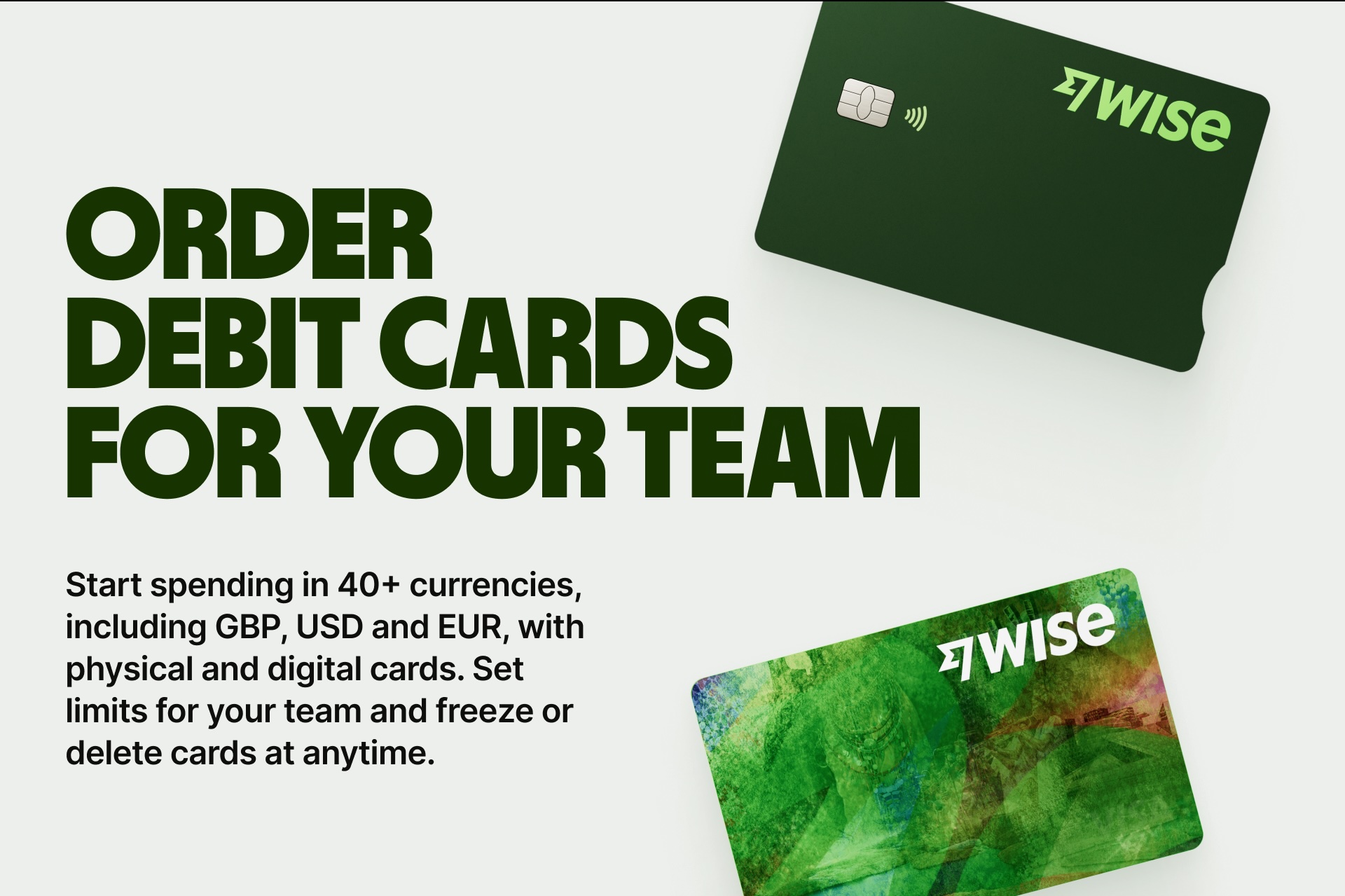
Other companies may opt for a business debit card, such as the Wise for business multi-currency Mastercard. A debit card allows users to spend up to the balance held, while avoiding interest and penalty fees — and the Wise business card also cuts international transaction and currency conversion costs.
Whether or not you need a corporate card — and the type of card which might work for you — will depend on your business type and size.
If you have employees who regularly incur business expenses that need to be reimbursed, offering corporate cards, small business credit cards, or another solution such as a business debit card, can make the whole process more efficient. It means your staff are never out of pocket for their business spending, and avoids long waits for reimbursement.
You’ll need to consider where liability for payment lies, and how credit checks may be carried out. For some credit cards, the liability for payment sits with the card holder - the employee. They’ll then need to claim back the expense from the business in order to settle the credit card bill. Other cards, though, are paid directly by the employer.
There are also different approaches to credit checking for corporate cards. Some cards require an employee to have their credit checked. While this is unlikely to damage their credit score, it is worth noting. Other corporate credit cards are issued on the creditworthiness of the business rather than the employee.

Moving from a "reimbursement model" (where employees pay and get paid back) to a corporate card model offers distinct advantages for both the business and the staff.
This is the primary driver for most businesses. With corporate cards, finance teams can see spend happening in near real-time. Modern card platforms often come with dashboards that allow you to:
Corporate credit cards essentially provide a short-term float. You make purchases throughout the month but pay the bill at the end of the billing cycle. This allows businesses to keep cash in the bank longer for payroll or other immediate needs.
The reimbursement process is rarely popular. Asking employees to front thousands of dollars for business travel on their personal cards places a financial burden on them. Corporate cards remove this friction, boosting morale and ensuring employees aren't essentially lending the company money interest-free.
Manual data entry is prone to human error. Most corporate card providers integrate directly with accounting software. When a card is swiped, the transaction data flows automatically into the ledger, saving hours of manual reconciliation time at month-end.
Each different business or corporate card will come with its own costs - check out all the small print before you decide which is the best for your needs.
Here are some of the key fees you’ll need to consider:
| Fee type | Cost range¹,²,³,⁴ |
|---|---|
| Annual fee | You may pay from A$50-A$300 on average depending on the account and card type you choose |
| Additional cardholder fee | Card plans may allow only a certain number of cards to be issued. If you need extra cards, you may pay a fee of $60 on average per card |
| APR for purchases and cash advances | The interest rates you’re offered will depend on the card type, from 15% - 20% is common |
| Minimum monthly payment | Check the minimum monthly repayment requirements as these may vary from as low as 2% to the full monthly balance |
| International transaction and currency conversion fees | Unless you choose a card from a currency specialist like Wise for business, you’re likely to find that spending overseas comes with additional charges |
To get the most out of a corporate card program, consider these operational best practices:
All of the largest banks in Australia, and many other global banking names, offer business card services. The cards on offer may vary from credit cards aimed at small business owners and sole proprietors, to corporate cards for big companies, and debit or charge cards for business.
Here are some of the main business cards available from Australia’s “big 4” banks:
Choose from the following range of different card options specifically made for medium to large businesses with unlimited card holders.¹
| Read more: Commonwealth bank business credit card |
|---|
Westpac has many different business card types. Here below are the ones that allow up to 99 card holders.²
| Read more: Westpac business credit cards |
|---|
The business focused cards on offer from ANZ come with different features, including rewards or extended interest free payment.³
| Read more: ANZ business bank account. |
|---|
Depending on your business type and size, you’ll be able to choose from any of NAB’s 5 business card types.⁴
| Read more: NAB business credit card |
|---|
For businesses that operate across borders or simply want to avoid the administrative heavy lifting of traditional credit checks, Wise Business offers a practical path forward. You can issue Wise Business debit cards to your team that connect directly to a multi-currency account, which helps reduce the costs of spending abroad and gives you real-time oversight of company outgoings.
This approach helps you maintain tighter control over budgets while ensuring your staff have the funds they need without incurring high interest or annual card fees.
Simplify how your team manages international expenses. Wise Business debit cards offer a straightforward and efficient solution for spending and withdrawing funds across the globe.
Want a simpler way to handle your team's international expenses?
Sign up for the Wise Business account! 🚀
This general advice does not take into account your objectives, financial circumstances or needs and you should consider if it is appropriate for you.
Sources:
Sources checked on 05-April-2023
*Please see terms of use and product availability for your region or visit Wise fees and pricing for the most up to date pricing and fee information.
This publication is provided for general information purposes and does not constitute legal, tax or other professional advice from Wise Payments Limited or its subsidiaries and its affiliates, and it is not intended as a substitute for obtaining advice from a financial advisor or any other professional.
We make no representations, warranties or guarantees, whether expressed or implied, that the content in the publication is accurate, complete or up to date.

Learn how small business payment processing works in Australia, including costs, setup steps, and how to manage domestic and international payments efficiently.

Not sure what a merchant account is? No worries. From definitions to benefits, requirements, and setups, we’re covering everything the Aussie SMB should know.
Learn how secure online payments work in Australia, the safest methods for businesses, and how to protect customer transactions and international payments.

Learn what integrated payments are, how they work, and how to set up a system. A practical guide for Australian businesses looking to simplify payments.

From payment networks to processes, we’re detailing what EFTPOS means and how it differs from the Australian domestic-only eftpos card scheme.

Learn how electronic funds transfers work, domestic vs international requirements, processing times, and the different types of EFTs for Australian businesses.