International B2B payments: A practical guide for Australian businesses
Learn how international B2B payments work, explore common methods, understand foreign exchange fees, and discover best practices to lower cross-border costs.



Getting paid is a big part of running a business. To do this efficiently, you’ll need a system that allows you to accept and process payments. This system will allow you to actually complete sales online or in-store, manage your finances, and meet growing customer expectations.
This guide breaks down different aspects of small business payment processing in Australia. We’ll cover what’s involved and what it all means, the main costs, and how to set up a system so you can start accepting cards, bank transfers, and other payment methods, both domestically and internationally.
| Table of Contents |
|---|


Small business payment processing is essentially the ‘lifeblood’ of a business, facilitating the flow of money from sales or services into your business bank account.
In Australia, credit and debit cards account for around 75% of all payments¹ – payment processing lets you accept and settle these, alongside other ‘alternative methods’ such as PayPal, Pay ID, and BNPL options like Zip. If customers can’t pay the way they expect, they’re more likely to go elsewhere, often to a competitor that makes it easier.
It also affects how your business runs behind the scenes. When everything is set up properly, payment processing supports:
A typical payment processing flow covers three distinct ‘stages’:
For small businesses in Australia, this chain of events applies across pretty much every transaction, including in-store purchases, online sales, and international payments. The main thing that usually changes is the mix of tools and systems you use for payment processing.
To make that flow work, from initiation through to settlement, there are several components or systems working together behind the scenes.
1. Payment gateway
The payment gateway is a piece of tech that securely captures and transmits payment details. It plays a big part in all online transactions, acting as the bridge between your checkout and the wider payment network. This is what gets the whole process under way.
2. Payment processor
The payment processor handles the transaction itself after receiving the payment details. It sends payment data between banks and card networks, checking if the customer has enough funds to complete the payment, and making sure the money is transferred to your account when everything is approved.
3. Merchant account
A merchant account temporarily holds the funds after a transaction is approved and before they’re transferred into your business account. You can get separate merchant accounts (more complex), but quite a few providers bundle them into a single payment processing system to make things easier.
4. Business account
A business account is where your funds land at the end of the process. For micro and small Australian businesses, this is typically an AUD account, though international sellers like e-commerce sites and dropshippers may use multi-currency accounts.
5. POS systems and payment tools
For any in-person payments, you’ll need card readers and terminals to facilitate payment processing. For online payments, it’s likely to be checkout pages or payment links, which providers may offer as part of their broader services.
6. Reconciliation and reporting tools
These are tools that track transactions and match payments to invoices, helping you to keep everything organised for accounting and tax purposes.
Here are the common fees that you’ll need to budget for when using a payment processing provider.
Fortunately, you don’t need lots of technical expertise at every stage to put a system in place. It’s mainly about making the right choices early on.
Start by defining exactly how customers will pay you. This is often dictated by your industry and business type. For example, an ecommerce store will need a secure online checkout, while a local café in Melbourne might rely on card terminals and tap-to-pay.
Listing the payment tech you’ll need upfront helps to avoid overcomplicating things and reduces the chances of wasting money.
Next, decide which payment methods you’ll accept. Australian customers value flexibility – cards are very popular, but as we noted earlier, alternative options are becoming more common, too.
If you regularly work with other businesses, bank transfers might be a priority. Meanwhile, dropshippers and others selling internationally will need to think about foreign currencies and local payment preferences.
The aim is to make it as easy as possible for people to pay you, without adding unnecessary costs or complexity to the system.
Check our guide on secure payments to find safe methods Australian businesses can use. [link to secure payments blog]
Now you know how you want to get paid, start looking at tools that support it.
This might include:
Some providers bundle all of these in a single platform, but you can pick and choose separate tools. Also, remember to factor in the costs outlined earlier.
You’ll need to register with your chosen provider to start accepting payments. This usually involves submitting your business details, verifying your identity, and linking a business bank account where funds will be deposited. Australian businesses may need to provide an ABN or ACN.
With your accounts ready, the next step is to connect everything. Link your payment system to your website or POS system, and look for other integrations to connect the dots between other tools you use. For example, pairing your accounting software is great for automatically tracking transactions.
A well-integrated system will mean your payments, records, reports, inventory (and more) update in real time, so you don’t have to manually coordinate things.
Read our blog post on integrated payments for more information. [link to integrated payments blog]
Finally, when everything is live, set a routine to manage your finances. You’ll want to regularly reconcile payments with sales or invoices, as well as monitor incoming funds and review overall costs. Keeping accurate records is mandatory in Australia; the ATO requires you to hold financial records for at least 5 years³.
Selling outside Australia opens up new opportunities, with bigger audiences and a global reach. But it also introduces new challenges if you’ve only prepared for payment processing locally.
One of the biggest challenges is making sense of and absorbing the costs of constant currency conversions. If you’re paid in foreign currencies but operate in AUD, this is likely to be a daily battle. Exchange rate markups can quickly eat into your margins.
Then there are cross-border fees – international card payments and transfers often come with additional charges. These vary depending on the countries involved and the payment method used, but you’ll need to be constantly vigilant about how all these markups affect your finances and cash flow.
Other challenges include:
Expanding a business globally opens up exciting opportunities, but also new challenges like receiving payments across borders. Hidden foreign transaction fees and hefty currency conversions involved with international payments can eat into your profits and time.
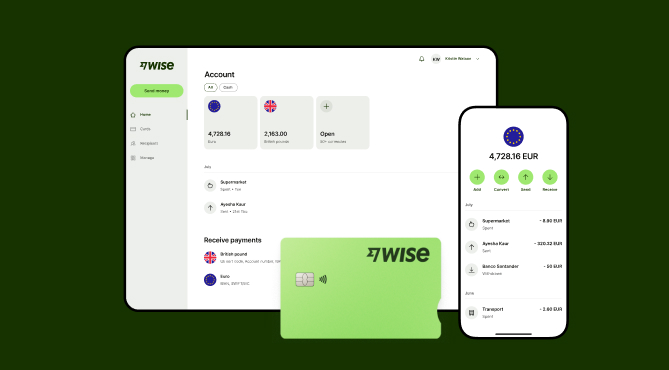
Wise Business serves as a cost-effective solution where you can receive money from around the world at the speed and price of local payments.
Transform the way you receive payments with Wise Business:
Sign up for the Wise Business account! 🚀
This general advice does not take into account your objectives, financial circumstances or needs and you should consider if it is appropriate for you.
Sources:
*Please see terms of use and product availability for your region or visit Wise fees and pricing for the most up to date pricing and fee information.
This publication is provided for general information purposes and does not constitute legal, tax or other professional advice from Wise Payments Limited or its subsidiaries and its affiliates, and it is not intended as a substitute for obtaining advice from a financial advisor or any other professional.
We make no representations, warranties or guarantees, whether expressed or implied, that the content in the publication is accurate, complete or up to date.

Learn how international B2B payments work, explore common methods, understand foreign exchange fees, and discover best practices to lower cross-border costs.

Learn what third-party payments are, how they work, and their benefits. This guide covers the main types, challenges, and how to set them up for your business.

Keen to incorporate cashless payments into your small Australian business? From benefits to costs and challenges, we’re covering everything you need to know.

Learn what ACH payments are, how ACH transfers work, fees, timelines, and ways Australian businesses can send and receive ACH payments with ease.

Learn what a recurring payment is, how it works, types, benefits, and how to set up recurring payments with Wise Business in Australia.

2025 OpenAI pricing overview for API usage in Australia — token rates, tools, and smart ways to reduce next month’s bill.