Guide on PayPal business account in New Zealand
Learn how to open a PayPal Business Account in New Zealand, and explore an in-depth guide to features, fees, and how it works for businesses.


Whether you’re in IT, engineering, or construction, a well-written business proposal could be key to landing that dream project. If it’s your first time crafting such a document, you'll need to figure out how to write a business proposal first.
From templates to structures and best practices, we’re covering all the need-to-know info in this post.
| Table of contents |
|---|

A company sends a business proposal to a client to propose a business solution, usually winning a project or making a sale. Businesses normally write business proposals for other businesses; it’s a common, well-established form of business-to-business (B2B) outreach.
A business proposal differs from a business plan. The proposal pitches a prospective client by highlighting how your product or service can solve a problem. The plan communicates your business strategy, objectives, and vision to potential investors, demonstrating you have the key ingredients for success.
The precise structure, sections, and inclusions vary between industries and projects. However, every decent business proposal will include the three P’s.
Avoid boring prospects with your vision, mission, and growth. Clients only want to know how you can solve their problem and what it will cost.
Solicited proposals respond to a request for proposal (RFP), a formal document that organisations publish when seeking bids on a project. An RFP outlines the problem, requirements, and budget. Any business can respond to a public RFP, so expect stiff competition.
An organisation may informally request a proposal through a casual conversation or email. Clients usually only send informal requests to one business. While this means less competition, informal requests often require more research.
The unsolicited business proposal is like a cold pitch. You send a proposal to a business that hasn’t asked for assistance in the hopes of securing a sale. As it's less likely to succeed, this proposal is generally more generic and may follow a pre-established template, perhaps with a few customisations to address pain points.
If you’re wondering what the document might look like, here’s aPDF business proposal example. The layout can vary considerably; see our structure section below for more details.
Not keen to start the writing process from scratch? Wise has a wide range of business proposal templates you can use for free. We’ve tailored them for specific purposes such as marketing, consulting, investment, partnership, sponsorship, and software proposals.
Keep these best practices in mind to secure that lucrative project or sale.
Thorough research underpins every winning proposal. Dig deep into your prospect’s business, learning all about their problems, pain points, and needs. Obtain a solid understanding of your solution, including product details, pricing, and timeframes.
Market research is extra handy for unsolicited proposals, when no formal RFP outlines the prospect’s needs.
Now is not the time for run-on sentences or incomprehensible prose. Enlist the best writer in your team or outsource the document to a reputable freelancer. While the time-saving benefits are tempting, a client can easily spot AI-generated proposals, which all look eerily similar.
A well-written business proposal is clear, concise, and jargon-free. Keep sentences short and sweet; omit needless words. Use an informative, non-hyperbolic tone, and follow a logical structure with a call to action at the end.
You don’t want to wreck a well-written and researched proposal with a silly spelling error or factual inaccuracy. Carefully proofread your proposal with a text-to-voice program to pick up on hard-to-spot mistakes, then run it through a spell checker. Have a fresh pair of eyes give the document a once-over before submitting it.
Prospects need to know you run a reputable, high-quality operation they can depend on. Add social proof by showcasing a string of happy customers through case studies, testimonials, rankings, and reviews. Highlight situations where past clients faced a similar problem and have provided feedback on how you resolved the issue.
Nobody likes a drab, monochromatic document. Graphic design software can add a splash of colour to your business proposal, while visual elements like pie charts can make boring data shine. Break up any “walls of text” with white space formatting and add a few relevant photos to enhance visual interest.
For digital business proposals, a video can reinforce how your product resolves the prospect’s problem, and may also work wonders for showcasing a testimonial.
Whether you’re a no-nonsense legal consultant or a trendy online retailer, your business proposal should reflect the personality of your brand. Adjust your writing, tone, layout, and graphics to align with your style guide and highlight how your business differs from the competition.
There’s no one-size-fits-all structure. Subheadings, positioning order, and proposal length may vary depending on the problem, solution, and industry.
Most business proposals, however, include some variation of the following:
1. Title Page
A slick, professional-looking cover page that includes your name, business name, the name and business of the recipient, and the submission date. Add a succinct one-liner summarising your value proposition.
2. Table of contents
Your prospect probably won’t read the whole proposal, at least not in the first sitting. A table of contents helps readers find the sections they need to read and then scan, skip, or postpone the rest.
3. Executive summary
Time-poor C-suites need reassurance that your proposal is worth considering. Treat the executive summary like a snappy, one-page cover letter targeting the problem, proposal, and pricing. Summarise your experience and name-drop past, well-known clients.
4. Problem statement
Demonstrate your superior research skills with a detailed breakdown of your client’s problem. Position yourself as the right person to solve it through a track record of similar projects.
5. Proposed solution
Show how you will solve the client's problem. Don’t send a generic sales pitch; make it personalised and specific, outlining processes, deliverables, and evaluation metrics.
6. Pricing
Cost is a key consideration for every decision maker. Provide a clear breakdown of how much your solution will cost, including upfront and ongoing expenses.
7. Timeline
Present a clear, realistic timeframe detailing deadlines for each deliverable. Presenting this information in a flow chart can help executives visualise the project workflow.
8. Qualifications
Establish trust in your capabilities by showcasing successful projects, industry qualifications, and social proof, such as case studies, testimonials, and positive online reviews.
9. Conclusion
Summarise the key points in your proposal, including the three P’s, in paragraph form. Add a compelling call to action.
10. Appendix
Add an appendix to provide supplementary information that helps the reader understand and evaluate your proposal. The appendix can reduce wordiness in the proposal body.
11. Terms & conditions
Detail the proposed agreement, including timelines, pricing, payment schedules, cancellations, warranties, and shipping conditions. Check your T&Cs comply with the client's RFP requirements and have a lawyer review this section.
12. The acceptance
Add a space for signatures at the end of the T&Cs so your new client can sign on the dotted line. Include contact details in case they have any follow-up questions.
After your business proposal seals the deal, the focus shifts to executing the project. This often involves a range of international financial tasks. Your new client will need to pay you, but you might also need to pay overseas suppliers for materials, hire international contractors, or manage expenses in different currencies.
A Wise Business account helps manage these moving parts from one place. You can get paid by your client with local account details in 8+ major currencies, and then use those funds to pay your own international invoices and freelancers at the mid-market exchange rate.
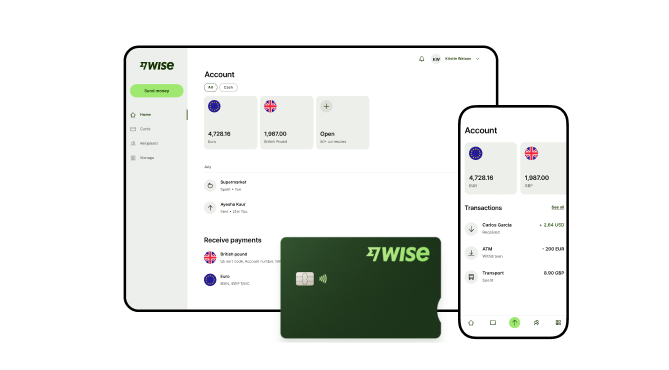
A Wise Business account allows users to can send, receive, and hold in multiple currencies. Experience hassle-free global transactions by transacting like a local business. Here's what you get with a Wise Business account:
Sign up for the Wise Business account! 🚀
This general advice does not take into account your objectives, financial circumstances or needs and you should consider if it is appropriate for you.
*Please see terms of use and product availability for your region or visit Wise fees and pricing for the most up to date pricing and fee information.
This publication is provided for general information purposes and does not constitute legal, tax or other professional advice from Wise Payments Limited or its subsidiaries and its affiliates, and it is not intended as a substitute for obtaining advice from a financial advisor or any other professional.
We make no representations, warranties or guarantees, whether expressed or implied, that the content in the publication is accurate, complete or up to date.

Learn how to open a PayPal Business Account in New Zealand, and explore an in-depth guide to features, fees, and how it works for businesses.

Compare remote payroll software and explore features, pricing, and modern alternatives. Read more here!

Keen to kickstart your business idea the easy way? From obligations to costings, we’re covering how to register as a sole trader in New Zealand.

Learn how recurring payments work for Kiwi SMBs. Learn about fixed vs variable types, direct debit, setup steps, and recurring payments with Wise Business.

Guide to nz telegraphic transfers. learn about swift codes, bank fees, and how to send money overseas. Compare costs and explore alternatives.

Looking for a business debit card in New Zealand? Compare top options, features and fees, plus see how Wise Business excels at international card payments.