
How to invoice international clients from India: Guide for global businesses
Learn how Indian freelancers and businesses can invoice international clients. We cover RBI and GST rules, invoice formats, and payment options


Online payments have become a common way for Indian businesses to collect money. UPI accounted for 85.5% of all payment transactions in India by volume in the second half of 2025, according to the Reserve Bank of India (RBI).¹
This guide covers how online payment systems work, the payment methods available in India, their fees, and how Wise Business helps you receive payments from abroad.
| Table of Contents |
|---|


An online payment system transfers money between a customer's account and a business's account over the internet. Businesses use these systems to accept payments through websites, apps, payment links, QR codes and bank transfers. They can also pay suppliers, staff and bills online.
You are likely to use one if you:
In India, the Payment and Settlement Systems Act, 2007, provides the legal framework for payment systems. The RBI authorises, regulates and supervises payment systems and the companies that operate them.¹
Here's what happens when a customer pays INR 2,000 for an order on your website.
Indian businesses use different systems for transfers, card payments, recurring debits and international payments¹.
| System or method | What it is | Best for |
|---|---|---|
| UPI | Instant bank-to-bank transfers through UPI IDs, apps and QR codes. | Everyday customer payments, online and in-store |
| Debit and credit cards | Payments made through card networks such as RuPay, Visa and Mastercard. | Online purchases and customers who prefer card payments |
| Net banking | A payment channel that lets customers approve transfers through their bank's website or app. | Customers who prefer paying from their bank account |
| Mobile wallets and PPIs | Prepaid instruments that store money for future payments. | Small, frequent purchases and digital transactions |
| NEFT, RTGS and IMPS | Bank transfer systems. NEFT handles regular transfers, RTGS settles large-value payments in real time⁴, and IMPS supports instant transfers. | Business-to-business payments and large transfers |
| NACH and e-mandates | Systems and digital instructions that allow automatic, recurring debits or bulk credits. | Subscriptions, EMIs, bills and salary payments |
| Bharat Bill Payment System (BBPS) | An integrated platform for paying bills through different channels and payment methods. | Utility bills, telecom bills and other recurring payments |
| Wise Business | A cross-border payment service that lets Indian businesses receive money in foreign currencies and get the funds converted to INR. | Freelancers, service exporters and businesses with overseas clients |

UPI is India's most widely used payment system by transaction volume.¹ UPI payments of up to INR 2000 do not attract charges from banks or system providers.3
Customers enter their card details and verify the payment at checkout. India had about 115 crore cards in use at the end of 2025.¹ Businesses can also accept payments from overseas customers if their provider supports international cards.
Customers select their bank at checkout, log in and approve the payment. In December 2025, the RBI authorised Banking Connect, an interoperable net banking platform run by NPCI Bharat BillPay Limited.1 It supports larger, one-time payments.

PPIs let customers store and spend money through digital wallets or prepaid cards. The holding limit depends on the PPI type and the customer's KYC status.¹
These systems transfer money between Indian bank accounts. NEFT processes transfers in half-hourly batches.¹ RTGS settles payments in real time for amounts of INR 2,00,000 or more.⁴ IMPS supports instant transfers of up to INR 5,00,000 per transaction on most channels.¹
NACH handles bulk and recurring payments, such as loan EMIs and insurance premiums.¹ The 2026 E-mandate Framework lets customers approve recurring debits through cards, UPI and other supported methods. Payments of up to INR 15,000 can then be collected without a fresh OTP each time.⁵
BBPS lets customers pay electricity, water, gas and DTH bills through a network of apps and agents.¹
Wise Business helps Indian businesses receive payments in 23+ currencies from over 140+ countries. Clients pay in their local currency. Wise converts the funds to INR and sends them to your Indian bank account. Wise Payments India is authorised by the RBI as a Payment Aggregator-Cross Border for inward payments.⁷

The fees you pay depend on the payment method and provider. Check these costs before choosing a payment provider.
Most Indian businesses need a current account and a payment aggregator or bank that accepts UPI, cards and net banking. The provider will verify your KYC documents. Here's how to set up Wise Business to get paid from overseas.⁸
Each payment must be at least USD 5 or its equivalent and cannot exceed INR 2.5M or its equivalent. Check Wise's pricing page for current conversion fees.
Expanding a business globally opens up exciting opportunities, but also new challenges like receiving payments across borders. Hidden foreign transaction fees and hefty markups involved with international payments can eat into your profits and time.
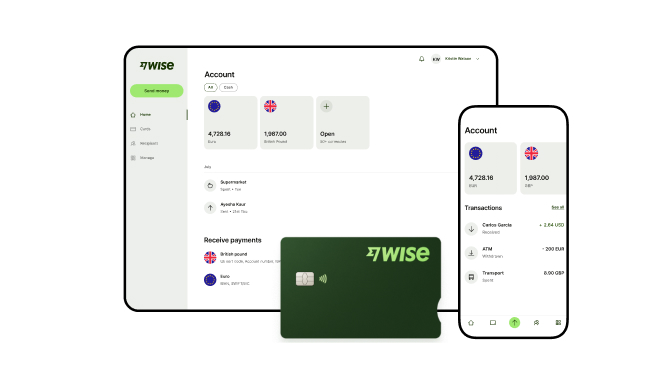
Wise Business addresses this gap by enabling Indian businesses to receive money from abroad using local account details in supported foreign currencies. Conversions are offered mid-market exchange rates with no hidden markups and a transparent upfront fee.
Are you a small business or freelancer receiving payments from overseas? Transform the way you receive global payments with Wise Business:
Sign up for the Wise Business account! 🚀
*Please see terms of use and product availability for your region or visit Wise fees and pricing for the most up to date pricing and fee information.
This publication is provided for general information purposes and does not constitute legal, tax or other professional advice from Wise Payments Limited or its subsidiaries and its affiliates, and it is not intended as a substitute for obtaining advice from a financial advisor or any other professional.
We make no representations, warranties or guarantees, whether expressed or implied, that the content in the publication is accurate, complete or up to date.

Learn how Indian freelancers and businesses can invoice international clients. We cover RBI and GST rules, invoice formats, and payment options


