How to verify a Wise Business account as a sole trader in India
Opening a Wise Business account in India as a sole trader? Learn what you need, how verification works, and how to receive your first payment.



Selling to customers outside India is much simpler than it used to be. India's exports reached a record USD 860 billion in the 2025-26 financial year1, and more businesses are finding customers beyond their home market. But sending a package abroad involves more than choosing a courier.
You need to prepare the right documents, understand customs rules, estimate shipping costs, and decide how you'll receive payment. Small mistakes can lead to delays, extra charges, or less money reaching your account than you expected.
This guide explains how international shipping from India works. It covers the steps involved, the documents you'll need, the costs to plan for, and the courier services available.
| Table of Contents |
|---|


International shipping is the movement of goods or documents between countries by courier, air, sea, or land. The best shipping method depends on what you're sending, how quickly it needs to arrive, and your budget.
Businesses use international shipping to sell products globally, while individuals use it to send gifts, personal items, or documents abroad.
Unlike domestic shipping, international shipments must clear customs in both countries and may be subject to duties, taxes, longer delivery times, and additional paperwork. Missing or incorrect documents can delay or prevent customs clearance.
There are four main ways to ship goods across borders, and each suits a different need.

Getting your paperwork right is just as important as packing your shipment. Missing or incorrect documents can delay customs clearance, lead to extra charges, or even result in your shipment being returned. Here are the documents most exporters need.
Some products may require additional documents or licences. For example, electronics may need BIS certification, while agricultural and plant-based products often require a phytosanitary certificate. It's worth checking the requirements for your product and destination before you ship.
Sending a shipment overseas involves a few key steps. Here is how a typical export shipment moves from India to a buyer abroad.
Decide how you want to ship your goods based on your shipment size, budget, destination, and delivery timeline. Express couriers are best for small, urgent shipments, while air and sea freight suit larger consignments.
Before you can ship commercially from India, you'll need an Import Export Code (IEC) and an AD Code linked to the bank where you'll receive export payments. These are one-time registrations that allow you to export legally and process foreign payments.
Package your goods securely so they can withstand international transit. Every shipment should be clearly labelled with the destination address and the necessary shipping information to help it move smoothly through the courier network.
Most shipments require a commercial invoice, packing list, and any certificates needed for the destination country or the goods being exported. Having these documents ready before booking helps avoid delays during customs clearance.
Once your shipment is ready, compare rates and choose a service. International shipping costs depend on factors such as weight, dimensions, destination, delivery speed, and applicable surcharges. Couriers usually charge based on whichever is higher: the actual weight or the volumetric weight of the parcel.
Your shipping bill is filed through ICEGATE for customs processing. Once Indian Customs issues the Let Export Order (LEO), the shipment is cleared to leave the country.
After departure, the shipment travels to the destination country, clears local customs, and is delivered to the recipient. Most carriers provide tracking updates throughout the journey.
The shipping process doesn't end when the parcel is delivered. Once your overseas buyer pays, the funds reach your bank in foreign currency and are converted into rupees. Your bank then issues an electronic Foreign Inward Remittance Certificate (e-FIRC).
This document plays an important role in India's export compliance process. Every export shipping bill remains open in the Reserve Bank of India's Export Data Processing and Monitoring System (EDPMS) until the payment is matched against it.5
Your bank uses the e-FIRC to reconcile the payment and close that shipping bill. If a shipping bill remains open beyond the permitted period, it can lead to regulatory issues, including being caution-listed by the RBI. Exporters must also realise export proceeds within the timeline prescribed by the RBI, so it's worth confirming the current requirement with your bank before shipping.
There is no flat rate for international shipping. Several factors shape the final price. Here are the main ones.

Several courier and logistics companies help businesses ship internationally from India. The right choice depends on your destination, budget, and delivery timeline.
Together, these costs can reduce the value of an export payment by 2% to 5%. On a USD 10,000 payment, even a 1.5% exchange rate markup works out to around INR 14,000.9
Shipping your products overseas is only part of the international trade equation. Once a package arrives safely, receiving the payment from your customer often brings unexpected costs, including hidden exchange rate markups, transfer fees, and extra tax charges that erode your profit margins.
Expanding a business globally opens up exciting opportunities, but also new challenges like receiving payments across borders. Hidden foreign transaction fees and hefty markups involved with international payments can eat into your profits and time.
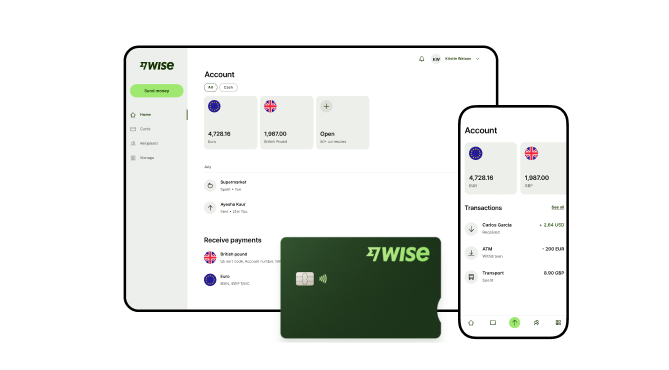
Wise Business addresses this gap by enabling Indian businesses to receive money from abroad using local account details in supported foreign currencies. Conversions are offered mid-market exchange rates with no hidden markups and a transparent upfront fee.
Are you a small business or freelancer receiving payments from overseas? Transform the way you receive global payments with Wise Business:
Sign up for the Wise Business account! 🚀
1. How is volumetric weight calculated for international shipments?
Multiply the parcel's length, width, and height (in cm), then divide by 5,00010. Couriers charge whichever is higher: the actual weight or the volumetric weight.
2. How do I wrap furniture for international shipping?
Dismantle the furniture if possible, protect the corners, and wrap each part with moving blankets and bubble wrap. Label loose parts and avoid wrapping wood directly in plastic.
3. What items are restricted or prohibited from being shipped internationally from India?
Items such as currency, precious metals, firearms, explosives, narcotics, wildlife products, and hazardous materials are prohibited or restricted. Always check the DGFT's ITC(HS)11 schedule before shipping.
4. Do I always need an Import Export Code (IEC) to ship goods internationally?
Not always. An IEC is required for most commercial exports, but exemptions apply for personal, non-commercial shipments, government departments, and certain low-value trade with neighbouring countries.
5. How do I obtain an e-FIRC for international export payments?
Your bank issues an e-FIRC after matching your foreign payment with the relevant export documents. Some international payment providers can also issue a digital e-FIRC.
Sources:
*Please see terms of use and product availability for your region or visit Wise fees and pricing for the most up to date pricing and fee information.
This publication is provided for general information purposes and does not constitute legal, tax or other professional advice from Wise Payments Limited or its subsidiaries and its affiliates, and it is not intended as a substitute for obtaining advice from a financial advisor or any other professional.
We make no representations, warranties or guarantees, whether expressed or implied, that the content in the publication is accurate, complete or up to date.

Opening a Wise Business account in India as a sole trader? Learn what you need, how verification works, and how to receive your first payment.

Compare the best web hosting for small business in India. Learn key features, pricing factors, and how to choose the right hosting for your growth.

Compare the best small business insurance in India group health, workmen's comp, and general liability. Find the right cover for your team and budget.

Want to register a startup in India? This guide covers the documents you need, the right business structure, and the full registration process.

Learn how to open a business bank account in India. More on required documents, step-by-step process, timelines, and global solutions.

Understand corporate bank accounts in India, their key features, and the opening process. Learn how they differ from current accounts to find the right fit.