Cost of sales: Formula, calculation, and tips for SMEs
Learn how to calculate cost of sales for Australian SMEs. Discover the standard formula, key direct inclusions, FX landed costs, and common mistakes to avoid.



Global trade in goods and services was projected to surpass $35 trillion in 2025¹. With so much money moving across borders every day, choosing the right method isn’t just about convenience — it can directly affect your cash flow, relationships with trading partners, and whether you get paid or not.
For businesses involved in international trade, the ‘best’ payment method usually depends on a range of factors, such as speed and cost, as well as the trust between parties and how much risk each side is willing to take on.
In this blog, we’ll explain how international trade payments work, the most common terms of payment and methods used globally, and some of the challenges traders face. There’s also an introduction to Wise Business: a service that importers and exporters in Australia can use to pay partners overseas faster with low, transparent fees.
| Table of contents |
|---|

Paying and getting paid across borders brings extra considerations that businesses need to navigate carefully. Unlike domestic transactions, there are more ‘moving parts’ with international trade payments typically involving:
For this reason, the two parties involved usually attempt to ‘trade off’ based on their best interests to come to an agreement on terms and payment methods that suits everyone.
Exporters typically want clarity as it can be difficult and expensive to recover unpaid invoices after goods leave Australia. Exporters often look for:
Importers typically want control as paying too early can tie up cash flow or expose them to the risk of non-delivery. Importers usually look for:
There are several types of transactions that allow both parties to balance these competing priorities: advance payments, letter of credit (LC), documentary collections, and open account. Payments for these agreements are generally facilitated through intermediaries — banks or payment service providers — that handle things like document verification and currency conversions.

Before we run through the different ways of payment in international trade, it’s useful to understand some of the common terms of payment. These are typically used globally, not just in Australia, so it’s a good primer for all forms of cross-border business.
We’ll cover other important terms, like letters of credit, that double as payment methods later in the blog.
The payment method obviously affects how money ‘moves’ after it’s been sent, but it can influence other aspects of the agreement and your business directly, including things like:
Smaller exporters might opt to accept higher risk methods to stay competitive, while large-volume traders might prefer the security of bank-backed payments. There isn’t a universal best scenario. It depends very much on the specific trade scenario.
Now, let’s look at the most common payment methods and types used in international trade. These each have their own benefits and risks depending on factors like trust and the level of security required.
A letter of credit is an agreement where a buyer’s bank commits to paying a seller for goods or services, provided the seller meets the specific conditions set out in the agreement. These conditions are set out in a formal document and can include things like shipping methods, and quality or inspection requirements. The bank then releases the payment when the seller provides evidence that the agreed terms have been met.
LCs are very popular in international trade as they reduce risk for both parties, and are especially useful when working with new partners for the first time.
Wire transfers are another mainstay of international trade payments, dating back 150+ years. These are direct electronic payments sent from a buyer’s bank to a seller’s bank using established banking networks like SWIFT. Wire is more common when two parties have some sort of relationship, and don’t need the ‘backstop’ of bank payment guarantees, like with LCs.
However, while wire transfers are quite straightforward, they typically involve higher fees and less transparency around exchange rates and intermediary charges.
An open account is a kind-off buy it now, pay later scheme for trade. It’s a credit transaction where the seller ships goods to the buyer before the payment is made, with the latter agreeing to settle the funds after a certain period, i.e. 30 or 60 days. This is clearly advantageous for the buyer and risky for the seller, so it’s very much dependent on trust, and is more common in long-term business relationships.
A documentary collection (D/C) is a trade payment where the exporter’s bank forwards shipping documents to the importer’s bank, with instructions on when these documents can be released. With this arrangement, the importer usually has to either make a payment or formally agree to do so at a later date before receiving the documents needed to collect the goods.
D/Cs offer more control than open account terms but less security than letters of credit, so it’s a sort of ‘middle ground’ option.
Digital payment trends are now influencing international trade. For B2B transactions, digital wallets offer much-sought after convenience and speed.
Mutli-currency accounts are also allow businesses to send and receive dozens of currencies without having to rely on traditional international bank transfers, and the hassle of opening local accounts in different regions.
Business accounts for international payments tend to be more suitable for repeat transactions and reducing the costs of cross-border business payments.

As you can see, quite a few of these payment methods are unique to B2B trade and come with specific challenges that must be managed carefully.
One of the biggest risks in international trade is actually getting paid. The simplest payment methods like open accounts or post-shipment terms rely on mutual trust, as exporters have to cover all the shipping costs upfront and then wait weeks or months for payments.
The fact that buyers are overseas adds another layer of complexity in recovering funds due to different legal systems and regulations in play.
For this reason, the Australian government recommends researching and running credit checks on buyers beforehand².
Importing and exporting is often a balancing act with finances as there are gaps between purchase and payments. These long payment windows can put pressure on cash flow. For example, exporters might need to pay suppliers and freight costs long before they receive funds from overseas customers. These risks are particularly acute during busy periods or when dealing with larger orders.
Currency exchange rates are very likely to fluctuate between shipment and invoicing/payment. This will affect how much money your business receives. For example, if you invoice a buyer in a foreign currency and the Australian dollar (AUD) moves lower before payment, your margins and profits can shrink.
Export Finance Australia, the Australian government’s export credit agency, states that currency fluctuations are a “normal” risk with international payments². However, you can manage volatility by using multi-currency accounts to convert at times that are more favourable, or using forex hedging tools to lock in fixed rates.
As international trade payments are fraught with risk, businesses use finance tools such as trade loans and shipping guarantees to protect against payment woes and keep goods moving. In addition to these tools, having a fast and secure way to send and receive international payments can be invaluable in controlling costs and reducing uncertainty, especially when trading across multiple currencies.
Managing the friction of multi-currency trade requires a balance between speed and financial oversight. Wise Business helps solve the complexities of cross-border transactions by providing local account details in major currencies like USD, EUR, and GBP, allowing you to receive payments from trading partners as if you had a local bank branch.
Expanding a business globally opens up exciting opportunities, but also new challenges like receiving payments across borders. Hidden foreign transaction fees and hefty currency conversions involved with international payments can eat into your profits and time.
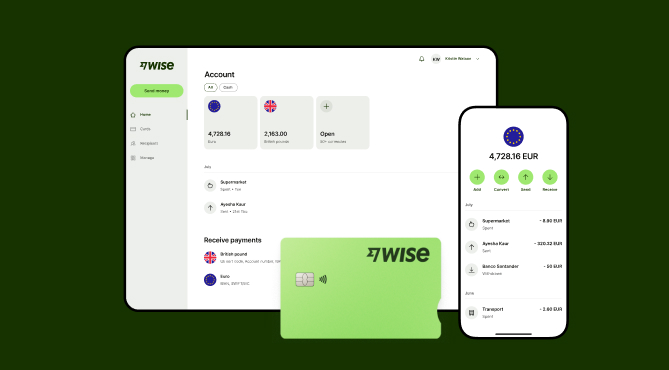
Wise Business serves as a cost-effective solution where you can receive money from around the world at the speed and price of local payments.
Transform the way you receive payments with Wise Business:
Sign up for the Wise Business account! 🚀
This general advice does not take into account your objectives, financial circumstances or needs and you should consider if it is appropriate for you.
1. Which payment method is most favourable for an importer?
Importers often prefer open account or post-shipment payments, as these reduce the risks of long-distance business while better supporting day-to-day cash flow. Any terms that allow importers to receive goods before paying are the most favourable.
2. Can I use digital payment platforms for international trade?
Yes, digital platforms are used quite regularly for international trade payments, especially for small-to-medium-sized enterprises. Digital payments are particularly effective for setting up and managing repeat payments, and handling things like supplier settlements and multi-currency accounts.
3. Who pays the bank fees in international trade transactions?
This is dependent on the payment terms agreed for the transactions. The fees might be paid by the importer, or the exporter, or shared between the two parties. It’s important to clarify these obligations upfront to reduce the chances of disputes and short payments arising.
Sources:
*Please see terms of use and product availability for your region or visit Wise fees and pricing for the most up to date pricing and fee information.
This publication is provided for general information purposes and does not constitute legal, tax or other professional advice from Wise Payments Limited or its subsidiaries and its affiliates, and it is not intended as a substitute for obtaining advice from a financial advisor or any other professional.
We make no representations, warranties or guarantees, whether expressed or implied, that the content in the publication is accurate, complete or up to date.

Learn how to calculate cost of sales for Australian SMEs. Discover the standard formula, key direct inclusions, FX landed costs, and common mistakes to avoid.

Learn how to calculate your break-even point. Discover the standard formula, step-by-step methods, and managing global costs.

Learn about expense reimbursement in Australia. ATO rules, FBT compliance, setting up a clear policy, and streamlining business payouts.

Understand the meaning of liquid assets, how they differ from illiquid holdings. Optimizing business cash flow and global liquidity buffer. Read here

Learn how to build a global go-to-market framework. Discover step-by-step strategies, key operational components, and common financial pitfalls to avoid.

Learn the types of business liquidation, the step-by-step winding up process, asset realization, and proactive financial strategies for directors.