Spain vs. Portugal taxes: US expat guide
Thinking of moving to Spain or Portugal? Find out what tax programs they have for expats to decide which might be better for you.



| This publication is provided for general information purposes and does not constitute legal, tax or other professional advice from Wise US Inc. or its affiliates, and it is not intended as a substitute for obtaining business advice from a Certified Public Accountant (CPA) or tax lawyer. |
|---|
Inheriting property abroad can often feel overwhelming, especially when you're ready to sell.
You're dealing with an unfamiliar real estate system, potentially in a language you don't speak, and you're also likely wondering how this affects your US taxes.
Overall, selling an inherited foreign property as an American requires you to follow the laws in the country where the property is located and meet your obligations to the IRS.
Here's everything you need to know to handle the foreign property sale legally and smoothly.
We'll also introduce Wise — your international money transfer alternative. Use Wise to send stress-free transfers to over 140 countries - all at the standard mid-market exchange rate.
The first step to selling your overseas property is figuring out how much it's worth.
You can do this by getting an official property appraisal in the country where your inherited property is located. Usually, you should look for a certified local appraiser who understands the market and can provide documentation that satisfies local requirements.
Most countries require a professional valuation before you can sell.
For US tax purposes, inherited property receives what's called a "stepped-up basis."
Because of the stepped-up basis, your starting value for calculating capital gains is the property's Fair Market Value (FMV) on the date the original owner died, and **not **what they originally paid for it.
This will often reduce your US tax burden when you sell.
You'll have to navigate two different legal systems at once when selling an inherited property abroad — both the country where the property is located and the US.
Here's what this looks like in practice:
- You may need to pay capital gains tax in both the country where the property is located and the US
- Foreign real estate transactions often require a local attorney or notary to handle the legal paperwork
- Some countries have inheritance taxes or transfer fees that apply when selling inherited property
- Currency exchange rates will affect how much money you receive in USD
- The timeline for selling your property largely depends on the local country, with some places taking months longer than typical US transactions
You might need to travel to the country in person to sign documents or complete the sale.
However, if you can't travel from the US, in some countries, it's possible to sign a power of attorney and have your lawyer or trusted family member handle the sale remotely.
The documents you need for your sale largely depend on the country where your property is located.
| Common documents include: |
|---|
|
Your real estate agent or lawyer should be able to walk you through more precise requirements.
Some countries will require more documents, such as zoning certificates from local authorities or utility documents to show that there are no outstanding bills.
Your buyer's lawyer will also likely run independent checks to verify that the title is clean and there are no debts, but you usually don't need to provide any extra documents for them to do that.
Before you can sell, you need to officially transfer the property into your name.
This process varies by country but typically involves registering the inheritance with local authorities and updating the property title.
You'll need the original owner's death certificate, proof of your inheritance rights, and possibly a court order or notarized will.
Hire a certified local appraiser to determine the property's current market value. This appraisal both helps you set a realistic selling price and establishes the Fair Market Value for US tax purposes.
Find an attorney who specializes in real estate transactions, and they'll guide you through local requirements, review contracts, handle negotiations, and make sure all paperwork is filed correctly.
Lawyers charge fees, but in most countries, getting their help isn't optional. It's often legally required to have an attorney involved in your property sale.
Check for unpaid property taxes, utility bills, or mortgages attached to the property. You'll need to settle these before the sale can proceed.
Your attorney can help you get tax clearance certificates and other proof that all obligations are met.

You'll work with a local real estate agent to list and market your property, especially if you're not there physically.
Alternatively, you might also sell directly to a buyer if you already have one lined up.
You'll likely get multiple offers on your property, and you should review them with your attorney and real estate agent.
Once you accept an offer, you'll typically sign a preliminary contract, and the buyer will put down a deposit.
Your attorney will prepare all required documents for the sale, including the final purchase agreement and transfer of title.
Depending on the country, you may need to appear in person at a notary's office or government registry to sign. If you can't travel, you can often grant power of attorney to your lawyer, but ultimately this depends on the country.
The buyer's funds are typically held in escrow until all conditions are met.
Once everything is finalized, you'll receive payment (minus any local taxes, fees, and commissions), and the property title will transfer to the new owner.
Make sure you understand how and when you'll receive the funds, especially if they need to be converted to USD.
File the sale on your US tax return for the year it occurred.
You'll report any capital gains based on the difference between the stepped-up basis (FMV at date of death) and your sale price.
There are also informational reporting requirements that you may need to comply with, such as Form 3520, FATCA, and FBAR — more on this later.
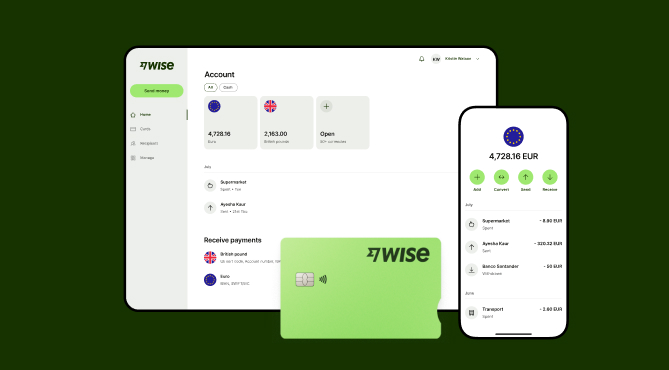
A smart option if you’re sending money overseas: meet Wise.
| With Wise, you can send up to 1,000,000 USD per wire transaction to 140+ countries, with the mid-market exchange rate and low, transparent fees. |
|---|
Over 70% of Wise payments arrive instantly* — and all Wise transfers are deposited directly into your recipient's bank account for convenience.
No ongoing fees, no hidden charges and no hassle — just fast, transparent international transfers that can beat the banks.
🚀Get started with high amount transfers
| See how Wise compares with international bank transfers in our full guide |
|---|
*Transaction speed claimed depends on funds availability, approval by Wise’s proprietary verification system and systems availability of our partners’ banking system, and may not be available for all transactions.
No fixed timeline applies to all properties and countries.
Some countries have straightforward processes that take just a few months. In others, you may have to deal with lengthy probate procedures that can stretch over a year or more.
For example, probate in France typically takes around 6 months from start to finish.¹
In Mexico, if the deceased didn't leave a will, just figuring out the legal heirs and dividing the property among them can take over a year.²
You should also factor in additional time for getting the property appraised and listed and finding a buyer.
You'll encounter different expenses in different countries, but common ones include:
- Legal fees for attorneys in both the foreign country and potentially in the US
- Property appraisal costs to establish Fair Market Value
- Real estate agent commissions
- Notary fees and government registration charges
- Translation and document authentication costs
- Currency conversion fees when transferring proceeds to USD
- Capital gains taxes in the country where the property is located
- US capital gains tax on the sale
Your US tax obligations will likely be pretty manageable thanks to stepped-up basis rules.
Since your basis equals the property's value at the date of death, you'll only owe US capital gains tax on appreciation that occurred after you inherited it.
If you sell relatively soon after inheriting, you might owe little or nothing to the IRS.
However, not all countries follow stepped-up basis rules. Many countries tax inherited property differently or impose inheritance taxes when you sell.
Your local tax obligations in the foreign country may be much higher than what you owe in the US, so research the appropriate rules for your property's location.
| Need to send a large amount? With Wise, you can send up to 1,000,000 USD per wire transfer to 140+ countries — and we automatically apply a discount when you send over 25,000 USD (or equivalent)*. |
|---|
🚀Send high-amount transfers with Wise
*For more information, please visit https://wise.com/us/large-amounts/.
You have tax obligations in two places: the country where the property is located and the US.
Every country has its own rules for taxing property sales and inheritances. For example, some countries charge inheritance or estate taxes when you receive the property.
Even if the local country doesn't tax inherited assets, you'll most likely have to pay capital gains tax when you sell the property. The rates vary widely, and you may consider working with a local tax advisor or lawyer to understand your obligations.
In the US, you'll owe capital gains tax on any profit from the sale.
Your profit is calculated as the sale price minus your stepped-up basis (the Fair Market Value on the date of death) and minus any selling expenses.
If you owned the property for more than 1 year after inheriting it, you'll pay long-term capital gains rates, which are typically 0%, 15%, or 20% depending on your income level.³
Short-term capital gains are taxed at the same rate as your ordinary income.³
| 💡 Learn more about receiving inheritance money from overseas in our full guide. |
|---|
The IRS may also require you to file informational reports when you inherit or sell foreign property:
Form 3520 must be filed if you receive a foreign inheritance worth more than 100,000 USD in a tax year from a foreign estate or foreign person⁴
FBAR (FinCEN Form 114) is required if the total value of your foreign financial accounts exceeds 10,000 USD at any point during the year, including proceeds from a property sale held in a foreign bank⁴
FATCA (Form 8938) requires reporting specified foreign financial assets above certain thresholds, which depend on your filing status and whether you live in the US or abroad
These are informational reports, not tax payments. However, not filing them on time or at all can trigger serious financial penalties and even criminal charges if the US government thinks that you're intentionally hiding foreign assets from them.

Yes, you must report the sale of your inherited foreign property on your US tax return.
The US taxes its citizens and residents on worldwide income, which means that any money you make from selling property abroad counts as taxable income, just like domestic property sales.
You'll need to report the transaction on Schedule D (Capital Gains and Losses) and Form 8949 (Sales and Other Dispositions of Capital Assets).⁵
However, you may end up owing no or minimal capital gains tax on your sale because of the stepped-up basis. Reporting doesn't necessarily mean you have to pay taxes.
It's not possible to completely avoid capital gains tax when you sell a foreign property, but you can often minimize what you owe, especially to the US government.
The stepped-up basis rule already gives you a lot of tax relief.
Since your basis equals the property's Fair Market Value at the date of death, you only pay tax on appreciation that occurs after you inherit. If you sell soon after inheriting, your taxable gain may be minimal or even zero.
Additionally, if you paid capital gains tax to the foreign country where the property is located, you can often claim a Foreign Tax Credit on your US tax return. This credit prevents double taxation by offsetting your US tax liability with the foreign taxes you paid on the same income.
You can't get money back, but the credit can reduce your US capital gains tax to zero if your foreign tax payment was high enough.
If you worry that you'll owe too much in taxes, it's a good idea to consult with a tax professional to figure out a strategy.
You need to understand both the local requirements and your US obligations to successfully sell an inherited foreign property and pay the least possible amount in taxes.
Working with qualified professionals in both countries, such as attorneys, appraisers, and tax advisors, helps you complete everything correctly.
However, when you have assets abroad or split your time between countries, you'll often need to send money internationally.
Banks charge high fees and add exchange rate markups that can cost you thousands of dollars, especially on large amounts like property sale proceeds.
To simplify international money transfers and save on costs, use Wise.
With Wise, you can send secure and trackable large amount transfers to 140+ countries worldwide with transparent fees and the fair mid-market exchange rate.
Have a look at the main benefits for using Wise to send large transfers:
Sources
*Please see terms of use and product availability for your region or visit Wise fees and pricing for the most up to date pricing and fee information.
This publication is provided for general information purposes and does not constitute legal, tax or other professional advice from Wise Payments Limited or its subsidiaries and its affiliates, and it is not intended as a substitute for obtaining advice from a financial advisor or any other professional.
We make no representations, warranties or guarantees, whether expressed or implied, that the content in the publication is accurate, complete or up to date.

Thinking of moving to Spain or Portugal? Find out what tax programs they have for expats to decide which might be better for you.

Need to report the sale of an inherited property abroad? Read on to learn how to avoid capital gains tax and other tips.

Interested in selling a classic car overseas? Find out what American classic car models are popular abroad and tips for listing and shipping your car.

Find out the key points of international estate planning, including US taxes, wills and trusts, country laws, and reporting requirements.

Importing a car to the US? Learn about the 25-year import law and how to verify your vehicle for import to the US.

If you’re a US expat or have foreign income, you have to report your assets in USD. Find out how the IRS exchange rate works in this guide.