How to receive money from overseas with Kiwibank: Steps, fees, and transfer time
Thinking of receiving money from overseas with Kiwibank? Our guide walks you through the process, fees involved, transfer speed, and an alternative.



If you’re receiving money from overseas into New Zealand it’s a good idea to clarify if you’ll need to report or pay taxes on your payment, either in NZ or in the country the payment originated from. The requirements can vary widely depending on your tax residency, the countries and currencies involved, and the reason for the money being sent in the first place.
So - do I have to pay tax on money transferred from overseas to NZ? Let’s explore.We'll also introduce to you Wise that can help you save on international transfers with it's low, transparent fees and mid-market exchange rates.
| Table of contents |
|---|

Whether or not you need to report money you receive from abroad to New Zealand can depend on several factors.
Your tax residency status can be important when understanding the tax implications for receiving money from overseas. New Zealand tax residents are usually required to pay tax on worldwide income to the New Zealand tax authorities. However, this may be different if you’re not a resident for tax purposes, or if you’re already taxed in another country on the specific payment.
The reason for the payment also matters - transfers made for salary, for example, are likely to be reportable as income tax¹. The profits you make when selling an overseas property are also likely to be assessable for tax, depending on how long you've owned the property². However, some payment types tend not to be liable for tax in New Zealand, such as gifts from loved ones, inheritances and payments received in the case that a double taxation treaty³ applies.
We’ll explore common scenarios in more detail, below.
This guide is for information only. Tax can be complex, particularly when more than one jurisdiction is involved. Get professional advice so you can be sure you’re complying with all duties both in New Zealand and the country the money is sent from.
There are a few common scenarios where you’re likely to need to pay tax on money received from overseas. This generally applies when the payment is considered to be taxable income, such as when you receive a regular salary from an employer, payment from a freelance client, rental income, pension, interest or dividends.
Here’s an outline - but it’s not exhaustive and doesn’t cover all possible situations. For personal advice you can also reach out to a tax accountant who can look at your individual situation in more detail.
Overseas income includes salary and wages, rental income, dividends or interest sent to you from overseas banks or investments, and similar payments. If you’re a New Zealand tax resident you’re likely to need to pay tax on your worldwide overseas income with progressive rates from 10.5% to 39%⁴ at the time of writing.
If you receive any overseas income you must complete an annual tax return in New Zealand. In some cases you might be able to claim a tax credit against this income, depending on the situation and value of the payments.
You may also need to report income derived from a different country to the tax authorities in that country. This will depend on factors including your employment status and your tax residency.
Another common time you may need to pay tax on a payment coming into New Zealand would be if you sell an overseas property and repatriate the funds⁵. In this case you’ll need to include income from overseas property sales in your annual tax return, and the tax liability is decided according to the Bright-line test.
Under the Bright-line test you may be liable for tax on the sale of the property if you owned it for under 2 years, subject to specific calculation rules. Some scenarios and types of property might have full or partial exemptions for taxes in this case, but getting individual advice is essential to make sure you understand your options and duties.
It’s also worth remembering that you may have tax liabilities in the country the property is sold in, depending on the details of the sale, your tax residency status and other factors.
Taxation may apply on overseas pensions, but this depends on the way you’re paid, and the country of the pension plan⁶. Your own tax residence may also make a difference.
You can expect to pay tax on regular payments from a superannuation overseas, in line with New Zealand’s income tax rates. If you’re getting a lump sum payment, or transferring a lump sum from an overseas plan into New Zealand, you may need to pay tax depending on the exact circumstances.
You’re not usually taxed on lump sum withdrawals or transfers from an Australian super plan.
As with all tax matters, getting individual advice from an expert can help you stay compliant while making the most of your money.
There are a few other common situations where you do not normally need to pay taxes on money sent to you from abroad.
Some income does not count towards your taxable income in New Zealand⁷. This can include reimbursements and some specific employment related payments. You may also find you’re exempt from some local tax on income if you’ve already paid tax on it overseas, through double taxation treaties.
New Zealand has double taxation treaties with many countries, which prevent people from paying taxes in two countries on the same income. If you’re receiving an overseas income you can talk your situation through with a tax accountant to establish if any double taxation treaties may apply.
Receiving inheritances in New Zealand does not usually incur a New Zealand tax. However, you may need to pay tax on income derived from an inheritance, such as interest on funds received. You might also need to pay inheritance or estate tax in the country which the payment came from.
New Zealand does not have any gift tax⁸. This was abolished some time ago. Do check if the country you're receiving a gift payment from has any tax of its own to make sure you’re on the right side of the law.
The tax obligations for money received from overseas depend primarily on the recipient's tax residency status in New Zealand and the reason for the transfer (e.g., salary vs. gift). New Zealand tax residents are typically required to pay tax on their worldwide income.
When preparing to receive funds, you will need to agree on a payment method and provide your full account details to the sender. For a standard bank transfer, you will typically need to provide your full name, account number, and your bank’s SWIFT code. You may also need an IBAN or a sort code, so check with your bank to confirm the exact required information.
The final cost of receiving money often comes down to hidden bank fees and weak exchange rates. Wise is a simple way to receive money fast and conveniently. Open a Wise account for free; get paid however you like, wherever you are. You will get 8+ domestic account details in global currencies like USD, GBP, and more to receive money like a local.
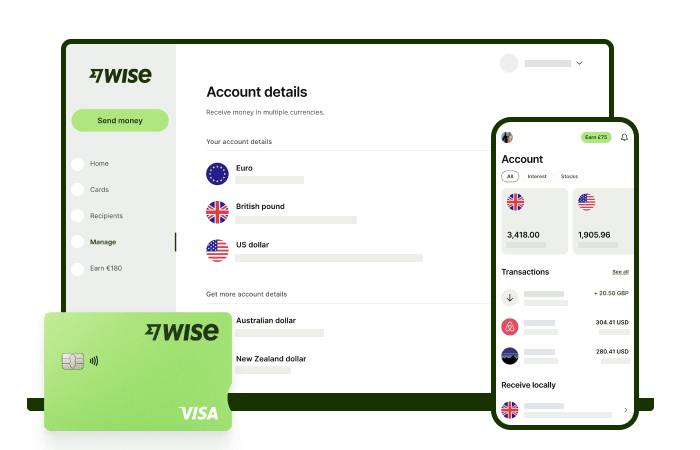
Easily manage transfers through the Wise app by sharing your account details, requesting with the Wise tag or syncing your contacts. After getting your funds, you can hold and exchange 40+ currencies in your Wise account. For all your currency exchanges, you can get the mid-market rate and low, transparent fees, which usually gives the best value for your money. Wise also lets you send money to 140+ countries or get a linked Wise debit card to spend internationally, all at the same great mid-market rate.
When it comes to international transfers, Wise makes things easier and cheaper.
This general advice does not take into account your objectives, financial circumstances or needs and you should consider if it is appropriate for you.
Please see Terms of Use and product availability for your region or visit Wise Fees & Pricing for the most up to date pricing and fee information.
*Please see terms of use and product availability for your region or visit Wise fees and pricing for the most up to date pricing and fee information.
This publication is provided for general information purposes and does not constitute legal, tax or other professional advice from Wise Payments Limited or its subsidiaries and its affiliates, and it is not intended as a substitute for obtaining advice from a financial advisor or any other professional.
We make no representations, warranties or guarantees, whether expressed or implied, that the content in the publication is accurate, complete or up to date.

Thinking of receiving money from overseas with Kiwibank? Our guide walks you through the process, fees involved, transfer speed, and an alternative.

Explore TransferMate’s features, fees and more in this comprehensive TransferMate review. See how it stacks up against other money transfer services.

Thinking of receiving money from overseas with ASB? Our guide walks you through the process, fees involved, transfer speed, and an alternative.

Thinking of receiving money from overseas with ANZ? Our guide walks you through the process, fees involved, transfer speed, and an alternative.

Planning an international transfer? Our MoneyGram review guides you through fees, exchange rates, and more to help you decide if it's the right choice.

Wondering whether Xoom, Remitly, or Wise is the better choice for money transfer internationally? We’ve compared features, fees, and more for New Zealand users.