How to take payments on a website: A Guide for Small Businesses
Learn how to take payments on a website, from choosing a payment provider to setting up a checkout, accepting cards, and managing fees.



Seven in 10 Australians made at least one online payment during a single week in 2025, according to the Reserve Bank of Australia, and they now account for 20% of all consumer payments¹. For Australian businesses, catering to these changing habits by offering the right mix of methods at checkout can help to engage buyers and increase sales.
This blog will detail the most common online payment methods to give you a better idea of how they work and which businesses they may suit.
| Table of Contents |
|---|


Online payment methods are digital ways for customers to pay for goods or services at online stores and through mobile apps without using cash or cheques. They include card payments, digital wallets (like Apple Pay), bank transfers, and direct debit – basically any method where details are inputted and authorised electronically.
Offering a variety of these online payment options makes it easier for customers to complete purchases, while helping businesses get paid securely and on time. However, the Australian government states that “no one type of payment is best” and that businesses should consider factors such as customer preferences, reliability, cost, and privacy when choosing payment methods².
Online payment systems have replaced older, traditional methods like cash and mail-order forms with fast, secure, convenient options that are easier to manage and automate. Taking the time to create a tailored payment system can:
Australian businesses have plenty of choices when taking payments. According to the RBA, mobile and apps made up 46% of online payments in 2025, highlighting the growing popularity of smartphones for payments¹.

Cards account for 11% of online payments in Australia (7% debit, 4% credit)¹.
To accept them, businesses generally need a payment gateway to securely capture the card details and a payment processor or acquiring bank to authorise transactions (and make sure funds are settled into a business account).
Because cards are widely trusted, they are suitable for almost all online businesses, from one-time purchases to recurring subscriptions.
Mostly used by:
Bank transfers let customers pay directly from their bank accounts. In Australia, these payments can move through different systems, including the New Payments Platform (NPP) for fast account-to-account payments5 and the Bulk Electronic Clearing System (BECS) for Direct Entry payments, including direct credits and direct debits4.
Businesses can also receive NPP payments using services such as Osko and PayID, which make bank transfers useful for invoices and larger payments⁶.
Mostly used by:
Multi-currency accounts (or foreign currency accounts) allow businesses to hold, send, and receive money in various foreign currencies without automatically converting them straight into Australian dollars. While not a direct customer-facing checkout option, they act as an essential backend solution that integrates with global payment gateways and bank transfers.
By collecting funds directly in a customer's local currency, businesses can avoid the high conversion fees and exchange rate markups typically associated with standard international payments. You can then choose to hold onto that balance to pay overseas suppliers directly in their local currency, or wait for a more favourable exchange rate before converting the funds back to AUD, improving your overall cash flow.
Mostly used by:


BPAY accounted for 5% of online payments in Australia in 20251. This is a secure electronic payment system that lets customers pay bills directly from their bank accounts using internet banking. To take BPAY, businesses need a BPAY biller code and a payment provider that supports it⁷. It’s particularly useful for anyone sending invoices or collecting regular payments.
Mostly used by:
Direct debits allow businesses to take payments directly from a bank account after the customer has given them permission (a mandate). The main benefit is convenience: instead of chasing customers for every payment, the business can collect money automatically.
The business schedules the payment through its payment provider, which processes it through Australia’s Bulk Electronic Clearing System (BECS)⁴.
Mostly used by:
With Pay ID, a business can receive a bank payment using an identifier such as a mobile number or Australian Business Number (ABN) instead of sharing its BSB and account number⁸. It operates through the NPP and can make it much simpler for customers to pay invoices and other amounts directly into a business account.
Mostly used by:

PayTo is an NPP service that allows businesses to set up and authorise one-off or recurring payments from a customer’s bank account⁹. The customer approves the payment agreement through their bank, rather than setting up a traditional direct debit arrangement.
It’s mainly relevant to businesses that collect regular payments.
Mostly used by:
The usage of BNPL methods has slowly increased in Australia¹. Providers like AfterPay and Zip typically pay the business the full amount upfront, minus service fees, then collect the repayments from the customer, who gets to spread the cost in instalments.
Mostly used by:

More people of all age groups are using mobile wallets in Australia¹. These digital wallets, such as Apple Pay, can be offered through payment gateways that support them. They use tokenisation – a secure method that replaces a customer’s actual card number with a unique set of numbers. For businesses, wallets provide super-quick checkouts, especially for customers on mobile devices.
Mostly used by:
Prepaid and gift cards are set up through a card provider or payment processor, which allows the business to accept them through their existing card payment system.
Mostly used by:

The exact method for your online system will depend on the payment types and provider, but here’s a general process you can follow to start implementing online payments.
1. Identify payment needs
Look at your customers, average transaction value, sales channels, and broader industry to work out which payment options make sense. For example, an invoice-driven accounting firm is likely to benefit from bank transfers and BPAY. You don’t need every option; just focus on what’s most useful and commercially viable.
2. Choose a payment gateway or payment service provider
A payment gateway is the tech that securely captures and passes payment information between your checkout and a payment processor. Many providers in Australia bundle gateway, payment processing and other services into a single platform to make it easier. But make sure they support the methods you’ve chosen.
3. Connect your checkout and business systems
After choosing a provider, connect it to the systems that you use to take payments – this could be an ecommerce platform, website, invoicing tool, or custom checkout. You’ll then need to configure the payment methods and other features (currencies, payment links, recurring billing, etc.) depending on your setup.
In addition to matching the payment methods you need with the provider/system, you should also make sure to:
All the methods listed here let you take payments from customers, but there’s still a key, final step to sort: how to settle funds after they arrive, especially if there are currency conversions involved. Wise Business complements your payment provider, giving you a low-fee, multi-currency account to receive, hold, and convert customer payments at the real, mid-market rate with no markup.
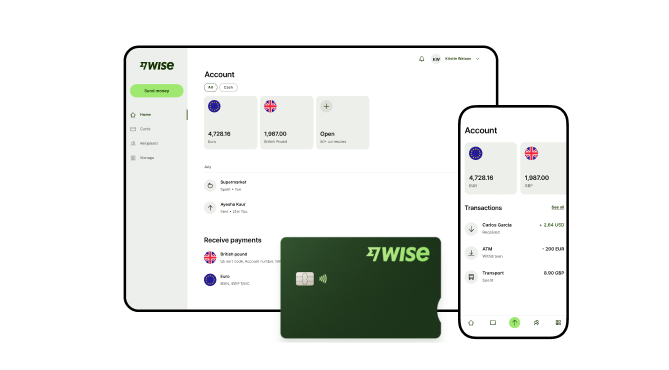
A Wise Business account allows users to send, receive, and hold in multiple currencies. Experience hassle-free global transactions by transacting like a local business. Here's what you get with a Wise Business account:
Sign up for the Wise Business account! 🚀
This general advice does not take into account your objectives, financial circumstances or needs and you should consider if it is appropriate for you.
**Capital at risk, growth not guaranteed. Interest is the name of a custody and nominee service provided by Wise Australia Investments Pty Ltd in partnership with Franklin Templeton.
1. Can Australian businesses pass online payment processing fees onto customers?
Yes, until 1 October 2026, businesses can add cost-based surcharges. However, after that date, surcharging will be banned across Eftps, Mastercard, Visa, and Amex in Australia, so businesses will either have to absorb the card costs or include them in their overall pricing.
2. How do I avoid high conversion markup fees when accepting international payments?
The best way to avoid high fees is by looking for a provider that uses a transparent exchange rate without an additional markup. A multi-currency account also provides more flexibility – you’ll be able to receive and hold currencies other than AUD, and convert them at a time that’s best for your business.
3. Do I need a specific merchant bank account to use online payment systems?
Most modern payment service providers bundle everything together, so you don’t usually need to set up a traditional, standalone merchant bank account to process online payments, although some gateways might require one. However, you can settle payments into any business account, including Wise.
Source:
*Please see terms of use and product availability for your region or visit Wise fees and pricing for the most up to date pricing and fee information.
This publication is provided for general information purposes and does not constitute legal, tax or other professional advice from Wise Payments Limited or its subsidiaries and its affiliates, and it is not intended as a substitute for obtaining advice from a financial advisor or any other professional.
We make no representations, warranties or guarantees, whether expressed or implied, that the content in the publication is accurate, complete or up to date.

Learn how to take payments on a website, from choosing a payment provider to setting up a checkout, accepting cards, and managing fees.

Compare GoCardless vs Airwallex on features, global capabilities, and pricing. Find the right payment solution for your Australian business.

Compare Payoneer vs Airwallex. Explore key differences in features, global coverage, expense management, corporate cards, setup, and fees.

Discover how to open an Amazon Business account in Australia. We explore procurement benefits, pricing tiers, setup steps, and handling global payments.

Learn how Australian SMBs can prevent payment fraud. We explore essential security features, main payment options, setup steps, and sending global payments.

Compare PayPal and Airwallex features, setups, coverage, and fees for Australian businesses managing global money, plus alternative accounts like Wise Business.