Understanding RSU Tax in Australia: The Complete Employee Guide
Received equity from your company? Learn how Restricted Stock Units (RSUs) are taxed by the ATO, and how to protect your proceeds.



If you are selling property in Australia, one document can make a major difference to your settlement proceeds: the ATO clearance certificate. Since 1 January 2025, foreign resident capital gains withholding, or FRCGW, can apply to all Australian property sales, not just higher-value deals, so even ordinary home sellers now need to know how the rules work.1,3
As for what a foreign resident capital gains withholding clearance certificate is, the short answer is this: it is an ATO document that proves an Australian tax resident seller does not need to have 15% withheld by the buyer at settlement.2 This guide covers everything you need to know about the process, while also introducing how Wise can help you move your funds across borders seamlessly using the mid-market exchange rate after settlement. Plus, you’ll get dedicated support and volume discounts when sending large amounts.
| Table of Contents |
|---|
This article is general information only and does not take into account your individual objectives, financial situation or needs. If you are unsure how the rules apply to your sale, consider getting advice from a qualified tax adviser.
Navigating the financial side of a property sale is stressful enough without unexpected compliance hurdles at settlement. In Australia, the FRCGW regime acts as a safety net to ensure taxes are paid before sale proceeds leave the country. Understanding how this mechanism is structured and how the regulations have expanded to cover everyday properties is the first step to protecting your cash flow.
Foreign resident capital gains withholding is an ATO tax collection rule for certain Australian property sales. It is designed to make sure the ATO can collect tax that may be due when a seller is a foreign resident, or when the seller does not provide the right documents before settlement.1
A common question is whether FRCGW is an extra tax or a penalty. It is neither. It is a withholding amount paid to the ATO upfront, and the seller can later claim it as a credit when they lodge their tax return for the year the contract was signed.2,5
The key mechanism is simple. At settlement, the buyer may have to hold back part of the sale price and send it to the ATO instead of paying the full amount to the seller. In effect, the buyer becomes the ATO’s collector for that transaction.1,3
The current rules are stricter than many sellers expect. For contracts signed on or after 1 January 2025, the withholding rate is 15%, and it applies to the value of all property, which means the threshold is now $0.1,3
One thing worth knowing is that older articles may still mention a $750,000 threshold. That was the previous rule, so it can now mislead sellers who assume smaller property sales are outside the regime.
| Rule | Contracts signed up to 31 December 2024 | Contracts signed on or after 1 January 2025 |
|---|---|---|
| Withholding rate | 12.5% | 15% |
| Property value threshold | $750,000 or more | $0, applies to all property |
The practical impact is clear. If the right paperwork is not provided by settlement, the purchaser may need to withhold 15% of the sale price, even if the seller is actually an Australian resident for tax purposes.2,3
Now that you know how the withholding system works, the next step is managing it. The ATO provides two completely separate pathways, depending entirely on your tax residency status. If you are an Australian resident, you use a clearance certificate to bypass the tax entirely; if you are a foreign resident, you use a variation notice to reduce the amount.
An ATO clearance certificate is the buyer’s official off-switch. It tells the purchaser that the vendor is an Australian resident for tax purposes for FRCGW purposes, so the buyer does not need to withhold the 15% amount from the sale price.2
This is different from proving you are an Australian citizen or permanent resident. The ATO applies tax residency rules, which are not the same as immigration status. That is why the clearance certificate matters so much: it gives the buyer a document they can rely on at settlement.1,2
If there are multiple sellers on the title, each vendor must get their own clearance certificate. If even one seller does not provide a valid certificate on time, withholding may still apply to that seller’s share.2,4
True foreign residents cannot get a clearance certificate. Instead, they may be able to apply for a variation notice if the standard 15% withholding rate would be too high compared with their estimated Australian tax liability.4,5
This matters because the 15% figure is based on sale value, not actual profit. So if the property is being sold at a loss, with a low gain, or in another situation where the final tax bill should be lower, a variation notice can reduce the rate, sometimes even to nil.5
Without a valid clearance certificate or variation notice given to the buyer by settlement, the purchaser must withhold at the full rate. That is the default rule, and it is where many sellers get caught out.3,5
For Australian resident sellers, the ATO says not to wait until a contract is signed. Apply as soon as you are thinking about selling, because some applications can take up to 28 days to process.2,4
Here is the basic workflow for residents:
- Start the ATO clearance certificate application online.4
- Enter your seller details, including your TFN if you have it. The ATO says providing a TFN helps it identify you faster, though it is not mandatory.4
- Complete a separate application for each vendor listed on the title.4
- Receive the certificate and give it to the purchaser on or before settlement.2,4
The certificate is valid for 12 months from the date it is issued, as long as your residency status does not change in that period.2,4
If you use myGov linked to ATO online services, you can also access your clearance certificate through My profile, then Communication, then History once it has been issued.2
The real risk here is timing. If you apply too late, the sale can still settle, but the buyer may be legally required to withhold 15% and send it to the ATO. You would then need to wait and claim that amount back through your tax return process.2
Once settlement is complete, the next question is often what to do with the money, especially if you need to move funds overseas, convert currency, or hold money before sending it on. Wise is an easy way to save up to 5x when sending money overseas. You can make extra secure transfers to 140+ countries, which are easy to set up with no physical paperwork and completed usually in seconds.
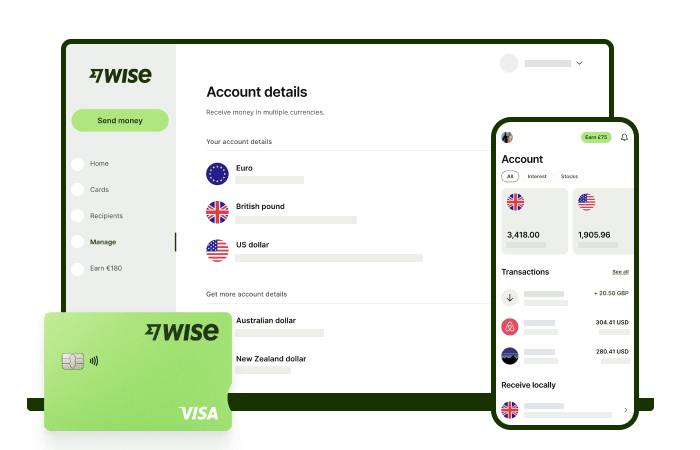
With low, transparent pricing and the mid-market exchange rate for all your currency conversions for your foreign transfers, you'll usually get the best value for your money. Wise lets you see exactly what you're paying for a transfer, and what the recipient will get, with no hidden fees.
For managing foreign currencies even easier, create a free Wise account, and you'll be able to manage and convert your money in AUD and 40+ other currencies. Plus, you'll get local account details in 8+ currencies, including GBP, USD, and more making it easy to receive money from abroad whenever you need. You'll be able to track your transfers all in one place.
When it comes to international transfers, Wise makes things easier and cheaper.
This general advice does not take into account your objectives, financial circumstances or needs and you should consider if it is appropriate for you. Savings claim based on our rates vs. selected Australian banks and other similar providers in Jan 2026. To learn more please visit https://wise.com/au/compare
Please see Terms of Use and product availability for your region or visit Wise Fees & Pricing for the most up to date pricing and fee information.
Yes. Australian resident sellers need a clearance certificate if they want to avoid withholding at settlement. Without it, the purchaser may still have to withhold 15% from the sale price.2
The ATO says most certificates are issued within a few days, but some can take up to 28 days. That is why the ATO recommends applying as soon as you are thinking about selling.2,4
No. Foreign residents are not entitled to a clearance certificate. If the 15% withholding rate is too high for their situation, they may apply for a variation notice instead.4,5
If a valid clearance certificate or variation notice is not provided by settlement, the buyer may have to withhold the required amount and pay it to the ATO. The seller can then claim that amount as a credit when lodging their tax return, if eligible.2,5
Sources:
*Please see terms of use and product availability for your region or visit Wise fees and pricing for the most up to date pricing and fee information.
This publication is provided for general information purposes and does not constitute legal, tax or other professional advice from Wise Payments Limited or its subsidiaries and its affiliates, and it is not intended as a substitute for obtaining advice from a financial advisor or any other professional.
We make no representations, warranties or guarantees, whether expressed or implied, that the content in the publication is accurate, complete or up to date.

Received equity from your company? Learn how Restricted Stock Units (RSUs) are taxed by the ATO, and how to protect your proceeds.

Wondering how much foreign income is tax-free in Australia? Learn how the ATO treats worldwide earnings, foreign tax offsets (FITO), and tax residency rules.

Learn how to link and transfer your AMEX Membership Rewards points to your Qantas Frequent Flyer account, check transfer ratios, and maximise your points.

Is the Amex Explorer card worth it? Our review dives into the benefits, lounge access, insurance, and fees.

Compare the best AMEX cards for points in Australia. Discover AMEX cards for Qantas points, travel rewards, and sign-up bonuses to maximise your spend.

Learn how to check, redeem, and use your AMEX travel credit in Australia.