
How to set up online payments for a small business?
Learn how to set up online payments for a small business in Australia, including payment methods, providers, costs, setup steps, and common challenges.


Setting up a successful ecommerce store is no easy feat. You’ll have to offer a killer product, find fast and cost-efficient shipping, and crush your digital marketing game.
To maximise conversions, minimise fees, and maintain compliance, you’ll also need a solid payment gateway. But which service works best for the budding Australia-based eCommerce store? It depends on your business model, transaction volume, customer preferences, and more.
In this post, we’re covering the best payment gateways for ecommerce to help you find the right fit.
| Table of Contents |
|---|


Think of the payment gateway as a virtual cash register for accepting online payments. The cloud-based ‘digital checkout’ acts as a go-between for your eCommerce store and merchant account, authorising customer payments, verifying transactions, and transferring funds.
eCommerce payment gateways serve online stores, though many also handle in-person payments via POS systems.
Smaller online businesses typically use hosted gateways, in which the customer is redirected to a secure pop-up portal to finalise the payment.
The entire process occurs automatically within a few seconds, except for settlement, which can take several days.
Established mid-to-large eCommerce stores might prefer self-hosted payment gateways, in which payment details are securely collected on-site using an API or iFrame. Self-hosting provides more control but requires substantial resources for technical design and compliance.
We’ve handpicked the top payment gateways for Australian eCommerce stores.
A well-established full-stack fintech solution, Stripe offers an online payment gateway, along with many other services. It streamlines the payment experience through features like real-time card validations, third-party autofill, descriptive error messages, 1-click Link payments, and address auto-completes. 1
The service has been optimised to operate on any device, including mobiles, tablets, and desktops, and automatically integrates with Link, Apple Pay, and Google Pay. Entrepreneurs can share payment links, integrate elements, set up subscriptions, and trade in 30+ languages with 135+ currencies. A customisable embedded checkout lets you align the design with your branding.
PayPal is a multinational payment behemoth that’s been helping entrepreneurs in Australia trade for decades. Its payment gateway tools cover security and compliance, and can handle instalments, card processing, and recurring payments. Fastlane automatically recognises guest shoppers and autofills checkout credentials to reduce friction and boost conversions.
Entrepreneurs can share no-code payment links via email or apps, or send and track invoices using various payment methods. Aussie customers generally trust PayPal, largely due to its long-standing reputation and famous Purchase Protection Program. However, the catch is that per-transaction fees are higher than many other payment gateways. 2
GoCardless is a well-established payment gateway processing US$130 billion annually worldwide. As the name hints, GoCardless aims to slash transaction costs by using bank transfers instead of card payments. By avoiding expiry-prone cards, the platform also claims to reduce payment failure rates down to as low as 0.5%.4
GoCardless excels at direct debits, a type of direct debit, in which a business automatically debits funds directly from a customer’s account, reducing the need to chase failed or late payments. As direct debit uses Australia’s BECS bank transfer system, fees are lower than card-based payments. GoCardless can do one-off payments too, although some customers may find these less convenient.
For established eCommerce stores with an existing merchant account, eWay offers a fast, secure payment gateway that delivers a seamless checkout experience to customers. Funds settle according to your existing merchant agreement, which typically means faster settlement timeframes and cash flow.
Successful online retailers can leverage high transaction volumes to negotiate low processing rates with their bank, then incorporate eWay to handle secure, compliant payment processing and checkout. eWay has 250+ integrations covering shopping carts, business software, invoicing tools, and more. Three separate plans are available for when you’re ready to scale.5
Square is a popular small business payment gateway catering to ambitious Aussie brands in growth mode. While the platform primarily caters to in-person trade, eCommerce entrepreneurs can also use Square for online and remote payments.
Business owners praise the service for its user-friendly interface, making it popular among entrepreneurs who just want something simple that works. However, Square may lack some of the advanced features found on other payment gateways.6
Catering to large multinationals, Adyen offers a range of enterprise-level fintech solutions, including online payment gateways. With a single API integration, eCommerce stores can accept, optimise, and settle online payments, bringing all payments, risk, and reconciliation into a single streamlined system.7
Users can build conversion-focused checkout flows to improve the customer payment experience and reduce cart abandonment. Adyen also offers AI-powered optimisation of the entire payment funnel, which it claims will boost performance, flag fraudulent transactions, slash payment costs, and increase conversion rates, among other benefits.

Australian entrepreneurs should consider various factors when comparing eCommerce payment gateways.
While payment gateways process your online sales securely, selling to international customers often brings steep foreign transaction fees and poor exchange rates. When you convert international customer payments back into AUD, currency markups can likely reduce the amount of money you receive into your account.
Wise Business helps solve this by providing local account details in major currencies like USD, GBP, and EUR. You can link these details directly to payment gateways such as Stripe or PayPal to receive payouts like a local. Currency conversions occur at the mid-market rate without hidden markup fees.
Expanding a business globally opens up exciting opportunities, but also new challenges like receiving payments across borders. Hidden foreign transaction fees and hefty currency conversions involved with international payments can eat into your profits and time.
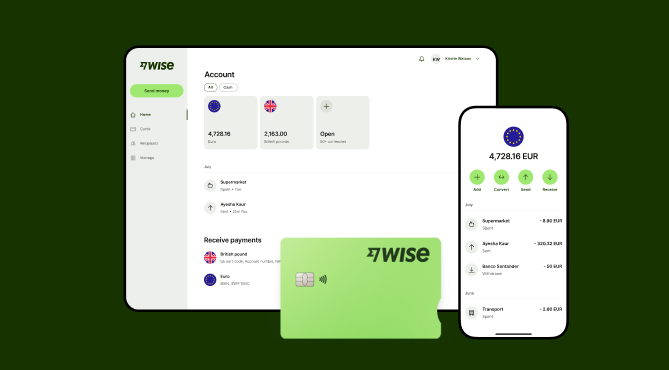
Wise Business serves as a cost-effective solution where you can receive money from around the world at the speed and price of local payments.
Transform the way you receive payments with Wise Business:
Sign up for the Wise Business account! 🚀
This general advice does not take into account your objectives, financial circumstances or needs and you should consider if it is appropriate for you.
1. How does a payment gateway work?
A payment gateway authorises and processes digital payments for an online store by encrypting and securing the transmission of data between customer and merchant accounts.
2. How do I choose a payment gateway?
Review the fees, ensure it integrates with your eCommerce platform, and look for security features and a user-friendly checkout flow.
3. What are the fees for eCommerce payment gateways?
Most payment gateways charge a transaction rate fee plus a fixed rate fee, for example, 2.9% + $0.30. Some also charge monthly fees or setup fees, which can help lower per-transaction charges.
Sources
*Please see terms of use and product availability for your region or visit Wise fees and pricing for the most up to date pricing and fee information.
This publication is provided for general information purposes and does not constitute legal, tax or other professional advice from Wise Payments Limited or its subsidiaries and its affiliates, and it is not intended as a substitute for obtaining advice from a financial advisor or any other professional.
We make no representations, warranties or guarantees, whether expressed or implied, that the content in the publication is accurate, complete or up to date.

Learn how to set up online payments for a small business in Australia, including payment methods, providers, costs, setup steps, and common challenges.

Learn how to take payments on a website, from choosing a payment provider to setting up a checkout, accepting cards, and managing fees.

Discover how to build an end-to-end invoice automation workflow, avoid the pay-out gap, and scale your business with integrated payment solutions.

Need a payment processing solution for your business? We’re covering everything you need to know to start payment processing in Australia.

Learn how to accept online payments in Australia. Learn about methods like gateways, links, and bank transfers and managing fees, security, and compliance.
Compare the best Shopify payment methods for Australian businesses, and find the right solution to lower your transaction fees and boost sales.


